Engineer • Olive Grower • Novelist
Tunisian-American. Born 1966. Inherited a name and an olive grove.
Who I Am
Tayeb R. Damerji is a Tunisian-American electrical engineer, solar entrepreneur, and olive grower. Born in 1966 — the year his grandfather died — he inherited both his name and the olive grove at Henchir al-Turki, Tunisia.
Over a decade of research, he reconstructed a forgotten story: how Mediterranean civilizations (Andalusian, Ottoman, Tunisian) maintained themselves through knowledge networks, how those networks were dismantled during colonial expansion, and what, if anything, remains.
The Trees Are Still Standing is a seven-novel cycle telling that story across four centuries and three families. Novel 1, The Andalusian, will be published in 2026.
Three Names, Three Civilizations
My name is the cycle made biographical
Tayeb
الطيب
The Good Tree
Ibn Tufayl • Quran 14:24
Grandfather • Henchir al-Turki
Ridha
رضا
Divine Contentment
8th Imam • Persian dimension
The grandfather's inheritance
Damerji
الدامرجي
The Blacksmith
Köprülü • The bridge-builder
The place, the grove, the wind
The Olive Grove at Henchir al-Turki
The trees were planted in 1613. They have outlasted Romans, Byzantines, Arabs, Ottomans, French, Germans, and two centuries of independence.
I stand among them and try to understand: What does a civilization do when its institutions are destroyed and its people are scattered?
The trees are still standing. Everything they witnessed is the story.
[Olive Grove Photo]
Connection to the Seven Novels
Maternal Line: Cárdenas → Damerji
The protagonist of Novel 1, Muṣṭafā de Cárdenas, is Tayeb's direct ancestor through his maternal line. The Cárdenas family journey from Valencia to Baeza to Tunis mirrors Tayeb's own family history.
Paternal Line: Köprülü → Damerji
Novel 2 follows the paternal line from the Ottoman viziers of Istanbul to the Damerji family of Tunisia, exploring themes of power, service, and transformation.
The Olive Grove: Henchir al-Turki
The real family olive grove in Cap Bon is both setting and symbol. Tayeb's stewardship of these ancient trees embodies the novels' central theme: what survives confiscation, colonization, and time itself.
The Saraya: Muṣṭafā's Palace in Annaba
The historical saraya (palace) of Muṣṭafā al-Grombali still stands in Annaba, Algeria. Built during his exile years (1654-1670), this physical testament to Andalusian resilience connects the novels' narrative to tangible history. View Muṣṭafā's character profile →
The Saraya in Annaba
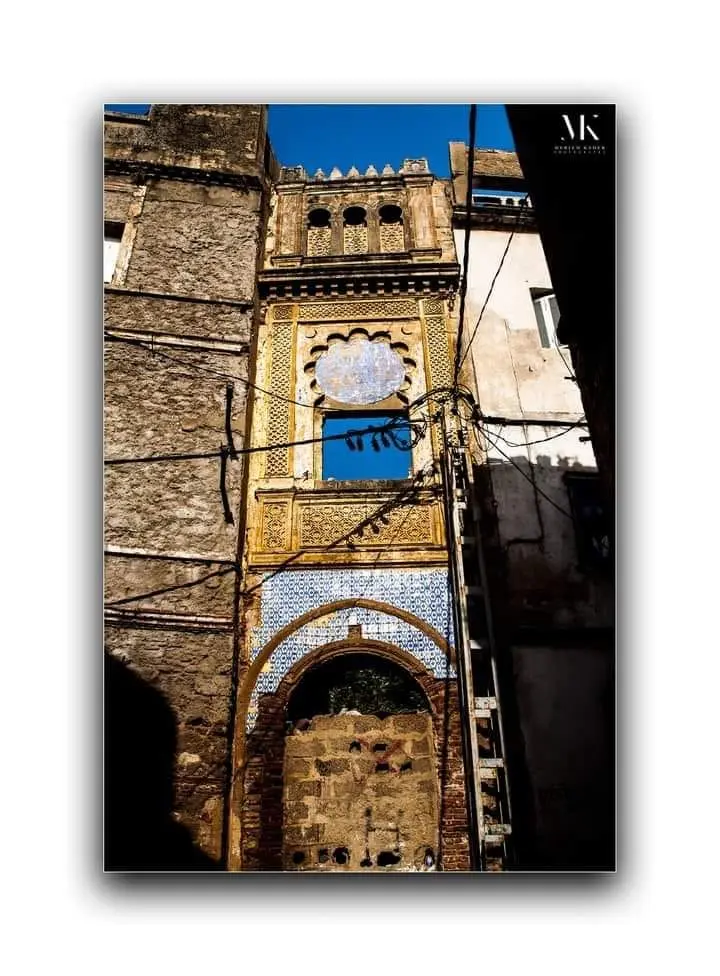
The saraya of Muṣṭafā al-Grombali in Annaba, Algeria — where the trilogy's protagonist rebuilt his life in exile
After losing his olive grove in Grombalia to confiscation, Muṣṭafā was exiled to Annaba in 1654. There, he built this saraya, which became a center of Andalusian culture and learning. The building stands today as physical evidence of the trilogy's historical foundation — the real places where fiction and history intersect.
The Motto
ولا غالب إلا الله — والملك لله أبداً
"There is no victor but God — dominion belongs to God, eternally."
The motto of the Nasrid kingdom of Granada, inscribed over 9,000 times in the Alhambra palace. This phrase carries through all seven novels — what remains when empires fall is not power, but memory.
The trees are still standing. Everything they witnessed is the story.
Get in Touch
Email: [email protected]
For press inquiries, podcast invitations, or academic collaboration.
Press & Podcast Resources
Download author photos, bio, and press kit for media use.