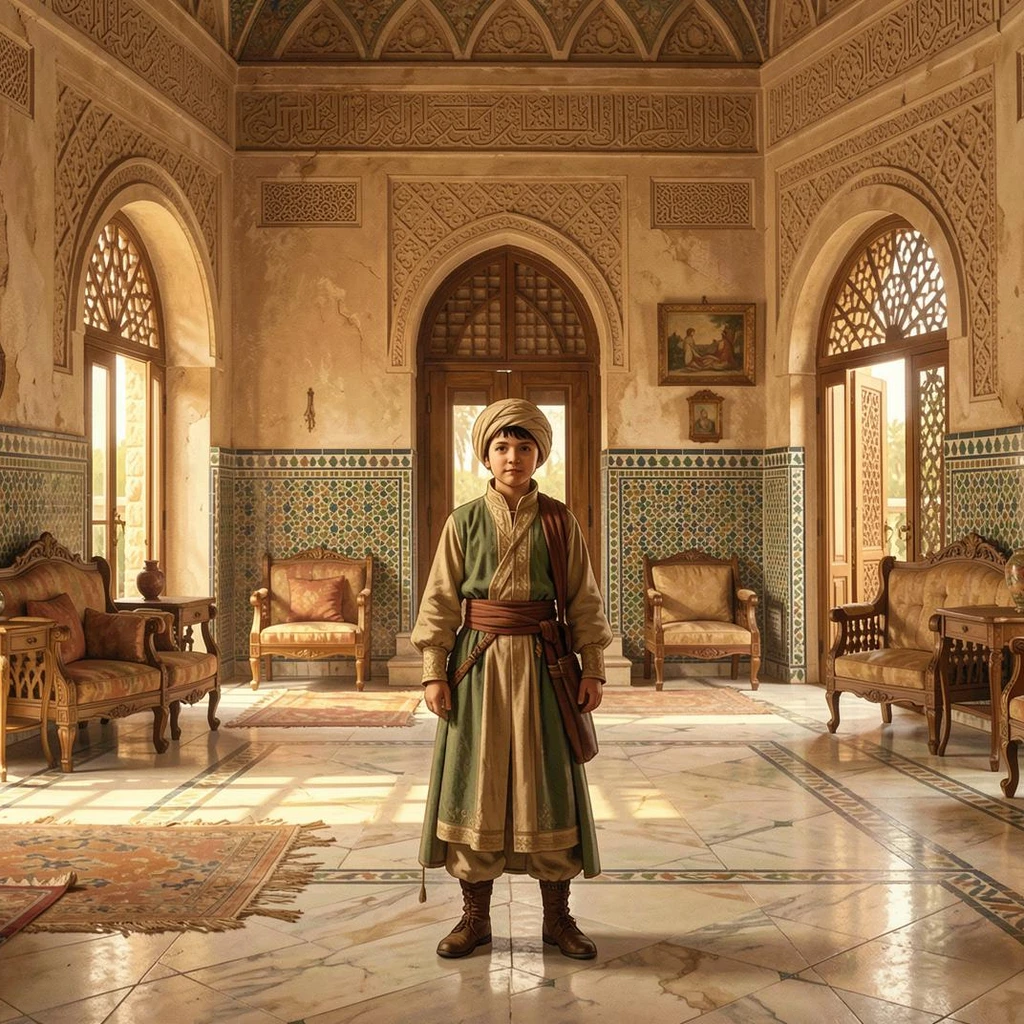
Tunis buried its Bey on September 16, 1814.
Ḥammūda Pasha’s body was washed, shrouded, carried through the streets of Tunis on a bier of cedar. The notables walked behind — Mamluk beys, merchant princes, religious scholars. The army marched in full regalia. The city watched from windows and rooftops.
The medina closed its shops. The souks fell silent.
The man who had ruled Tunis for thirty-two years was gone.
(Youssef Saheb Ettabaâ still lived. He would die in January.)
In the crowd, Mahmoud watched.
He was fifty-eight now. His hair was white, his face lined, but his eyes were sharp. He wore silk of emerald green, the color he had worn on that day in 1777, when he stood at Ali Pasha’s deathbed and heard the words that changed his life.
Ḥammūda is more accustomed to the management of affairs.
Thirty-seven years of waiting. Thirty-seven years of watching his cousin rule while he remained the “dean of the family,” a meaningless title that bought his silence.
Ḥammūda’s funeral passed through the streets of Tunis. Mahmoud walked behind the bier, a model of mourning, a portrait of loyalty. He bowed his head at the appropriate moments. He recited the Fatihah with the proper reverence.
He did not smile.
Late January 1815.
Youssef Saheb Ettabaâ died on January 23, after four months of suffering.
The grave was dug beside Ḥammūda’s. The stone was carved. The inscription read:
Youssef Saheb Ettabaâ Servant of Tunis Friend of the State Served the Beylik thirty-three years
Mahmoud walked through the cemetery alone on the evening of the burial. The sun had set, and the cemetery was empty. The graves of the Husaynid beys stretched before him — his grandfather Ali Pasha, his uncle Mohamed, and now Ḥammūda.
But Mahmoud did not stop at the royal tombs.
He walked to the smaller grave, the newer grave. The simple stone with the inscription he had seen carved that morning:
Served the Beylik thirty-three years
Mahmoud stood before the grave. He was fifty-eight now. His hair was white. His face was lined. He had waited thirty-seven years.
“You knew,” Mahmoud said to the stone. “You knew from the beginning. You placed Ḥammūda on the throne. You managed the succession. You maintained this way of governing.”
He was silent for a moment.
“You served him for thirty-three years,” Mahmoud said. “You served the state, not the man. You served the office, not the person. And when he died, you ensured your son would do the same.”
Mahmoud looked at the palace rising on the hill above the cemetery. The windows glowed with lamplight. The Divan was meeting there now, discussing the succession, discussing the future.
“My cousin is dead,” Mahmoud said to the grave. “The Moldavian is dead. The system they built — it endures. But the men who built it are gone.”
He paused.
“I remember what you told me in 1782,” Mahmoud said. “You told me: Serve the office, not the man. I remember what you said.”
Mahmoud looked at his hands — the hands of a man who had waited thirty-seven years, who had watched while his cousin ruled, who had nodded while his cousin built institutions that would outlast them all.
“The throne does not age,” Mahmoud said. “But the men who wait do. I am fifty-eight. I am not the man I was in 1777. I am not the man who accepted the pension, the villa, the meaningless title.”
He looked at the grave again.
“Did you know?” Mahmoud asked. “Did you know what I would become? Did you know what I would do when Ḥammūda was gone?”
The grave did not answer.
Mahmoud stood in the gathering darkness. The cemetery was silent. The city was silent. The only sound was the wind in the olive trees beyond the walls.
“You were a great man, Youssef Saheb Ettabaâ,” Mahmoud said. “You built something that will endure. But you are gone now. And I am here.”
He turned and walked toward the city, his green silk robes catching the last light of the dying day. The palace glowed on the hill above, waiting for him.
The next day, the Divan convened. Mohamed Larbi Zarrouk Khaznadar stood before the notables — the Khaznadar, now the most powerful man in Tunis, spoke the words Youssef Saheb Ettabaâ would have said.
Ḥammūda Pasha had left no heir. But he had a brother. Uthman Bey would succeed him.
The seal would pass from brother to brother.
Mahmoud stood in the Divan chamber. He was fifty-eight now. The eldest. The man who should have been Bey in 1777.
He looked at Uthman — his younger brother, the man who had not proven his worth through crisis. He looked at Zarrouk Khaznadar — the maternal uncle of the princes, the treasurer who had engineered the succession in 1777, who now engineered it again.
Mahmoud said nothing. He bowed to Uthman. He accepted the succession. His face gave nothing away.
The city watched. The notables watched. Everyone watched.
Weeks passed. The autumn deepened. Uthman ruled. Mahmoud attended councils, received honors, nodded at decisions. He said nothing. He waited.
Then came the night of December 12.
Winter had come to Tunis. The palace was quiet. Uthman Bey had ruled for three months. The notables were content.
Mahmoud Bey sat in his villa on the night of December 12. He was fifty-eight years old. He had waited thirty-seven years for this night.
His villa was dark, lit by a single oil lamp. The emerald silk robe lay across his lap — the same green he had worn in 1777, when he stood at his uncle Ali Pasha’s bedside and heard the words that passed him over.
Ḥammūda is more accustomed to the management of affairs.
Thirty-seven years.
Mahmoud had sent his sons away. Hussein and Mustafa were at their country estates, far from Tunis, far from what would happen tonight. They would return in the morning. They would find their father the Bey.
The villa was silent. Mahmoud sat alone.
He did not pace.
He did not pray.
He sat.
The lamp flame trembled in the still air, casting shadows that moved across the walls like ghosts of the years that had passed. Mahmoud touched the silk of the robe across his lap — smooth, cool, the color of new leaves in spring. The color of the dynasty.
He thought of Ḥammūda.
Not of Ḥammūda the Bey, not of Ḥammūda the cousin who had ruled for thirty-two years while Mahmoud waited.
He thought of Ḥammūda the boy.
They were twelve, riding out from Bardo Palace toward Cap Bon, the summer wind carrying the scent of pine and sea. Mahmoud’s horse was a black stallion, high-spirited and nervous — a gift from his father, who believed difficult mounts made strong riders. Ḥammūda rode a chestnut mare, steady and patient, chosen by the grooms for a boy who had never sat a horse.
The road to the cape wound through hills dusted with wildflowers. Red poppies. Yellow chamomile. Purple thistle. The cousins rode in silence until they reached the crest where the Mediterranean stretched blue and endless to the north.
Ḥammūda’s mare stumbled on loose stones.
Mahmoud reined in and turned back. His cousin had righted himself, was dusting off his tunic, looking embarrassed.
“Your seat is too forward,” Mahmoud said. “You grip with your knees. You must trust the horse.”
Ḥammūda looked up, and in the sunlight Mahmoud saw his own face reflected — the same nose, the same chin, the same eyes that looked out from the portraits of their grandfather Ali Pasha. But Ḥammūda’s eyes held something Mahmoud’s did not: a calm, a stillness, a patience that would someday make him a ruler who could wait nine years for Venice to pay.
“Show me,” Ḥammūda said.
Mahmoud dismounted and adjusted his cousin’s position in the saddle. “Lean back. Let your weight settle. Feel the horse beneath you. If you are rigid, she cannot move. If you trust her, she carries you.”
Ḥammūda tried. The chestnut mare stepped forward, then stopped.
“You are thinking too much,” Mahmoud said. “Ride with your body, not your mind.”
Ḥammūda laughed — a boy’s laugh, unselfconscious and bright. “That is easy for you to say. You were born on a horse.”
“And you,” Mahmoud said, “were born to rule.”
The laughter died on Ḥammūda’s face. “What do you mean?”
“Nothing,” Mahmoud said. “Mount. We ride to the cape.”
They rode together along the coastal road, the Mediterranean glittering on their right, the hills rising on their left. The smell of salt. The cry of gulls. The heat of the sun on their shoulders. They spoke of hunting, of falcons, of the fleet their grandfather had built, of the women they would someday marry.
They did not speak of the throne.
They did not speak of the words their grandfather would speak on his deathbed seven years later.
They rode as boys ride, careless and free, under a sky so blue it hurt to look at it.
Mahmoud sat in the dark villa and remembered the blue of that sky. He remembered the sound of Ḥammūda’s laugh. He remembered the smell of horses — the black stallion’s sweat, the chestnut mare’s dusty coat. He remembered thinking, as they rode side by side toward Cap Bon: We are brothers. We are blood. We are the same.
The lamp flickered.
The memory dissolved into shadows.
Mahmoud touched the emerald robe across his lap. Ḥammūda was dead these three months. Buried with what he had built, the institutions he had forged, the patience that had outlasted Venice, that had balanced factions, that had made Tunis strong while Mahmoud waited.
Tonight, the waiting ended.
Tonight, Uthman slept in the harem, surrounded by guards who had been paid, by servants who had been bought, by a dynasty that did not know it was ending. The palace was two miles away. Mahmoud would not hear the blades. He would not hear the cries. He would not hear the blood on the sheets.
He did not need to hear.
He had built this moment for thirty-seven years. The shadow court. The network of loyalty. The investments in grievances. The cultivation of men who felt overlooked, men who felt passed over, men who would serve the Bey who finally rewarded them.
The lamp burned lower. The shadows lengthened across the room.
Mahmoud did not sleep.
He sat in the chair, the emerald robe across his lap, and watched the darkness.
He thought of the blue sky over Cap Bon. He thought of a boy’s laugh. He thought of the way the chestnut mare had stepped forward, then stopped, and how he had reached up to adjust his cousin’s seat, and how for a moment they had touched — his hand on Ḥammūda’s knee, Ḥammūda’s hand on his shoulder — two boys who did not yet know that one of them would rule and the other would wait.
He sat.
The lamp flickered.
He did not move.
Dawn came.
A knock at the door. Soft. Respectful.
“Excellence.”
A servant’s voice from the threshold.
Mahmoud did not turn. He sat in the same chair, the emerald silk robe across his lap, the lamp burned to oil.
“It is done,” the servant said.
Two words. That was enough.
Mahmoud stood.
He did not smile.
He lifted the emerald silk robe from the chair and drew it over his shoulders. The fabric settled around him, green and heavy. He smoothed the folds with hands that did not tremble.
He did not look in the mirror.
He walked to the door. The lamp burned behind him, a single flame in the darkness.
The villa was silent. The courtyard was empty. The night air was cold on his face.
He walked out.
The palace was quiet. The council chamber was empty. The ministers had gone to their homes, exhausted by the night’s events. The guards stood at their posts, but they watched the doors with new eyes — eyes that measured this man who had taken the throne not from death but from life, not from war but from a brother’s blood.
Mahmoud left the council chamber. He walked through the corridors of Bardo Palace alone.
He did not go to the harem. He did not go to his quarters.
He walked to the garden.
The Andalusian olive trees Ḥammūda had planted were taller now. They had grown from saplings to adults under Ḥammūda’s care. They stood in rows, their branches silver-green in the moonlight, their roots deep in the soil of Tunis.
Mahmoud walked to the edge of the grove.
He did not touch the trees.
He had waited thirty-seven years for this night. He had built networks of loyalty in the shadows while Ḥammūda built networks of institutions in the light. He had cultivated grievances. He had invested in the men who felt overlooked, the men who felt passed over, the men who would serve the Bey who finally rewarded them.
He had imagined this night a thousand times.
He had imagined the feeling of the seal around his neck. He had imagined the weight of the throne beneath him. He had imagined the satisfaction, the justice, the rightness of finally being the man who should have been Bey in 1777.
But he had not imagined this.
A servant crossed the far end of the courtyard — a boy carrying ledgers toward the waqf office. He did not look at Mahmoud. He walked the same path he walked every night, because the morning distribution would begin at dawn as it had begun every morning for twenty years.
Somewhere beyond the walls, the hospital in Halfaouine was admitting patients. The madrasa students were rising for the night prayer. The fountain in the courtyard splashed its rhythm into the darkness.
The machine did not know that a different man ruled. The ledgers did not know. The physicians did not know. The fountain did not know.
Mahmoud had imagined this night for thirty-seven years. He had imagined the seal around his neck, the throne beneath him, the state bending to his will.
He had killed Uthman for this. And the waqf clerk still opened the ledgers at dawn.
He looked at the olive trees in the darkness. Ḥammūda’s trees. They stood in their rows, silver-green in the moonlight, indifferent to the man who walked among them.
Mahmoud turned from the grove. He walked back toward the palace, his green silk robes catching the moonlight. The night was cold. The air was still.
He went inside.
The courtyard of Bardo Palace was quiet in the spring morning.
Aisha knelt in the earth. She was fifty-seven now, her hair streaked with gray, her hands lined but steady. Beside her lay an olive sapling — not one of the ceremonial Andalusian trees Ḥammūda had planted along the palace avenues, but a common Tunisian tree from the Cap Bon nurseries. Small. Hardy. Roots ready to take hold.
She pressed earth around the sapling’s roots with both hands, firming the soil.
She reached for the clay jug. She poured water — slow, careful, letting the earth drink. When the jug was empty, she stood. She wiped her hands on her caftan, leaving streaks of damp earth on the silk.
She looked at the sapling. Small. Newly planted. Uncertain in the spring earth.
My husband said: Plant more trees. He meant: build what endures. She had learned something different at Mornaghia, in a dry summer, over a canal dispute: sometimes what endures is the choosing, not the building.
Aisha walked into the palace alone.
In the zawiya archives, Aisha sat with the records keeper. The room smelled of paper and ink and dust. Shelves lined the walls, holding the account books of endowments established over three decades — mosques, madrasas, hospitals, fountains.
The keeper placed a ledger on the table. “The waqf accounts from the past year, sayyida.”
Aisha opened the book. She read the entries slowly. Revenue from the Sfax olive presses. Disbursements to the Halfaouine hospital. Maintenance for the Saheb Ettabaa Mosque. The ink was precise, the numbers careful. Ḥammūda’s system functioned without him.
She turned the pages. More entries. More accounts. The institutions he had built continued to feed the people he had left.
The waqf from Sfax funded the soup kitchen that fed three hundred families every Friday. The endowment from the Cap Bon estates paid the salaries of twelve Quranic teachers. The naval academy Ḥammūda had founded trained the officers who protected the coast from Algerian raiders.
The institutions were alive.
“Everything is in order,” Aisha said.
She closed the ledger. She did not sign. She did not command. She only read.
She stood and walked to the door, then paused. “Do you have the accounts from the Cap Bon estates?”
The keeper hesitated. “Those are private, sayyida. The Bey’s personal properties.”
Aisha was silent for a moment. “My husband’s personal endowments funded the naval academy. The sailors trained there protect the coast. Their families eat because of what he gave.”
“Yes, sayyida.”
“Then bring me those accounts,” Aisha said. “I will read them too.”
She walked out into the courtyard. The sapling stood where she had planted it. She did not touch it. She did not water it. She only watched the leaves move in the wind.
Then she returned to the palace.
The hands that had managed the Mornaghia estate for thirty years — the hands that had organized the harem message during the Janissary revolt, the hands that had touched the cedar chest where Ḥammūda’s charter lay unread — these hands knew the weight of what survived.
She walked into the garden. Her sapling stood in the spring earth, its leaves moving in the wind.
In 1815, Mahmoud Bey ruled.
He ruled differently than Ḥammūda. He ruled differently than his ancestors. He ruled as a man who had waited thirty-seven years, who had watched the institutions function, who had learned what Ḥammūda had learned.
He did not purge. He did not massacre. He did not become a tyrant.
He became something else.
He issued one decree in his first year: the succession would pass from father to eldest son. No council. No delay. No thirty-seven years of waiting. The succession was clear.
The notables accepted it. The Mamluks accepted it. The method accepted it.
Then he made three decisions that showed how he would rule.
First, he confirmed the waqf endowments. Every document Ḥammūda had signed was reconfirmed. Every madrasa, every hospital, every fountain — the endowments were secure.
Second, he kept the ministers Youssef had trained. Hamida Ghammed continued to command the city. Ali Mhaoued continued to command the suburbs. Mustapha Khodja continued to lead the army. The men who knew the institutions continued to serve them.
Third, he maintained the treaties. With Venice. With France. With Britain. Tunis traded with all nations and allied with none.
The institutions survived. What Ḥammūda built endured.
When Mahmoud died in 1824, his son Hussein inherited the throne. Not a cousin. Not a brother. A son. The eldest son.
The succession was clear. The dynasty was secure.
In 1830, a French ship arrived at the port of Algiers.
It was not a trading ship. It was a fleet — ships of war, soldiers in red uniforms, cannon pointing at the city walls.
The news reached Tunis within days. The French had come with thirty thousand soldiers and a fleet of six hundred ships — more than any force that had touched North African shores since the Roman legions.
Algiers fell after three days.
Mahmoud was dead by then. He had died in 1824, passing the throne to his son Hussein. Hussein ruled now. Hussein watched the French invasion with fear.
“The dismantling has begun,” Hussein said.
His advisor stood beside him. “The French have taken Algiers. Will they take Tunis?”
“Not yet,” Hussein said. “But everything will be tested. The institutions will be tested. The trees will be tested.”
He walked to the palace courtyard. The olive tree Ḥammūda had planted still stood, its bark rough and weathered, its branches reaching toward the sky. Hussein touched the bark. Rough under his palm. The tree was still alive.
Among the refugees was a boy of ten, thin and weathered, carrying nothing but his grandfather’s Quran. He was from the mountains of Kabylia, where the Algerians resisted the French. His grandfather had fought the invaders and died. The boy had fled with his mother, walking across the border into Tunisia, following the coast eastward toward safety.
The boy from Kabylia walked east, toward the desert, toward a shaykh who spoke of networks beyond states.
Hussein touched the olive tree. The roots held. The tree lived.
NOVEL 3: THE REFORM — END
The Andalusian Cycle continues in Novel 4: THE SUREST PATH (1837–1890)