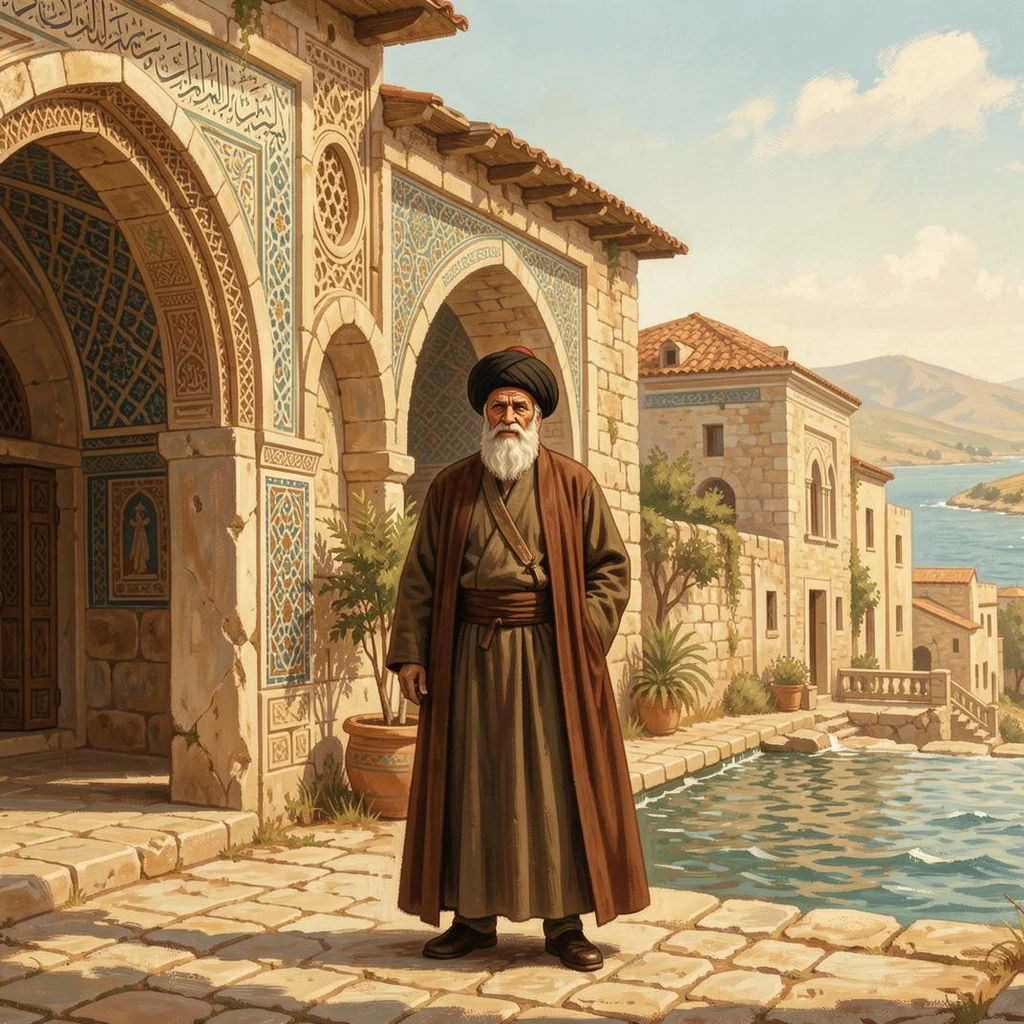
Crete, September 1669. Twenty-one years.
The siege lines were a city themselves.
Ottoman encampments stretched back two kilometers from the walls of Candia — the capital of Crete, called Heraklion by the Greeks. The encampments had streets, markets, mosques, bathhouses. They had existed for so long that children had been born in them, grown to adulthood, and married without ever seeing the inside of the city walls.
Fazıl Ahmed’s father had begun this siege in 1648. He was here to finish it.
Defterdar Ahmed Pasha had been arranging provisions for this operation for years. Grain ships arrived from Anatolia on schedule. Livestock was driven from the island’s interior to feed the army. Weapons were repaired, replaced, distributed. The bureaucracy of supply and maintenance was as complex as any provincial administration.
Kaplan Mustafa commanded the naval blockade. The Ottoman fleet prevented the Venetian relief ships from reaching the city. The Venetians tried — year after year, fleet after fleet — but the blockade held.
Kethüda İbrahim Pasha stood beside the grand vizier in the command center. He was the household’s lieutenant — the man who received Fazıl Ahmed’s orders and translated them into action across the siege lines.
Fazıl Ahmed walked the siege lines. He was thirty-four years old. He had been fourteen when his father first laid siege to this city. Twenty years of his life, compressed into the circumference of these walls.
The personal guards stood outside the grand vizier’s tent.
One hundred Albanian men, recruited specifically from able-bodied young men of the highlands. They spoke Albanian to each other. They prayed in Albanian. They carried their weapons with the ease of men who had grown up holding them.
Fazıl Ahmed had placed Albanian commanders throughout the siege forces. The village was small. Everyone knew everyone. A promise was not just words — it was survival.
Among the Albanian garrison commanders was a man whose name the chronicle did not record. He was thirty years old, from the mountains near Shkodër. He had served in the Ottoman army for twelve years. He had fought in Hungary, in Anatolia, and now here in Crete.
He had a young son — Yusuf, twelve years old — who had grown up in the siege camp. The boy knew nothing of Albania except the language his father spoke at night. He knew the smell of gunpowder and salt water. He knew the rhythm of the siege — the cannon fire at dawn, the skirmishes at dusk, the long quiet of the night.
The boy sat near the tent’s entrance, mending a tear in his father’s boot. The ağa from Mati arrived with a message from the grand vizier. The boy’s father stood, received the message, reached into his pouch, and pressed a small purse into the ağa’s hand.
“Yusuf,” his father said, without turning around. “Pass me the thread.”
The boy found the spool without looking up. He handed it to his father. Their fingers brushed — the father’s calloused from twelve years of war, the son’s still smooth.
The purse was not payment. Yusuf had seen his father refuse payment from the treasury three times. This was something else.
“Your harvest?” the ağa asked.
“My sister’s wedding,” the boy’s father said. “A small thing.”
The ağa nodded. He would remember the wedding. He would send a gift when the time came. Not because he had to. Because he chose to.
Yusuf stitched the boot. He did not look up. He had learned that you saw more when people thought you were not watching.
He was twelve years old. He was learning to carry two identities without fully belonging to either.
The ağa from Mati looked at the boy, then at the father. “When this war ends,” he said, “where will you go?”
The father did not answer immediately. “There are always wars,” he said. “And there are always places that need men who know how to govern.”
Yusuf tied off the thread. He bit through the knot.
He only knew that his father had trusted him with the boot.
Three years before the fall.
Yusuf was sixteen now. His shoulders had broadened. His voice had deepened. His father had begun bringing him on errands beyond the siege camp — not into battle, but into the spaces where the army’s business was conducted.
They rode to the grand vizier’s compound together. The guard at the gate recognized Yusuf’s father, waved them through. Inside, the courtyard was full of men coming and going — messengers, treasury scribes, commanders reporting for duty.
A young Albanian soldier stood near the entrance, waiting. He was perhaps eighteen, with the look of the highlands about him — the fair skin, the light eyes of the Mirdita. He carried a pack. He wore the rough wool of a village, not the uniform of the army.
Yusuf’s father dismounted. He greeted the young soldier in Albanian.
The soldier’s face changed. The tension in his shoulders dropped. He answered in the same tongue.
Yusuf watched from horseback. He did not understand all the words — the Albanian of Mirdita was different from the Mati dialect his father spoke — but he understood the tone. This was a villager greeting a villager, far from home.
A ağa emerged from the grand vizier’s tent. He carried a coffee cup. He spoke to the young soldier in Ottoman Turkish.
The soldier did not understand. He looked toward Yusuf’s father.
Yusuf’s father translated. Then he translated the ağa’s response. Then the soldier’s answer again.
Back and forth, the three of them building a conversation across three languages — Albanian, Turkish, and the Greek that the ağa switched to when Turkish failed.
Yusuf watched the exchange unfold. He saw the ağa offer coffee. He saw the soldier drink. He saw the ağa ask about the soldier’s village, his family, his journey to Crete. He saw the soldier answer, and then ask a question about the ağa’s own origins.
The coffee was finished. The ağa reached into his purse and withdrew a small pouch of gold. He pressed it into the soldier’s hand.
This was not payment. Yusuf had seen his father refuse payment from the treasury. This was something else.
The soldier bowed. The ağa placed a hand on the soldier’s shoulder — a brief touch, light as a falling leaf, but the soldier straightened under it as if bearing a weight.
The ağa spoke to a scribe, who wrote something in a ledger. The soldier was given a place to sleep, a meal, a position in the Albanian garrison.
Yusuf’s father mounted his horse. They rode back toward the siege camp in silence.
“What was that?” Yusuf asked.
His father did not answer immediately. They rode past the supply wagons, past the artillery lines, past the tents where thousands of men slept and woke and trained for a war that had lasted longer than Yusuf had been alive.
“They call it intisab,” his father said finally. “The bond.”
Yusuf rode beside him, thinking of the pouch of gold, the coffee, the hand on the shoulder.
“I saw the gold,” Yusuf said. “Was he buying him?”
“No,” his father said. “He was acknowledging him.”
Yusuf waited for more.
“The difference is everything,” his father said.
He reined in his horse. They stopped at the edge of the siege camp, where the Albanian tents circled the cooking fires. The smell of roasting meat and coffee rose in the evening air.
“You know how the highlands work,” his father said. “A man gives his word. He keeps it. That word is besa.”
Yusuf nodded. Every child in the highlands learned this before they learned to read.
“The vizier’s household is the village,” his father said. “The bond is the besa. You carry it with you when you leave.”
Yusuf turned this over. He had seen the village. He had seen how the village held.
“The empire is large,” his father said. “But the vizier has found a way to make the large village hold.”
He looked toward the grand vizier’s compound, visible in the distance as a cluster of tents on the hillside.
“The bond is hereditary,” his father said. “If that soldier serves well, his sons will serve. The bond passes from father to son, like besa.”
Yusuf did not speak. He watched the tents on the hillside.
He was sixteen years old.
They rode into the Albanian camp. His father dismounted. The evening fires were burning. The men were gathering.
Yusuf sat by his father’s fire and listened to the talk of war and harvest, of villages left behind and battles yet to come. He did not speak of what he had seen.
But he remembered.
He remembered the pouch of gold changing hands. He remembered the coffee shared. He remembered the hand on the shoulder, light as a leaf, heavy as a promise.
He remembered the word his father had used: intisab.
The bond.
Somewhere in the compound, the young Albanian soldier slept, bound now to a household that would remember his name.
Yusuf did not yet know where he would carry this memory.
The Venetian garrison starved.
The relief fleet did not come — blocked by Kaplan Mustafa’s ships, scattered by storms, driven back by the sheer length of the siege. Twenty-one years was longer than any city could hold. The Venetian commander, Francesco Morosini, had tried every strategy. Nothing had worked.
On the morning of September 27, 1669, the city opened its gates.
Fazıl Ahmed entered Candia on horseback, surrounded by the household commanders. He was thirty-four years old. He walked through the gate that his father’s army had first approached when he was fourteen.
He did not celebrate.
He organized.
The administrative structure began within hours. Albanian commanders were placed in the garrison. The local Christian population was granted autonomy under Ottoman rule — they could keep their churches, their laws, their property, in exchange for taxes and loyalty. Supply lines were established. Tax registers were begun.
The city’s population watched from their doorways. They had expected sack and massacre. They had seen what happened when cities fell.
What they saw instead was efficiency. Men with account books moved through the streets. Men with lists inspected the storehouses. Men who knew how to turn a conquered territory into a paying province without destroying what made it worth conquering.
The Venetian flag was lowered. The Ottoman flag was raised.
Fazıl Ahmed did not watch the ceremony. He was in his tent, reviewing the grain accounts.
Scaffolding clung to the base of the minaret. Stone dust hung in the air.
Turhan Sultan walked through the courtyard, her veils lifted against the grit, her hands clasped at her waist. She was forty-two years old. She had been Valide Sultan for twenty-one years. She had ruled this empire as regent for five of those years, and now she ruled it through architecture.
The Yeni Mosque — the New Mosque — was complete. The dome had been finished in 1665. Four years of construction under her patronage, four years of her personal treasury emptied into stone and glass and calligraphy. She had supervised the architects, reviewed the plans, chosen the site.
She walked to the base of the minaret, where the stone was still rough, where the carver’s tools waited. She thought of her fortresses at the Dardanelles — Seddülbahir and Kumidülbahir — completed years before, her name cast in the stone, seen by every ship that passed through the straits. The inscription she would commission today would join them — fortresses and mosque, straits and harbor.
The mosque stood on the Golden Horn, near the Spice Bazaar, where the ships from Egypt unloaded cinnamon and pepper and coffee, where the merchants of Istanbul bought and sold the goods of three continents.
It was her answer to the Venetian blockade.
The Venetians had controlled the seas. The Venetians had dominated the trade routes. The Venetians had held Crete for twenty-one years, bleeding the empire’s treasury, bleeding the empire’s pride.
The marble columns rose around her. The dome arched overhead. Stone, not wood. Permanent, not temporary.
She walked through the main courtyard. The marble columns were rising — quarried on the island of Marmara, carried across the Sea of Marmara on ships, unloaded by dockworkers who carried them up the hill on their shoulders. The arches were taking shape — the work of Armenian stonemasons who knew how to carve the Ottoman curves because their grandfathers had built the mosques of the previous century.
She touched a column. The stone was cool against her palm. She thought of the buildings of her childhood — the wooden churches of the snowy forests, the temporary structures that rotted and collapsed and were rebuilt, over and over, because nothing lasted in the land where she was born.
A messenger arrived through the scaffolding — dust-stained, breathless, carrying a dispatch from the fleet.
Turhan Sultan took the letter. She broke the seal. She read:
Candia has fallen. The Venetian garrison surrendered on September 27. The Ottoman flag rises over the city. Fazıl Ahmed Pasha sends word: The siege is ended. The island is ours.
She read the words once. She set the letter on a nearby table, where the workmen’s tools lay — hammers and chisels, trowels and levels. The letter rested beside them, a small rectangle of paper against the stone and iron.
She looked up at the mosque rising around her.
Her husband Sultan Ibrahim had begun the siege of Crete in 1648. He had died before it ended. She had borne his son, Mehmed IV, who was now twenty-seven years old. She had ruled as regent when he was a child. She had recalled Köprülü Mehmed from retirement when the empire was dying.
She had done all of this, and now Crete was hers.
Not hers personally. Hers as the empire’s. Hers as the Valide Sultan who had emptied her personal treasury to build a mosque that would outlast her, outlast her son, outlast the empire itself.
The architect approached — a Greek convert named Mustafa Ağa, born in Thessaloniki, converted as a child, educated in the palace school. He spoke Greek with her, and she answered in the same language, the language of her childhood that she had almost forgotten.
“Valide Sultan,” he said. “The dome is ready for the inscription.”
She nodded. She had chosen the words months before, before she knew whether Crete would fall, before she knew whether the empire would survive the year.
“Come,” she said.
She led him to the base of the minaret, where the stone was still rough, where the carver’s tools waited. She spoke the words in Arabic, and he translated them into Greek, and she nodded because she understood both:
There is no victor but God.
She had first heard these words as a child, in the snowy forests of her birth, where the people spoke a language she no longer remembered and worshipped in wooden churches that no longer stood. She had heard them again as a slave in the caravans of the Crimean Tatars, from the Muslim merchants who traveled the same roads. She had heard them again in the palace of Kösem Sultan, where she learned that power was not held but wielded.
She heard them now as the Valide Sultan who had emptied her treasury to build a mosque that would carry these words across the centuries.
The words would be carved in stone. The stone would outlast her. The words would outlast the empire.
“Carve them,” she said.
Mustafa Ağa bowed. He called the carver — an Armenian named Harutyun, whose father had carved the inscriptions in the Şehzade Mosque, whose grandfather had carved the inscriptions in the Süleymaniye.
Harutyun prepared his tools. He tested the chisel against the stone. He looked at the Valide Sultan for permission.
She nodded.
The chisel struck the stone. The first letter appeared, the letter that began wāw, the conjunction and.
She watched the letter form in the stone. She thought of the snowy forests of her childhood, where nothing lasted. She thought of the wooden churches that rotted and collapsed. She thought of the language she had forgotten, the name she had lost, the girl she had been when the slavers came.
She thought of the journey — from the wooden churches to the stone mosque, from the periphery to the center, from the temporary to the permanent.
Her hand went to the unfinished stone. She touched the place where the next letter would appear.
The stone was rough against her palm. The inscription was incomplete. But the words were there, waiting to be revealed.
She was forty-two years old. The mosque had been completed four years ago, in 1665. She would live for fourteen more years. The stone would survive the empire.
The chisel struck again. Stone dust fell.
The waqf endowments were established within the month.
Ottoman mosques were founded. Their maintenance would be funded by agricultural revenues from the island’s plains — olive groves, vineyards, wheat fields. The structure was familiar. It was what his father had built in every conquered territory. It was what the household had always done.
The Church of St. Titus, near the city center, was converted to a mosque. The building was not vandalized. The stone was not broken. The function changed. The structure remained.
The motto was carved above the door.
Istanbul received him as a hero.
The crowds lined the streets. The cannon fired salutes. The sultan received him in the Divan and praised him as the conqueror of Crete. His reputation, damaged by Szentgotthárd five years earlier, was restored.
Fazıl Ahmed did not particularly care about either the damage or the restoration.
He was forty-four years old. He had seven years left. He did not know this.
What he cared about was the account book from the Cretan administration, which showed the waqf revenues stabilizing at a level that would sustain the garrison and the local Islamic institutions without drawing on the imperial treasury.
He sat at his desk in the palace, reviewing the numbers. The columns balanced. The income exceeded the expenses. The endowment would maintain the mosques and the garrison and the schools for as long as the olive trees produced and the wheat grew.
The door opened. A messenger arrived with a petition from the Anatolian frontier — a dispute over tax collection between two provincial governors.
Fazıl Ahmed set the Cretan account book aside. He opened the petition. He read the details. He picked up his pen.
The work continued.
That evening, Fazıl Ahmed walked to the Valens Aqueduct.
It had become a habit in the years since his father’s death — coming here when the weight of the office pressed, standing beneath the arches, watching the water move through channels that had been cut sixteen centuries before.
He was not triumphant. He was quiet.
The water had been flowing since the Byzantines built this thing in 378. It had flowed when Justinian was emperor. It had flowed when Mehmed the Conqueror rode through the city. It had flowed when his father purged the empire. It had flowed when he himself lost at Szentgotthárd and won at Crete.
The water did not stop.
Fazıl Ahmed stood beneath the arch and watched the water flowing above him — carried across the valley on stone that had held since before Islam, before Christianity, before the city was called Istanbul. It had been called Byzantium then. It was called Constantinople when his father’s father was born. Names changed. Emperors changed. Religions changed.
The water did not change.
He remembered Crete — the smell of salt and siege smoke, the waqf endowments taking root, the self-funding island. He remembered the boy he had seen in the siege camp, the Albanian commander’s son, stitching the boot while his father received the ağa’s message. The boy had watched everything.
Fazıl Ahmed did not know this. He only knew the water was moving.
Three weeks after the fall of Candia. The Ottoman garrison had been established. Ali Turki — now twenty-nine, recently assigned as Agha of Kef — stood on the harbor wall, watching the ship that would carry him to Tunis.
He had received his orders that morning. The decree from the Husaynid bey in Tunis: Report to Kef. Take command of the garrison. Protect the border.
He did not know what Kef was. He asked a Tunisian officer.
“A border town,” the officer said. “The highest city in Tunisia — six hundred meters above the sea. The kasbah dominates the valley. You can see Algeria from the ramparts.”
Ali Turki had spent his life in Crete — an island surrounded by sea. Now he was being sent to the mountains, the border, the edge of the empire.
It was evening. He walked through the quarter near the harbor where the Maghrebi soldiers camped — men from Tunis, Tripoli, Fes, who had come east with the Ottoman fleet and were now waiting to go home.
One of these men was singing.
He sat on a stone wall with his back to the harbor, his face toward the west. He was not performing. He sang the way a man sings when he is far from home and the walls of an enemy city are finally down and he is still alive and does not know what to do with that fact. He sang quietly, almost to himself, the melody drifting on the evening breeze.
Ali Turki passed. He slowed.
He did not know the tune. It was not Albanian. It was not Turkish. It was something older and further west. The melody moved in a way that Ottoman music did not move — with a particular turn at the end of each line, a resolution that did not resolve, that opened rather than closed.
He stopped. He listened until the song ended.
The man noticed him. There was a moment of mutual acknowledgment between soldiers.
Ali Turki asked, in halting Arabic, what the song was.
The man said only: from Andalusia.
Ali Turki did not know where Andalusia was. He knew the word the way soldiers know words from places they have not been — as a direction, a rumor, a wind from the west.
“You are going to Kef,” the Maghrebi said.
Ali Turki nodded. The orders had come that morning.
“Eighty kilometers east,” the Maghrebi continued. “A town called Testour. My people founded it. Sixty years ago.”
He sang another verse. The Arabic was the Andalusian dialect — preserved in the exile communities of Testour, Sloughia, Tebourba. The language of Córdoba and Granada, carried across the sea in 1609, when Spain expelled the Moriscos.
Ali Turki listened. He did not understand the words.
“They tell me Kef is old,” Ali Turki said.
The Maghrebi laughed. “Everything is older than Córdoba. The Romans called it Sicca. The Carthaginians called it Sicca before that.”
He pointed west, toward the setting sun. “Forty kilometers that way, you cross into Algeria. The border shifts. The mountains remain.”
Ali Turki looked toward the west.
“The garrison at Kef,” Ali Turki said. “What do I need to know?”
The Maghrebi thought for a moment. “The kasbah dominates the city. The permanent garrison — the oujaq — was established in 1637. You will command men who have been there for thirty years.”
He paused. “They do not like officers from the coast.”
“Why?”
“Because officers from the coast stay for two years, then leave. The mountain men stay forever. Their grandfathers built the walls. Their fathers patrol the border. They marry the local women. They bury their dead in the local earth.”
He sang another verse. The melody rose and fell like wind over stone.
“There is a saint,” the Maghrebi said. “Sidi Bou Makhlouf. His tomb is in the city. The people pray to him.”
“Do the Algerians come raiding?”
“Every generation,” the Maghrebi said. “The border shifts. The mountains remain.”
Crete — the twenty-one year siege, the Venetian blockade, the final assault. His father, who had served Hussein I in Candia. The ağa’s hand on his shoulder — the bond recorded in the register.
Now he was being sent to Kef. To the mountains. To the border.
“What will I find there?” Ali Turki asked.
The Maghrebi smiled. “The edge.”
He sang the final verse. The oud strings went still.
The Maghrebi stood. He dusted off his robe.
“Go to Kef,” he said. “Learn from the mountains. They have survived longer than any empire.”
Ali Turki walked on toward the harbor. The water moved against the stone. The ship waited at the dock. The crossing would begin at dawn.
The kasbah dominating the valley. The border forty kilometers west. The ship would sail at dawn.
The song was eight hundred years old and had crossed a sea he had never crossed. The mountains were older than the song.
The ship docked in Tunis. Ali Turki rode west — one hundred seventy-five kilometers through the interior, following the Roman road that had become the Ottoman road, the path that soldiers had taken for two thousand years.
The elevation rose. The air grew thin. The city appeared on the horizon — white buildings climbing the slope, dominated by the kasbah on the heights.
Six hundred twenty-seven meters above sea level. The highest city in Tunisia.
Ali Turki rode through the gates. The city was older than Candia — older than the Venetian walls he had besieged, older than the fortress he had watched fall. The Romans had built the first fort here. The Carthaginians had built the first walls. The Byzantines had built the first churches.
He found the garrison commander — an old man with a face weathered by thirty years of mountain wind. The commander had served in Kef since the oujaq was established in 1637. He had fought Algerian raiders. He had survived the plague of 1655. He had buried two sons in the local earth.
“You are the Agha from Candia,” the commander said.
Ali Turki nodded.
“Crete is an island,” the commander said. “Kef is a mountain. On an island, the sea protects you. In the mountains, you protect yourself.”
He showed Ali Turki to the ramparts. From the kasbah walls, the valley spread out in every direction — east toward Tunis, west toward Algeria, north toward the coast, south toward the desert.
“Algeria is forty kilometers that way,” the commander said, pointing west. “When the Algerians come raiding, we see them from here. We have time to sound the alarm. We have time to mobilize the garrison.”
He pointed to the Roman ruins on the slope below — the fallen columns, the broken arches, the stones that had once been a temple, then a church, then a mosque, then ruins.
“Everything that has tried to hold Kef has fallen,” the commander said. “The Carthaginians fell. The Romans fell. The Byzantines fell. The Arabs remain. The saints remain. The mountains remain.”
“You will stay,” the commander said. “You will marry. You will have children. Your children will be of Kef, not of Crete. You will forget the island. You will remember the mountains.”
He showed Ali Turki a map carved into a wooden panel — the territory under the garrison’s protection. Kef at the center. Testour to the east. Sloughia to the northeast. Tebourba to the northeast.
“The Andalusi towns,” the commander said. “Founded sixty years ago by refugees from Spain. They built the Safet district in Testour — the fortress of the faithful. They pay their taxes. They serve in the garrison. They remember Córdoba and Granada. They keep the old music.”
He pointed to Testour on the map. “Eighty kilometers east. You will visit them. You will see the Safet district. You will meet the Andalusi elders. They will ask you for protection. You will give it.”
“Why me?” Ali Turki asked.
“Because you are from Crete,” the commander said. “You know what it means to lose an island. You know what it means to survive in exile. They will trust you because you have survived what they survived.”
The twenty-one year siege. The Venetian blockade. The island that had been his home, now conquered.
Ali Turki looked at the valley spreading below. His father in Candia. The ağa’s hand on his shoulder. The bond recorded in the register.
The mountains were higher than the walls of Candia. The air was thinner. The border was closer.
“Show me the garrison,” Ali Turki said.
The commander nodded. They walked from the kasbah to the garrison barracks — the oujaq that had housed the permanent garrison since 1637. The men were drilling in the courtyard: mounted archers, foot soldiers, the men who patrolled the border, who fought the Algerian raiders, who protected the valley.
They were mountain men — tough, weathered, with faces that had seen too much sun and too little rain. They spoke Arabic with the mountain accent, thick and fast, the language of men who had lived on the border for generations.
Ali Turki stood at the edge of the courtyard. He was twenty-nine years old. He had spent his life in Crete, besieging the Venetian fortress. Now he was in Kef, protecting the border.
The mountains were old. The border was old. The saints were old.
And he was the new Agha, charged with protecting them all.
Two months after arriving in Kef, Ali Turki rode east to Testour — eighty kilometers through the mountains, following the Roman road that became the Ottoman road, the path that refugees had taken sixty years before.
The town appeared in the valley — white houses climbing the slope, the minaret of the Great Mosque rising above them. The Safet district spread across the southern quarter, the fortress of the faithful that the Andalusi refugees had built when they arrived from Spain in 1609.
Ali Turki rode through the gates. The streets were narrow, winding, designed for defense. The houses were built around courtyards, the Andalusian style — rooms opening onto central spaces, preserving the architecture of Córdoba and Granada.
The elders of Testour gathered in the town square to meet the new Agha. They were old men, with faces that remembered the expulsion from Spain, the journey across the sea, the arrival in Tunisia. They spoke Arabic with the Andalusian dialect — the language of Al-Andalus, preserved in exile.
“Effendi,” the eldest said. “We have been waiting for you.”
He showed Ali Turki the Safet district — the fortress, the school, the mosque. The proportions of the buildings recalled Córdoba; the arches echoed Granada.
“We pay our taxes,” the elder said. “We serve in the garrison. Our sons patrol the border. We ask only one thing: protection.”
“From what?” Ali Turki asked.
“From forgetting,” the elder said.
He sang a verse of the song — the same song the Maghrebi soldier had sung in Candia. The melody rose in the narrow street, bounced off the white walls, filled the courtyard with the sound of eight hundred years of survival.
Ali Turki listened. Crete — not lost to exile, but to conquest.
“I will protect Testour,” Ali Turki said. “I will protect the Safet district.”
The elders nodded.
The elder led him to the Great Mosque. The inscription above the door was in Arabic calligraphy, the Andalusian style:
There is no victor but God — dominion belongs to God, eternally.
Ali Turki touched the inscription. The same motto that his father had served under in Crete. The same motto the Andalusi refugees had carried from Spain.
His fingers traced the carved stone.
Ali Turki rode back to Kef through the mountains. The snow had begun to fall — white flakes drifting from the gray sky, dusting the slopes, disappearing into the stone.
Testour. The Safet district. The Andalusi elders who had trusted him with their memory.
His father in Candia. The ağa’s hand on his shoulder — the bond recorded in the register.
He rode through the gates of Kef. The kasbah rose above the city, dominating the valley. The Roman ruins lay below, fallen columns and broken arches, the stones that remembered everyone who had tried to hold this place.
The garrison commander was waiting at the ramparts.
“You went to Testour,” the commander said.
“I went,” Ali Turki said.
“And?”
“And I understood,” Ali Turki said. “They lost Córdoba. They lost Granada. They crossed the sea. And sixty years later, they are still singing.”
The commander nodded.
He pointed to the tomb of Sidi Bou Makhlouf, visible on the slope below.
Ali Turki looked at the tomb. Testour. Candia. The bond recorded in the register — the ağa’s hand on the shoulder, the promise of service.
He only knew that he was the Agha of Kef. He was responsible for Testour.
The snow continued to fall. The mountains were white. The border was quiet.
Ali Turki on the ramparts of Kef, December 1669, watching the snow fall on the mountains. The kasbah dominates the valley. The border is forty kilometers west. The Andalusi towns survive to the east. He does not know that he will marry a woman from Kef, that his son Hussein will found a dynasty in 1705.
The snow falls on the kasbah. The mountains are white. The border is quiet.