The Venetian flag came down at Candia. The Ottoman flag went up. The wind caught the silk and unfurled it over walls that had bled for twenty-one years.
The siege had ended twenty-one days before. The Venetian flag had come down. The Ottoman flag had gone up. Candia was Ottoman.
Ali Turki stood in the Albanian camp outside the walls. He was twenty-nine years old. He had been here for three years — a bölükbaşı, commander of a unit of Albanian cavalry. His men were from the highlands: Mirdita, Mati, Malësia. They spoke Albanian among themselves, fought with the curved sword of their mountains, and followed Ali because his grandfather had been a ağa in the old country.
The Grand Vizier’s tent was visible on the hillside. Köprülü Fazıl Ahmed Pasha — the son of the old Albanian who had saved the empire, the young vizier who had finished what his father began. He had been here for the final siege, two years of relentless pressure.
Ali had never met him. A bölükbaşı did not speak to grand viziers.
But he watched.
The dispute began at the entrance to the camp. Two Cretan farmers — a father and son — stood before an Ottoman sipahi, arguing over a cart of grain that had been seized during the siege. The grain had been taken from their field south of the city. The siege was ending; the farmers wanted it back. The sipahi refused.
Ali watched from his position beside the horse lines. He knew what would happen. The sipahi would report the farmers to his commander. The commander would have them whipped for disrespect. The grain would be kept.
But one of the Grand Vizier’s ağas rode past — a man with a white beard, the seal of the household on his chest. He stopped. He listened. He dismounted.
Ali could not hear the words from this distance. He saw the ağa speak to the farmers, saw the sipahi gesture angrily, saw the ağa raise a hand to silence him. The ağa sent a messenger to the Grand Vizier’s tent. The messenger returned within minutes with a small purse.
The ağa opened the purse. He counted out gold coins — not to the sipahi, but to the farmers. The grain would be purchased, not seized. The farmers would be paid for what the army had taken.
Then the ağa turned to the sipahi. Ali saw the sipahi’s face change — the anger replaced by something else. Fear. Shame. The ağa spoke quietly. The sipahi nodded.
The sipahi opened his own purse. He added coins to the farmers’ payment.
The farmers left. The sipahi remained, his head bowed. The ağa placed a hand on the sipahi’s shoulder before mounting his horse and riding away.
Ali watched the whole thing from the horse lines.
His men watched too. One of them — a boy from Mati, nineteen years old — spoke what they were all thinking. “The vizier paid them. For grain we took. Why?”
Ali did not answer immediately. He watched the dust settling where the farmers had stood. He watched the ağa disappearing toward the Grand Vizier’s tent.
“Because the farmers will be here when the army leaves,” Ali said. “Because the sipahi will need them next year. Because the grand vizier does not rule this island for today. He rules it for twenty years from now.”
The boy from Mati looked at Ali. “How do you know this?”
“I watched,” Ali said.
That night, the surrender was signed. Candia fell. Twenty-one years of siege ended. The Venetian flag came down. The Ottoman flag went up.
Ali Turki stood in the Albanian camp as his men celebrated. The victory was complete. The island was theirs.
An messenger arrived from the Grand Vizier’s tent. He carried orders for the Albanian units — reassignment, garrison duty, transfers to the provinces. Ali received his order: Agha of Kef, in the Regency of Tunis.
The messenger could not explain why a young bölükbaşı from Candia was being promoted to a governorship in North Africa. The order was simply the order.
Ali folded the paper. He looked toward the dispute he had watched that morning — the farmers, the grain, the ağa’s hand on the sipahi’s shoulder. The grand vizier was Albanian. His ağas were Albanian. The men who had taken this city were Albanian.
Ali Turki mounted his horse. Behind him, the smoke of the campfires rose into the Cretan sky. Ahead, the ship waited in the harbor. The crossing began.
The courtyard smelled of roasting coffee and bread fresh from the oven. Hussein sat at his mother’s feet, his back against the rough plaster of the wall. He was six years old. He had heard the story a hundred times.
“Your father,” Hafsia said, setting the coffee pot on the brazier, “stood in the Albanian camp outside Candia. The siege had lasted twenty-one years. Twenty-one years of shooting and digging and dying.”
She spoke in Arabic, but the words she quoted from the old soldiers were in Turkish — the language of the garrison, the language of the father Hussein had never known.
“He watched the Grand Vizier’s ağas ride through the camp. They wore the seal of the household. They spoke the Albanian of the highlands. They settled disputes the way your father’s grandfather had settled disputes in the village of Roshnik — with justice, not with power.”
Hussein leaned forward. “What does that mean, Mother? Justice, not power?”
Hafsia’s hands were scarred from the loom, from the cooking pot, from the life of a woman whose husband had died young and left her to raise a son alone. She poured coffee into two cups — one for herself, one small cup for Hussein, though he was too young for coffee. He liked the bitter smell.
“Justice,” she said, “is when the farmer who was wronged is paid for what was taken. Power is when the soldier takes what he wants because he has a sword.”
She handed him the small cup. He held it without drinking. The warmth spread through his fingers.
“Your father saw a dispute,” she continued. “A sipahi had seized grain from Cretan farmers. The farmers wanted it back. The sipahi refused. A dispute that would have ended in whippings, in blood, in the bitterness that makes men hate the empire they serve.”
“But then,” Hussein said. He knew this part. “The ağa came.”
“The ağa came,” Hafsia agreed. “An old man with a white beard, carrying the seal of the Köprülü household. He stopped. He listened. He paid the farmers for the grain their fathers had grown. And then he did something your father never forgot.”
“What?”
“He put his hand on the sipahi’s shoulder.” Hafsia reached out and touched Hussein’s shoulder, her rough hand gentle on his small frame. “He did not strike the sipahi. He did not shame him. He touched him, and the sipahi understood what he had done wrong.”
“The sipahi paid too,” Hussein said.
“The sipahi paid too. And your father watched the whole thing from the horse lines, and he understood: the grand vizier did not rule Crete for today. He ruled it for twenty years from now.”
Hussein set the coffee cup on the floor. “Why does it matter? The grain was just grain.”
Hafsia’s face softened. She touched his cheek — the same cheek she had kissed when he was an infant, when his father was already three years in the ground.
“The grain was not the point, my son. The point was that the farmers would still be there when the army left. The point was that the sipahi would remember the hand on his shoulder, and would treat the next farmer differently.”
She picked up her coffee cup. She drank. The courtyard was quiet except for the distant sound of the market, the call to prayer floating from the Zaytuna mosque.
“You will be a bey someday,” Hafsia said. “Your father’s ağas have promised it.”
“I don’t want to be a bey,” Hussein said. “I want to be like the ağa. The one who puts his hand on shoulders.”
Hafsia smiled. It was a rare expression — her face had grown stern in the years since Ali Turki died.
“Then you must learn what your father learned,” she said. “You must watch. You must listen.”
She took his small cup. She poured the coffee back into the pot. Coffee was precious.
“Go now,” she said. “The ağas are coming. They will want to hear you recite what I taught you.”
Hussein stood. At the gate, the sound of horses. The ağas were coming. He smoothed his collar, the way his mother had taught him.
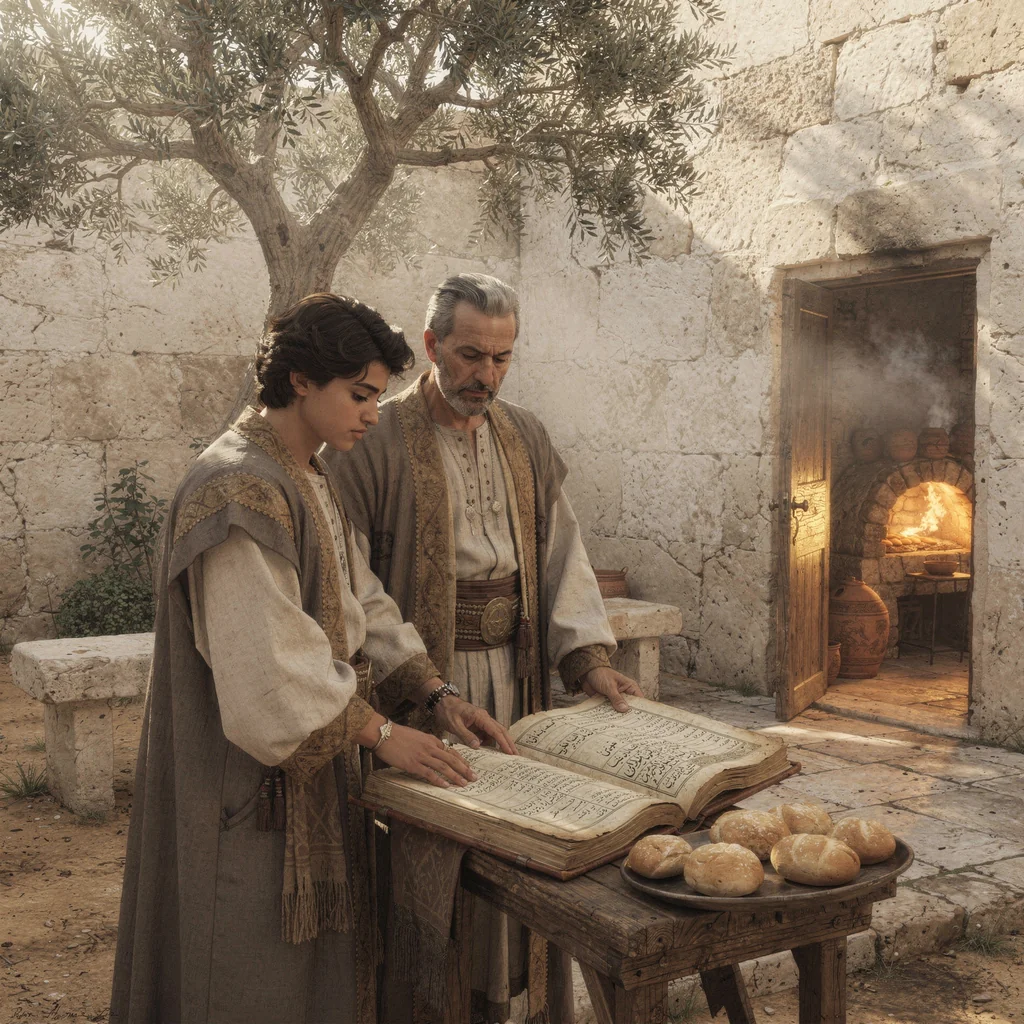
Hussein sat in the garrison courtyard, the rough stone wall at his back. He was twelve years old. The Ottoman ağas gathered around the table, speaking the Turkish of the imperial court — the dialect of Istanbul, of the Divan, of the sultans’ palaces.
“Young Hussein,” said Hasan Ağa, his father’s old comrade from the Candia years. “Read for us.”
Hussein opened the book. It was a collection of ghazals by Baki — the Sultan of Poets, who had written in Istanbul during Suleiman’s reign. Hussein read the Turkish aloud, his pronunciation precise, his accent shaped by years of listening to the ağas who had served his father.
Ey sevgili, gel bu dünyaya geçmek için…
The ağas nodded approvingly. They heard in his voice the echo of their own courts, their own capital, the world they had left behind when they came to Tunis.
“Your father would be proud,” Hasan Ağa said. “You speak the language of the palace.”
Hussein closed the book. He accepted the compliment with a slight bow, as he had been taught.
But when he walked out of the garrison gate, something shifted.
The street below was full of Tunisians — Arab merchants, Berber farmers, the mixed population of the mountain town. They spoke Arabic, the dialect of Tunis, the language of the souks and the mosques and the homes where Hussein had grown up.
“Hussein!” called Youssef, the baker’s son. He was Hussein’s age, twelve years old, with the dark hair and quick smile of the mountain people. “Come down! We’re going to the orchard.”
Hussein descended the stairs. He switched to Arabic without thinking.
“My mother needs me at home,” he said. “Maybe later.”
“Your mother always needs you,” Youssef said, laughing. “Come on. The figs are ripe.”
They walked through the orchard outside the town walls. The fig trees were heavy with fruit. Youssef climbed a tree and threw figs down to Hussein, who caught them in his shirt.
They ate in the shade, sticky juice running down their chins.
“My father says,” Youssef said, “that your father was from Crete. But you speak Turkish like the Ottomans.”
Hussein froze. The fig in his hand suddenly felt heavy.
“My father served the Ottoman bey,” Hussein said. “He learned their language.”
“But you’re not Ottoman,” Youssef said. He said it without malice — as a statement of fact. “You’re Tunisian. Your mother is Tunisian. You were born here.”
The other boys looked at Hussein. He felt their gaze like a weight.
“I speak both,” Hussein said. “That’s all.”
“It’s not all,” Youssef said. “When you’re in the garrison, you’re one of them. When you’re here, you’re one of us. But you can’t be both.”
Hussein stood. He brushed the fig juice from his shirt.
“I am who I am,” he said.
He walked back toward the town. The boys watched him go. None of them followed.
At the garrison gate, the guard nodded him through. “Hussein efendi,” he said, using the Ottoman title of respect.
Hussein entered the courtyard. Hasan Ağa was still there, discussing the supply train from Istanbul.
“Ah, young Hussein,” the ağa said. “We were just speaking of you. You have the makings of a scribe, perhaps. Or even a diplomat. Your Turkish is excellent.”
Hussein heard the words. He knew they were meant as praise.
But what he heard was: You speak our language. You are not one of them.
Hasan Ağa noticed the boy’s expression. “You are thinking too much again,” he said, his Turkish accented with the Albanian of the highlands.
Hussein nodded. He had seen his father’s account books — the columns of numbers in Ottoman script, the marginal notes in cramped Arabic where Ali Turki had recorded details that didn’t fit the official categories.
“Your mother sends brik for dinner,” Hasan Ağa said. “Did she?”
“She sent word with the baker’s son. Yes.”
“Good.” Hasan Ağa smiled. “The börek of the palace cannot compare to your mother’s brik.”
Hasan Ağa used the Turkish word; Hussein used the Tunisian. The pastry was the same — thin dough wrapped around egg and tuna, fried in olive oil until crisp. But the name was different, and the difference mattered.
Hussein sat down beside Hasan Ağa. He opened the book of Baki’s ghazals. He read in Turkish. His mother’s Arabic sat beside the words like a shadow.
Hussein touched the doorframe of his father’s room — a habit he had developed in the three years since the old man’s death. The wood was smooth where his fingers had traced it. He did this every morning, before facing the ağas who came for counsel. It was his way of asking permission. From a ghost. From a memory. From a man whose name he carried but whose method he was still learning.
The courtyard smelled of roasting coffee and olive oil. Hussein sat on the bench where his father had sat, listening to the men talk.
He was twenty years old. He had been born in this house, in this town, where the Ottoman garrison met the Tunisian countryside. His father had been a ghost all his life — dead in 1676, when Hussein was one year old.
Ali Turki. Al-Turki — the one the harbor had called the Turk, though where exactly the man was born, no one in Tunis agreed. Some said Crete. Some said Istanbul. Some said he had been born on a ship between the two and belonged to neither.
“Your father,” one of the old soldiers said, his Albanian thick with age, “he could read a man by his hands. He knew who would steal before the thief knew it himself.”
Hussein had heard this before. He had grown up surrounded by his father’s network — the ağas who had served with Ali Turki in Crete, the scribes who had learned accounting from him, the merchants who owed their positions to his patronage. His father had been dead for nineteen years, but his presence was more alive than the living.
“What was he like?” Hussein asked. He had asked this a hundred times.
“He was quiet,” said the old soldier. “He did not speak of Crete often.”
Hussein knew the intisab bond from the inside. He had grown up in the shadow of it, fed by the men who had served his father, taught by the scribes who had learned from his father’s clients. The ağas who now commanded the garrison treated Hussein as their own — not because he was their blood, but because he was his father’s son.
He remembered the day he had understood what this meant.
He was twelve years old. A merchant from the interior had come to the house in Kef — a Berber man who spoke no Turkish, only Arabic. The Albanian ağas in the courtyard had shifted, uncomfortable. They did not know this man. They did not trust him.
Ali Turki had walked into the courtyard. He had greeted the merchant in Arabic — the language of the mosque, the language of the Zaytuna scholars. Then he had turned to the Albanian ağas and switched to Albanian — the language of the highlands, the language of soldiers. Then he had sent a scribe to find a Greek interpreter for the merchant who brought goods from the coastal cities.
The ağas had relaxed when they heard their own tongue. The merchant had relaxed when he heard Arabic. Hussein had watched his father move through the crowd like water through stones, belonging everywhere and nowhere all at once.
Hussein, watching from the corner of the courtyard, was eight years old. He had seen his father do this before. He had not understood it before.
He went to his father that evening. “Why did you speak three languages?”
Ali Turki was at his desk. He did not look up from the accounts.
“Because each language is a different door,” he said. “The same room. Different doors. You open the door the man already has a key for.”
Hussein did not fully understand. He was eight years old.
He remembered it for thirty years. By the time he understood it, his father was long dead, and Hussein was learning to open doors with whatever language they required.
“He spoke of Istanbul,” another man said. “Of the grand viziers who had saved the empire. The Köprülüs.”
“The Köprülüs are gone,” Hussein said.
“The men are gone,” the old soldier corrected. “The method remains.”
Hussein had seen this with his own eyes. He had traveled to Istanbul as a young man, seeking service in the imperial capital. What he found was not what his father had described.
The janissaries stood in groups near the bazaars, their arms folded, watching everyone who passed. They did not stand like guardians. They stood like owners. The merchants paid them before they could set up their stalls. The homeowners paid them before they could sleep without fear.
He returned to Tunis and found a different corruption. Ibrahim Sharif had seized power in 1702 — installed by the Dey of Algiers after a coup. Sharif called himself bey al-hakim, but he ruled as a dey rules: by military force, by Friday judgments in the garrison courtyard where men were dragged away for speaking when they should have been silent.
“Can you kill?” Sharif had asked, when Hussein presented himself for service.
Hussein had hesitated. “If necessary.”
“Then you will command under me,” Sharif had said.
Every Friday after the noon prayer, Sharif held court on horseback — a white Arab stallion imported from the desert at great expense. The ruler of Tunis rode what no Tunisian could afford.
Hussein stood at the perimeter and watched. A soldier was brought forward for stealing grain. The guards held him down. The curved blade flashed. The hand fell to the stone. Blood pooled on the flagstones.
A merchant was fined double. His inventory was seized.
A servant — young, trembling — was accused of speaking out of turn to a janissary. They tied him to the whipping post. At thirty-seven lashes, with his back bloodied, the servant stopped counting.
“I am innocent,” he said.
The courtyard went silent. Sharif did not speak. He only looked down from the horse.
The lash fell again. Harder. The guard counted for him. They whipped an unconscious man to fifty.
Sharif turned his horse. He did not look at the blood. “Next week,” he said. “Same time.”
The white stallion stepped carefully around the pools.
Hussein walked to the center of the courtyard. The blood was still fresh, dark red on the limestone. He could smell it — the iron tang, the salt of sweat. Sharif had taught him the practical business of military command — how to move men, how to supply an army, how to read the intentions of enemies.
Sharif did not teach governance. Sharif taught only power.
Hussein began making connections. Not with the speed or ruthlessness of Sharif, but with the patience of a man who had grown up hearing stories of how his father had built loyalty — gift by gift, favor by favor, obligation by obligation. He cultivated the Albanian soldiers who had known his father. He befriended the Maliki scholars of the Zaytuna. He attended the ceremonies of the Qadiri lodge, listening to the sheikhs speak of community, of obligation, of bonds that survived because they were chosen.
One evening at the Qadiri lodge, a Berber tribal leader from the interior arrived seeking mediation in a land dispute. The man spoke no Turkish. The Albanian ağas shifted, uncomfortable. Hussein stood and greeted him in Arabic, the language of the mosque, the language of the Zaytuna. He heard the case himself. He resolved it before the night ended.
The ağas watched. This was not how Sharif would have done it. This was not how the Ottoman garrison had ever done it.
The Berber leader left with his dispute resolved. Hussein returned to his place among the ağas. The sheikh of the lodge nodded once, small.
Now, in 1705, everything had changed. The Dey of Algiers had captured Ibrahim Sharif during a campaign and imprisoned him. The army in Tunis was leaderless. The city was on the brink of chaos.
Hussein sat in the courtyard, the old soldiers around him, and remembered Istanbul — the janissaries standing like owners, the merchants paying bribes, the empire rotting from the inside.
“My father taught me,” Hussein said, “that men follow leaders who give them a reason to follow.”
On the night of July 14, 1705, Hussein walked to the Zaytuna mosque. He prayed. He asked for clarity.
The mosque was empty at this hour. The stone floor was cool beneath his feet. The arches stretched into darkness, carrying the weight of a hundred years of prayer.
He looked toward the qibla, the prayer niche that pointed toward Mecca. He looked toward his father’s memory — a man he had never known, only his stories. He looked toward Istanbul in his mind — the city where the ağa paid farmers for grain, where the Köprülü viziers had served the state rather than themselves. He looked toward the memory of Sharif — the man who ruled through fear and now sat in an Algerian prison.
Hussein stood. He walked out of the mosque into the Tunisian night. The air smelled of olives and sea. The stars were bright overhead.
He went to the janissary garrison. He spoke to the men his father had known — the old ağas, the veterans who remembered Ali Turki. He spoke to them not as a commander, but as a son asking for guidance.
The old men nodded. They had heard this before. They had heard it from Ali Turki.
One by one, they placed their hands on his shoulder. Not in submission. In recognition.
The janissary garrison courtyard, July 15, 1705. Dawn had broken over the walls of Tunis. The air smelled of coffee and horses and the sea.
Hussein stood in the center of the courtyard. He wore the plain caftan of a dey — not the robes of a bey, not the insignia of authority. He had come alone, without bodyguards, without retainers. He stood as his father’s son, nothing more.
The janissaries stood around the perimeter — three hundred men, armed, watching. Their commanders stood nearer: the ağas who had served under Sharif, the officers who had watched Hussein for years, the men who would decide whether this moment would end in proclamation or bloodshed.
Between Hussein and the janissaries stood the old men.
They were the ones who had known Ali Turki. They were the ones who had served with him in Crete, who had transferred with him to Tunis, who had remained loyal to his memory through thirty years of widowhood and fatherless sons. They were gray now, their faces weathered, their hands scarred from decades of service.
The courtyard was silent.
No one spoke. The only sound was the morning wind moving through the arches, the shuffle of a horse, the distant call of a muezzin from a mosque beyond the walls.
One of the old men stepped forward.
He was the oldest of them all — Ismail Agha, his beard white as the stone of the courtyard, his face lined with seventy years of sun and wind. He had served with Ali Turki in Candia. He had been present when Hussein took his first steps. He had kept the promise he made at Ali’s grave: The boy will not want for fathers.
Ismail Agha walked to Hussein. He did not bow. He did not kneel. He stood before the son of his old commander, looked him in the eye, and placed his hand on Hussein’s shoulder.
The gesture was simple. The hand was rough, calloused, warm. It said: I see you. You are ours. We are yours.
Ismail Agha did not speak. He did not need to.
The second old man stepped forward. Then the third. Then the fourth.
One by one, the ağas who had known Ali Turki walked to Hussein and placed their hands on his shoulder. They did not bow. They did not kneel. They stood as men acknowledging their own — the son of their commander, the heir of their network, the carrier of what they had been given.
The janissaries watched. They saw the old men who had commanded their fathers. They saw the gesture that passed between them. They understood what was happening.
One of the younger commanders — a man who had served under Sharif, who had known only cruelty and fear — stepped toward the old men. He started to draw his sword.
Ismail Agha turned. The old commander did not speak. He only looked at the younger man, and the younger man stopped. The sword remained in its sheath. The commander stepped back.
The gesture continued. Twelve old men, each placing a hand on Hussein’s shoulder. Twelve hands, one by one, until Hussein stood surrounded by the living memory of his father.
Hussein did not raise his arms. He did not embrace them. He stood with his hands at his sides, receiving what they offered.
The last hand was placed. The old men stepped back.
The janissary commander who had drawn his sword stepped forward again. This time he did not reach for his weapon. He walked to Hussein, looked at the old men who had vouched for this moment, and placed his own hand on Hussein’s shoulder.
The others followed. The commanders, the officers, the janissaries — each approaching, each placing a hand, each stepping back. The gesture spread through the courtyard until three hundred hands had been placed, three hundred acknowledgments given, three hundred bonds chosen and sealed.
The first muezzin of the new morning called the prayer. The sound rose from the minaret beyond the walls, clear and sharp in the dawn air.
Hussein stood in the center of the courtyard, surrounded by the hands that had chosen him.
On July 15, 1705, Hussein ibn Ali was proclaimed Bey of Tunis.
There was no coup. There was no violence. The janissaries accepted him because their commanders accepted him. The commanders accepted him because the old ağas vouched for him. The city accepted him because he offered what Sharif had never offered: stability without cruelty.
Hussein was thirty years old. He had never expected to rule.
The letter from Ibrahim sat on Hussein’s desk for three days before Hussein opened it.
He knew what it would say. He knew what Ibrahim would ask. He knew why his brother had sent it now, in the summer of 1705, with Sharif imprisoned in Algiers and the army leaderless and the city on the brink.
Ibrahim was his father’s son. Hussein was his father’s son. But they were not the same.
Hussein opened the letter. The script was Ibrahim’s — the Arabic learned at the Zaytuna, the hand of a scholar who had studied with the Maliki judges, who had memorized the Quran before he was twelve, who had chosen the path of learning while Hussein chose the path of soldiers.
Brother,
The ağas come to me. They ask what I will do when Sharif falls. They ask whether I will seek the beylicate. They say the army needs a commander who knows the city, who knows the people, who was born in Tunis, not brought from Crete.
I tell them: my brother is the elder. My brother is the one our father trained. My brother is the one the ağas will follow.
But they ask: Will your brother rule as Sharif ruled? Will he rule as the Dey of Algiers rules? Will he rule with the sword, or will he rule with justice?
I do not know the answer. I ask you: What kind of bey will you be?
Your brother, Ibrahim
Hussein read the letter once. He read it again.
He set it on the desk. He looked at the account book beside it — the columns of numbers in Ottoman script, the marginal notes in Arabic where he recorded the details that didn’t fit the official categories. He had been keeping these books for ten years, ever since he returned from Istanbul and found that the empire his father had served was rotting from the inside.
He stood. He walked through the house he had built in the shadow of his father’s network — the ağas who came for counsel, the scribes who came to study the accounts, the merchants who came seeking mediation in disputes that Sharif’s judges would not hear.
He mounted his horse. He rode to Ibrahim’s house in the medina.
Ibrahim was in the courtyard, surrounded by students — young men from good families, the sons of merchants and scholars, sitting at his feet as he explained a point of law. They were discussing the zakāt — the obligatory alms that Muslims paid to support the poor.
Ibrahim saw Hussein in the doorway. He dismissed the students. They gathered their books and left, bowing to Hussein as they passed. He was the son of Ali Turki, the brother of Ibrahim the scholar, the cavalry commander who had served under Sharif but kept his own counsel.
The courtyard emptied. The brothers faced each other.
“You received my letter,” Ibrahim said.
“I received it.”
“You did not answer.”
“I am here.”
Ibrahim nodded. He gestured to the bench beside the fountain. Hussein sat. Ibrahim sat beside him. The water splashed in the courtyard, the sound of something that does not stop.
“The ağas ask me what kind of bey you will be,” Ibrahim said.
“What do you tell them?”
“I tell them that I do not know,” Ibrahim said. “Because you have never told me.”
Hussein looked at his brother. Ibrahim was thirty-four years old — four years older than Hussein, but he looked younger. His face was unmarked by sun and wind. His hands were smooth — the hands of a scholar, not a soldier. He had never held a sword. He had never commanded men. He had never seen what Hussein had seen in the Friday demonstrations, the hand cut from the thief’s wrist, the blood on the courtyard stones.
“I have served under Sharif,” Hussein said. “You have not.”
“I have seen what Sharif does,” Ibrahim said. “The whole city has seen.”
“Then you know what I will not do.”
“I know what you will not do,” Ibrahim said. “I do not know what you will do.”
Hussein was silent.
“You speak of our father’s method,” Ibrahim said. “You speak of obligation rather than fear. These are good words. But they are only words until they are tested.”
“What are you asking?”
“I am asking,” Ibrahim said, “whether you will rule as a bey of Tunis, or as a dey of Algiers. Whether you will rule as our father would have ruled, or as Sharif ruled.”
“I will not rule as Sharif ruled,” Hussein said.
“How will you rule?”
“The ağas will follow me if I give them a reason to follow,” Hussein said. “Not fear. Obligation.”
“This is what you say,” Ibrahim said. “But what will you do when a man steals from the treasury? What will you do when a governor rebels?”
Hussein did not answer immediately.
“Sharif ruled for three years,” Ibrahim said. “The city obeyed. Our father’s method did not stop him from cutting off hands.”
“Sharif is in an Algerian prison,” Hussein said. “The ağas who knew our father, the men who served with him — they held for thirty years. They will hold without Sharif.”
Ibrahim was silent.
“I will put my hand on shoulders,” Hussein said. “Not heads on pikes.”
Ibrahim looked at his brother. “You have seen Sharif. You have seen the blood on the courtyard stones. What you have not seen is governance. You have never ruled.”
Hussein did not deny this.
“So I ask you again,” Ibrahim said. “What kind of bey will you be?”
Hussein stood.
“I will serve the state, not myself,” Hussein said. “I swear it.”
He walked toward the gate. Ibrahim stood.
“Hussein,” Ibrahim said.
Hussein stopped. He did not turn.
“If the ağas proclaim you,” Ibrahim said, “I will not stand in your way. But I will not serve a Sharif. If you become that kind of bey, you will rule alone.”
Hussein turned. He looked at his brother.
“I will not become Sharif,” Hussein said. “I swear it.”
He walked out of the courtyard. He mounted his horse. He rode back through the medina, the sun high overhead, the market crowded with merchants and shoppers who did not know that two brothers had just drawn lines they could not cross.
Hussein returned to his house. He sat at his desk. He looked at Ibrahim’s letter.
Hafsia Cherni swept the courtyard of the house in Kef. She had done this every morning for thirty years. The broom moved across the stone in the same rhythm her hands had known since she was a girl in the Cherni household, before the Ottoman agha came with his Albanian soldiers and asked for her hand.
She had been sixteen. Ali Turki had been thirty. He was a widower then, or so he said — the ağa stationed in Kef, the man who spoke Albanian with his men but learned Arabic for her. He had never spoken of where he came from before Kef. She knew only what the others said: Crete, Istanbul, a ship between the two.
The sun rose over the courtyard wall. Hafsia did not stop sweeping.
A messenger arrived at the gate. He was dusty from the road, his horse lathered. He carried news from Tunis — the city where her son was, where the army had gathered.
Hafsia did not look up. She continued sweeping.
“The janissaries have proclaimed him,” the messenger said. “Hussein ibn Ali. Bey of Tunis.”
Hafsia’s hands did not stop. The broom moved across the stone, gathering dust into the corner where it always went.
“They say the old ağas placed their hands on his shoulder,” the messenger continued. “One by one. Not to submit. To recognize.”
She swept the dust into the corner. She bent to pick it up.
“They say he spoke the words your husband spoke,” the messenger said. “That men follow leaders who give them a reason to follow. Not fear. Bonds that are chosen, not forced.”
Hafsia stood. She carried the dust to the small garden behind the house, where the olive trees grew. She scattered the dust at the base of the largest tree. Ali had planted it the year Hussein was born.
She had been alone for twenty-nine years. Ali had died in the winter of 1676, leaving her with a son who could not walk and a network of men who expected her to hold them together. She had done it. She had received the ağas who came to pay respects. She had fed the scribes who came to study Ali’s account books. She had kept the doors open when the neighbors whispered that a widow could not maintain what her husband built.
She had never complained. She had never claimed credit. She had simply kept the house standing, the doors open.
Her son was Bey of Tunis.
She returned to the courtyard. The messenger still stood at the gate, watching her.
“Tell him,” she said, “that his father planted this tree the year he was born. Tell him that the tree has borne fruit every season since. Tell him that the house still stands.”
The messenger nodded. He mounted his horse and rode back toward Tunis.
Hafsia returned to her sweeping. The stone was clean. The courtyard was ready for the day.
She had kept the network alive for thirty years. Now her son would carry it forward. She did not need to be told what this meant. She had known it would come, ever since the day she buried Ali and the ağas came to her door with their hands on their hearts, swearing to hold what her husband had built.
She finished sweeping. She put away the broom. She went to the kitchen to prepare breakfast for the servants who would arrive soon, the ağas who still came to pay respects to the widow of Ali Turki, the mother of the Bey.
The courtyard was clean. The house stood. The work continued.
The proclamation over, Hussein walked to the window of the palace room where the janissaries had gathered. Through the window, he saw the medina spreading below — the roofs of the houses, the minaret of the Zaytuna mosque, the road leading north to Kef where his mother still swept the courtyard of the house his father had built.
Three hundred men had placed their hands on his shoulder.
The sun rose over Tunis.