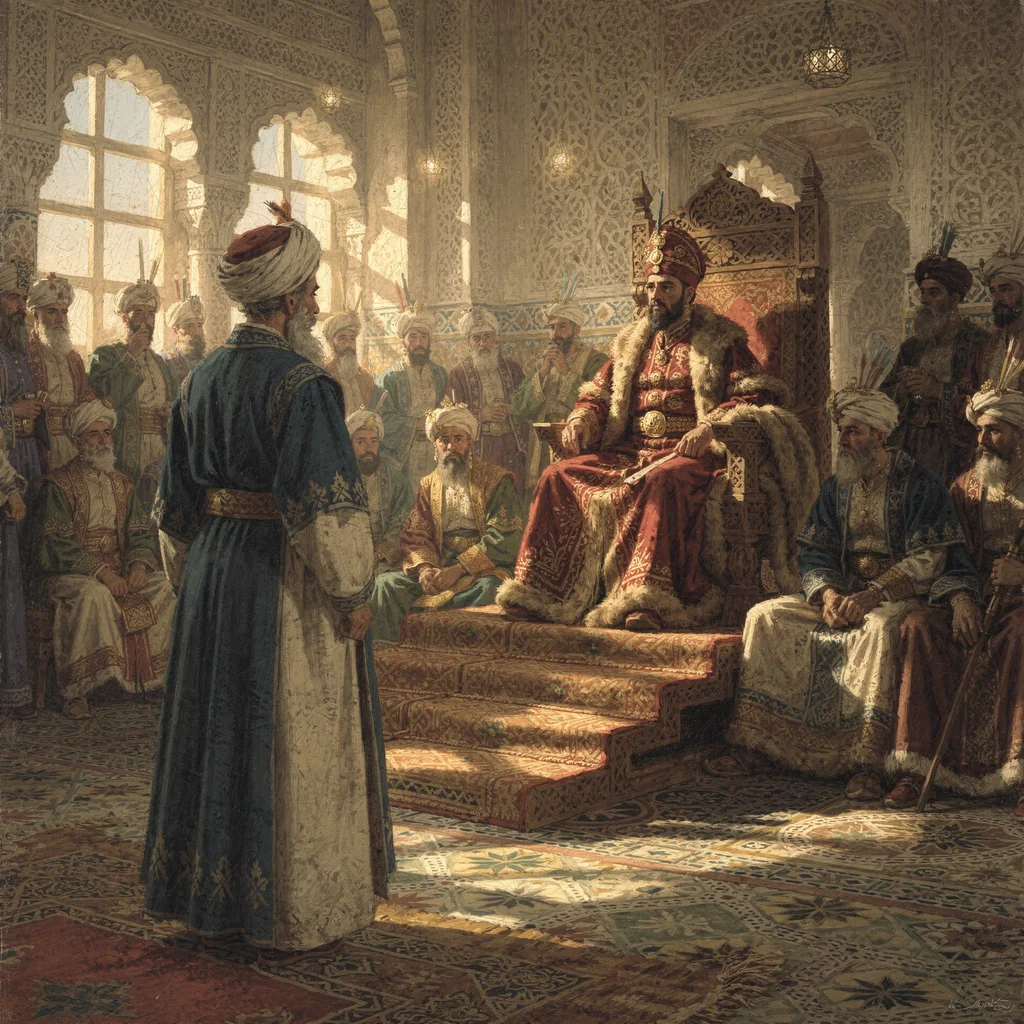
The al-Zarqali partnership proved prosperous.
Within five years, the Annaba grove numbered ten thousand trees. The olive oil produced was of the same quality as Ras al-Tayeb oil. Red limestone soil, Zaghouan-like mineral water, Andalusian expertise. The merchants of Alexandria and Tripoli recognized the quality. They paid a premium.
The profits were divided according to the partnership agreement. Muṣṭafā received his share. The al-Zarqali family received theirs.
In 1658, the partnership required renegotiation. The al-Zarqali family demanded a larger share, citing the expansion’s success. Muṣṭafā refused. He had the Grana capital; he did not need their generosity. They compromised. The partnership continued, diminished but intact.
He reinvested everything.
He purchased more land on the edge of Annaba. He planted more trees. He built more water channels. He expanded the storage facilities. He hired more workers.
He was building again.
He was sixty-five years old.
He had been in Annaba for four years. The grove was thriving. The workers were skilled. The community was growing.
He decided it was time to build the palace.
The architect was an Andalusian from Murcia who had fled to Annaba in 1613, when he was a child. He had grown up in the Andalusian quarter, learning the trade of his father. Stonecutting, masonry, architectural design.
His name was Sālim al-Murjī.
He had heard of Muṣṭafā. The Sheikh of the Andalusians in Tunis, the man who had built thirty thousand trees and a palace and a community, the man who had been exiled by Ḥammūda Bāšā Bey.
He had not expected to meet him in Annaba.
“The Šayḫ al-Andalusīyīn.”
“I plant trees.”
“You are the Sheikh. The Andalusians of Tunis speak your name with reverence. They say you built a palace that rivals the Bey’s.”
“I built a palace. It is gone now. Confiscated.”
He had heard the stories of the confiscation. He had heard how Ḥammūda Bāšā had taken everything.
“I am building again.”
“I have heard. Ten thousand trees in four years. The fastest expansion in Annaba.”
Muṣṭafā did not respond to the compliment.
“I want to build a palace.”
Sālim waited.
“Not like the Bey’s palace. Not domes and minarets and ornate tiles. Andalusian style. Courtyard house. Gardens. Fountain. Rooms opening onto shaded arcades.”
Sālim nodded. He knew this style. He had grown up in the Andalusian quarter, surrounded by buildings that reminded the exiles of home.
“It will be your home.”
“It will be the community’s home. A place for meetings. A place for disputes. A place for celebrations. A place where the Andalusians of Annaba can gather as a community.”
“The Grombalia palace. I have heard it described.”
“It was built around a central garden. With a fountain that recirculated mineral water. With rooms opening onto shaded arcades. With space for the community to gather.”
He looked at Sālim.
“Build me the same.”
Sālim examined the soil. He tested the stone from nearby quarries. He calculated the costs.
“It will take three years.”
“Take five. Build it slowly. Build it well. Use the best stone. The best wood. The best craftsmen.”
He paused.
“I have the capital. From the Grana network—Livorno, Genoa, Marseille—released by letter. From the Sublime Porte pension. From the al-Zarqali partnership, which accelerates what I could do alone.”
He looked at Sālim.
“Money is not the constraint. Quality is the constraint. Build it to last. Build it for the grandchildren of the grandchildren.”
Sālim nodded.
“I will build you a palace that will stand for three hundred years.”
The construction took the full five years.
Sālim had underestimated the time. He had underestimated the cost. He had underestimated the difficulty of finding craftsmen who could execute the Andalusian style with precision.
The quarry flooded in 1658. Muṣṭafā stood at the edge of the water, his boots in mud, watching the limestone he had selected disappear under brown current. Sālim wanted to switch to local stone. Muṣṭafā refused. The work stopped for three months. When the new quarry opened on the eastern ridge, the cost had risen thirty percent. The al-Zarqali family objected. Muṣṭafā paid the difference without explanation.
He visited the construction site every day. He examined the stone. He tested the mortar. He inspected the joinery. He rejected anything that was not perfect.
“The Andalusians of Annaba are watching.” Sālim spoke one day. “They see the old man in the caftan walking the construction site, examining every stone. They know this is being built for them.”
Muṣṭafā said nothing.
“You are building a monument.”
“I am building a home.”
“It is the same thing.”
Muṣṭāfa considered this.
The palace was completed in 1663.
Muṣṭafā was seventy years old.
The courtyard tiles were cool underfoot in morning, burning at midday. The fountain splash echoed differently in each arcade. He walked to where the water sound was clearest, the arcades shielding him from the afternoon heat.
The al-Zarqali family insisted that the palace be named for him.
“Sarāyā al-Grombali. The Palace of al-Grombali.”
Muṣṭafā shook his head. He pointed toward Tunis.
“The name belongs to Tunis.”
“You are al-Grombali now. The man from Grombalia. The palace should be Sarāyā al-Grombali.”
Muṣṭafā was quiet.
“Sarāyā al-Grombali.”
The family was satisfied.
The palace became known throughout Annaba as the Palace of the Exile. The Andalusians gathered there for meetings, for disputes, for celebrations, for weddings and births and funerals.
They came to Muṣṭafā for judgment.
He resolved disputes by reading what was there, by noticing what others missed, by finding solutions that served everyone.
A young woman from the Andalusian quarter claimed that her husband had beaten her. She asked for a divorce. Muṣṭafā spoke with the husband. He spoke with the wife. He learned that the husband had struck her in anger, but that it was the first time and he was filled with remorse.
Muṣṭafā ordered the husband to pay a fine to the community. He ordered the wife to forgive him. He ordered them to speak with the Imam.
They accepted his judgment.
The Andalusians of Annaba began to call him the Sheikh.
Not the formal office of Tunis, with Ottoman berat and tax collection authority. The honorific of Annaba, earned through dispute resolution and community leadership.
Al-Grombali.
The man from Grombalia.
The grove continued to expand.
Fifteen thousand trees. Twenty thousand trees. Twenty-five thousand trees.
Muṣṭafā reinvested everything. More land. More trees. More workers arriving each month from the refugee ships.
The olive oil from Annaba began to compete with the olive oil from Tunis. The merchants of Alexandria and Tripoli and the wider Mediterranean recognized the quality.
They paid a premium.
The profits were shared. The community prospered.
Andalusian refugees continued to arrive in Annaba. Refugees from the renewed expulsions in Spain, refugees from the pirate raids, refugees from the instability of the Maghreb.
Muṣṭafā gave them work.
He did not ask where they had come from. He did not ask what they had lost. He only asked if they were willing to plant trees.
Most were.
The community around the grove grew. A mosque was built. A school was founded. A market was established.
In 1656, Muṣṭafā heard a worker humming a phrase while pruning row six. He stopped. The worker froze, fearing correction. Muṣṭafā said nothing.
The next morning, Muṣṭafā hummed it deliberately, loudly, while inspecting the trees. The worker heard. Others heard.
By 1660, three workers hummed it. By 1662, Fatima reported it.
He received news from Tunis in 1662.
A letter from Fatima, carried by a merchant traveling between the two cities.
She wrote of the palace. Now Ḥammūda’s property, but maintained as a waqf endowment to Sidi Abū Marwān mosque. The endowed trees could not be confiscated. They remained in the name of God.
She wrote of the groves. Now managed by the waqf trustees. The workers knew their jobs. The foremen knew the trees. The harvest continued.
She wrote of their children.
ʿAbd al-ʿAzīz was now forty-one years old. He managed the shipping routes. He had three sons. Muṣṭafā’s grandchildren, though he would never meet them.
The youngest, Ibrahim, measured the trees each morning. “He spaces them as you taught me,” Fatima wrote. “Checking the soil the way you showed me.”
Muṣṭafā touched the paper.
He had never seen their faces.
Aisha was thirty-nine years old. She was married to a merchant in Tunis. She had two daughters. Muṣṭafā’s granddaughters.
Fatima wrote of other things. She walked the groves in the mornings still. She had noticed the workers at dawn humming something as they moved through the rows. She had tried to identify it. She could not.
“It is a melody I do not recognize. But the way they hum it — the way it moves through the rows — it sounds as if they have always known it.”
Fatima wrote of the community.
The Andalusians of Tunis remembered him. They asked Fatima when he would return.
“I do not know if he will return. The Bey has forbidden it. But he carries us in his heart.”
Muṣṭāfa read the letter in the courtyard of Sarāyā al-Grombali. He sat on the fountain edge, listening to the water recirculating, reading his wife’s words again and again.
He read the one sentence three times.
He did not respond to it in his reply.
The workers watched him from a distance. They did not approach.
When he finished reading, he sat for a long time.
He folded the letter. He refolded it. The paper was worn at the creases now. He had read it three times.
The water in the fountain recirculated.
He looked at his hands. The scars were white lines now. The ladder fall from 1628, the grafting knife slip of 1635, the pruning saw catch of 1649. Forty years of work in the groves.
The protection document from the Sublime Porte lay in the chest beneath the palace floor. It protected him in Annaba. It did not protect him in Tunis. If he crossed the border, Ḥammūda’s soldiers would arrest him. The document would not save him.
He sat by the fountain for a long time.
The mineral smell of the water rose from the fountain. Mineral and sulfur, the taste of limestone dissolved over centuries. It was the smell of Tunis. It was the smell of the groves he had built. It was the smell of Fatima’s garden in the courtyard of the palace he no longer owned.
He smelled the water and did not wash it off.
The next morning, Muṣṭafā went to the grove before dawn.
The predawn air was cool. The stars were still visible. The North Star, the same stars that had guided him since he was a boy in Baeza reading constellations with his father. The eastern sky was beginning to lighten, a pale gray that would soon become blue.
He walked through the rows. His feet knew the path. The same walk he had taken every morning for nine years, since he first arrived in Annaba in 1654. The ground was soft under his sandals, damp from the mineral water that flowed through the channels.
He reached the sixth row.
This was the sixth tree in the sixth row, planted when he first arrived in Annaba. The same position as the tree in Henchir al-Turki, his old grove near Tunis, where the hum had risen in his throat forty-seven years before and stopped. One phrase. The minor third turning downward at the end, resolving into the silence that followed. He had not noticed. He had continued planting.
Now he stood before this tree in Annaba. The trunk was thick now, the bark rough and furrowed. The branches spread wide. The leaves were dark green in the predawn light.
He placed his hand on the bark. The bark was cool. He could feel the sap moving beneath. The tree was alive, even in this hour before dawn.
He closed his eyes.
He breathed in. He breathed out.
His fingers stiffened. The neutral third hovered, then settled.
The hum rose in his throat.
He let it out.
One phrase. The minor third turning downward at the end, resolving into the silence that followed.
The sound was low. Quieter than he expected. The melody had lived in his body for almost five decades, carried from Baeza in the expulsion, from Grombalia in the planting, from Tunis in the teaching. It had surfaced without permission in 1615, when he was twenty-two years old, planting the sixth tree in Henchir al-Turki. It had risen again and again over the years. Sometimes conscious, sometimes not. He had never written it down. He had never given it a name.
Fatima’s letter had come three days before. The workers hum it, she had written. They do not know where they learned it. They have always known it.
He opened his eyes. The tree was still there. The branches were still spreading. The leaves were still dark green.
He hummed it again.
The second time was easier. The pitch was correct. The timing was correct. The minor third turned downward and resolved.
He stood for a long moment. The predawn light was strengthening now. The eastern sky was pink. The birds were beginning to stir in the branches.
He removed his hand from the bark.
He walked back to the palace. He went to the room where he kept his writing desk. He sat in the chair. He took up the pen.
He began to write.
The malouf melody began to take shape in 1663.
Muṣṭafā was seventy years old.
He sat at the writing desk in the predawn courtyard of Sarāyā al-Grombali. The eastern sky was beginning to lighten, a pale gray that would soon become blue. The fountain recirculated water. Mineral and sulfur, the mineral smell that reminded him of Tunis, of the groves, of Fatima.
He dipped the pen in the ink. He held it over the paper.
The first words that came were not about exile.
He wrote the Arabic script from right to left, the Andalusian letters forming under his hand:
ḥusn al-ḥabīb fāyiq wa-dhakī wa-l-mabsam sakrat ʿuyūnī
The beauty of the beloved. Surpassing, brilliant. And that smile, it has intoxicated my eyes.
He wrote the next line:
wa-l-mabsam rūḥī — yalalal — suhrat ʿuyūnī
That smile, my soul. Yalalal. Kept my eyes sleepless.
He wrote the refrain where the words stopped and only the sound remained:
yalalal
He did not name the face. He did not write Fatima’s name. He wrote what his hand put down.
He wrote the lines about the cup and the heart:
jarra fu’ādī min al-maḥāsin li-man malā al-ka’s bi-l-yamīn
My heart is wounded by such beauty. The one who filled the cup with the right hand.
He wrote the night verses, the patience verses, the wound of beauty.
Then the exile line arrived.
He wrote:
mā nmūtš ġarīb fī bilād al-saḥāba
I will not die a stranger in the country of the clouds.
Then the flowers. He wrote the line that named the cities:
yā ward al-shām wa-qarnafal ʿanāba
O rose of Damascus, carnation of Annaba.
When he wrote the word ʿanāba. Annaba. He had named his city the way he had named his son and his grove and his palace. By making it the thing he refused to lose.
He wrote the variant with Constantine:
yā ward al-shām — rūḥī — yalalal — wa-qarnafal qasanṭīna
O rose of Damascus, my soul. Yalalal. And carnation of Constantine.
He wrote the verse about the beauty like the beauty of Joseph, the sun eclipsed, the moon blushing with shame.
He wrote the final verse. Standing at the door of the beautiful one, waiting, a guest.
He set the pen down.
The predawn light was strengthening. The eastern sky was pink. The birds were beginning to stir in the branches.
He had written the song over three weeks. The yalalal came first—the sound without words. The ḥusn al-ḥabīb came second—the love without exile. The mā nmūtš ġarīb came last—the defiance that required the other two to mean anything. He crossed out more than he kept. The final version was the fifth.
He set the words to music.
The melody was Andalusian. The same modes, the same rhythms, the same instruments. The oud, the darbuka, the violin.
He taught the musicians he hired.
They were young Andalusians from Annaba who had grown up with the music. Muṣṭafā taught them the modes, the rhythms.
They learned quickly.
They performed the song for the community.
Ḥamdī Bannānī sang the opening verses. ḥusn al-ḥabīb fāyiq wa-dhakī. The beauty of the beloved, surpassing and brilliant. The music was Andalusian, the modes familiar, the rhythms recognized. The audience listened. They did not need to know whose face it was. They knew what it was to be sleepless for a smile. They knew what it was to carry a face across the sea.
When the yalalal refrain came, the jawk’s voices joined. The place where the words stopped and the sound carried what the words could not say.
Then Ḥamdī sang the exile line. mā nmūtš ġarīb fī bilād al-saḥāba. I will not die a stranger in the country of the clouds.
Something shifted in the courtyard. An old woman from Granada, who had crossed the Pyrenees at nine years old, who had lived in France for three years before crossing back to the Mediterranean, who had survived the grey sky of the north. She straightened her spine when she heard the line. She had not died there. She had refused. The line was past tense in her body even as the words sang in the present tense of defiance. She was here. She was in Annaba. She had survived.
Then Ḥamdī sang the flower line. yā ward al-shām wa-qarnafal ʿanāba. O rose of Damascus, carnation of Annaba.
A young man from the grove, one of the workers who tended the trees Muṣṭafā had planted, heard his city named. He looked up. He had never heard a city called carnation before. He had never heard Damascus called rose. His eyes widened.
The Andalusians of Annaba wept when they heard it.
Muṣṭafā sat at the back of the courtyard. The fountain recirculated behind him. The mineral smell rose from the stone.