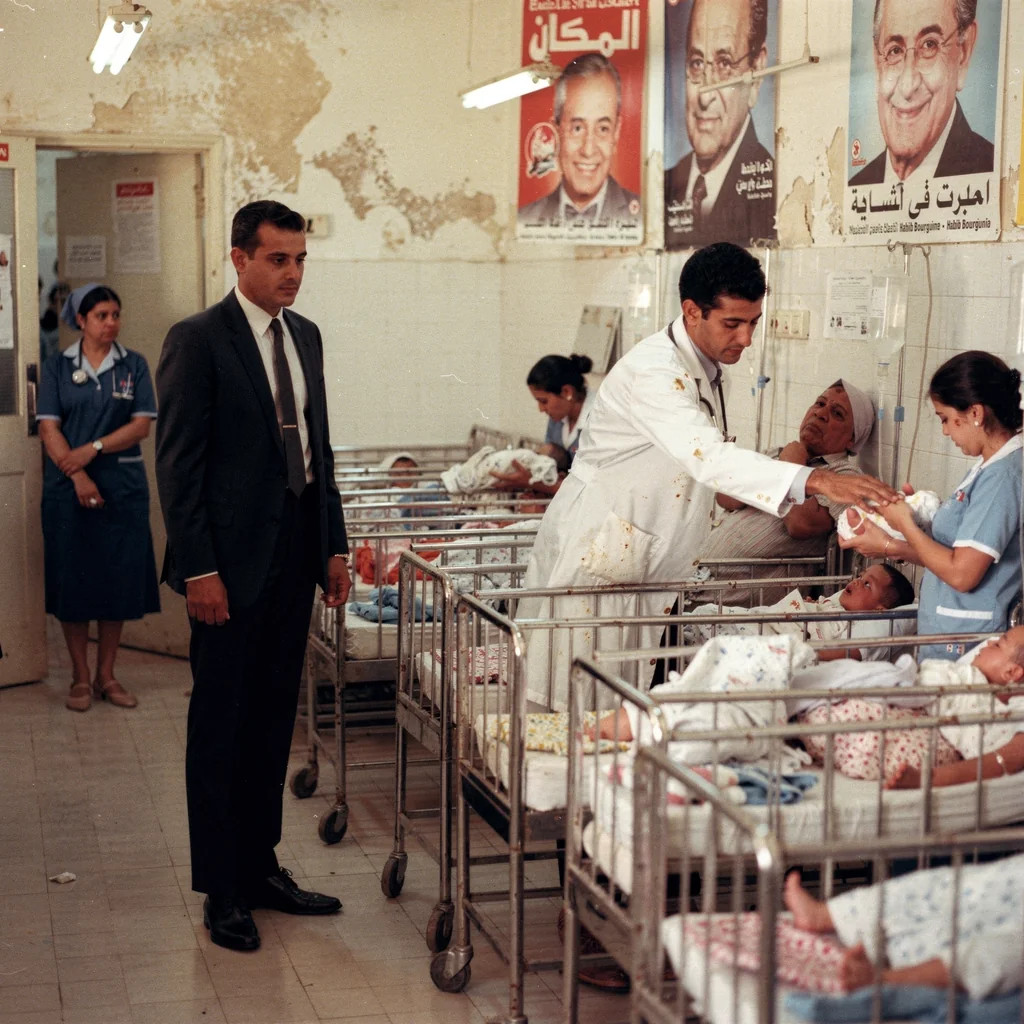
Tunis, 1977.
The lecture hall at IHEC was packed. Omar was nineteen years old. He was a second-year student. He was studying business. He was studying economics.
The guest speaker was Mansour Moalla. The Planning Minister.
Omar had heard of Moalla. Everyone had. The brilliant technocrat. The reformer. The man who would modernize Tunisia.
Moalla stood at the podium. He was forty-four years old. He had a doctorate in law from Paris. He had studied at the Ecole Nationale d’Administration. He had reorganized Tunisia’s civil service.
We are launching a new program, Moalla said. A rural development program. Forty million dinars for small agricultural equipment. Hand tools. Plows. Irrigation pumps. For the small farmers. For the subsistence farmers. For the people who feed Tunisia.
The students applauded. It sounded visionary. It sounded like progress.
Omar raised his hand.
Moalla called on him.
What about training? Omar asked. The farmers will need to know how to use the new equipment. Hand tools are one thing. Irrigation pumps are something else. Who will train them?
Moalla’s smile didn’t waver. Training will come later. First, we distribute the equipment.
But what about extension services? Omar asked. The public extension services don’t reach the remote areas. The subsistence farmers are in the interior. In the mountains. In the places where the roads are bad. How will the equipment reach them?
The hall was quiet. The other students looked at Omar. They looked at Moalla.
The program will be executed by local agents of central ministries, Moalla said. The organizational framework is already in place.
But the World Bank report, Omar said. The 1976 report. It said the organizational framework is too weak. It said no provisions have been made to train farmers. It said the extension services don’t reach remote areas.
Now the students were really looking at Omar. Where had he read the World Bank report? How did he know these things?
Moalla’s smile faded.
The World Bank offers advice, Moalla said. But Tunisia makes its own decisions. Tunisia knows what Tunisia needs.
But if the pitfalls have been identified, Omar said, why implement the program anyway? Why not fix the framework first? Why not train the extension agents first? Why not—
Thank you for your questions, Moalla said. Next question.
Omar sat down. The student next to him nudged him.
You shouldn’t have done that, the student whispered.
Done what?
Challenged him, the student said. He’s the Planning Minister. He’s a brilliant technocrat. Who are you to question him?
I’m just asking the obvious questions, Omar said.
After the lecture, Omar’s economics professor pulled him aside.
You asked good questions, the professor said.
Thank you.
You asked the same questions the World Bank asked, the professor said.
I read the report, Omar said.
Yes, the professor said. But do you understand what you just did?
What?
You embarrassed a powerful man, the professor said. Moalla has clear political ambitions. He wants to be somebody. And you — a second-year student — you just pointed out that his program is flawed.
But it is flawed, Omar said.
Of course it’s flawed, the professor said. The World Bank identified the pitfalls. The framework is too weak. There’s no training. No extension services. The program will fail.
Then why implement it?
Because Moalla proposed it, the professor said. And Moalla is a man of vision.
That doesn’t make sense, Omar said.
No, the professor said. It doesn’t.
So the program will fail, Omar said.
Yes, the professor said. And Moalla will move on to the next. And the next.
But the farmers, Omar said. The small farmers. The ones who are supposed to receive the equipment. What happens to them?
The professor didn’t answer immediately. They manage, he said. Without the equipment. Without the training. Without the help they were promised.
Omar looked at his notebook. The rural development program. Forty million dinars. Hand tools. Irrigation pumps. No training. No extension services. A weak organizational framework.
Why didn’t anyone else ask the questions? Omar asked.
The professor looked at him. Because they already know what happens when you embarrass a powerful man.
Omar didn’t want to believe it. He wanted to believe that good ideas mattered. He wanted to believe that asking the right questions would lead to the right answers.
But the professor had been teaching at IHEC for twenty years. The professor knew Tunisia better than Omar did.
What should I do? Omar asked.
Learn, the professor said. Study. Get your degree. He paused. And learn the difference between being right and being listened to.
Moalla. The brilliant technocrat. The reformer. The man whose rural development program would fail because he refused to listen to warnings.
Will I see him again? Omar asked.
Moalla? the professor said. Yes. He’s ambitious. He’ll rise high. Deputy Secretary General of the Party. Maybe even higher.
But his programs fail, Omar said.
Yes, the professor said. But in Tunisia, failure doesn’t matter if you have the right connections.
Omar walked out of the lecture hall. He walked through the campus. He sat on a bench. The sun was warm on the back of his neck.
His notebook lay open in his lap. The pages were blank. He hadn’t written anything down.
He was nineteen. He had never paid a bribe. He had never compromised. He had never stayed silent when he should have spoken.
Omar stood up. He walked to his next class. He carried his books in hands that were still clean.
Tunis, 1980.
Omar sat in the waiting room of the Société Tunisienne de Banque. He was twenty-two years old. He had graduated from IHEC two years ago. He had worked for an import-export company. He had saved money. He had a business plan.
The door opened.
Monsieur ben Hadded?
Omar stood up. Yes.
Come in.
He walked into the office. It was large. A window looked out on Avenue Habib Bourguiba. The desk was mahogany. The man behind the desk stood up to shake hands.
Hassan Belkhodja, the man said. President Director-General of STB.
Omar shook his hand. He knew who Belkhodja was. Everyone knew. Independence generation. Negotiated with France in 1954. First Tunisian ambassador to Paris. Friend of Bourguiba. Member of the Political Bureau.
Omar ben Hadded, Omar said.
Sit down.
Omar sat.
You have a loan application, Belkhodja said.
Yes, Omar said. For a food distribution business. I have the suppliers lined up. I have the customers. I need capital for inventory.
The man flipped through the papers. He didn’t read them. He looked at the numbers on the first page, then the last.
Your collateral, the man said. Your father’s apartment. That’s it?
Yes.
The apartment is worth 40,000 dinars, the man said. You’re asking for 30,000. That’s… aggressive.
The business will generate cash flow immediately, Omar said. I’ve done the projections.
The man looked at Omar. His eyes were flat.
Your grades, the man said. From IHEC. Very good.
Thank you.
Your reference, the man said. Your former employer. He says you’re hardworking.
I try.
The man stood up. He walked to the window. He looked out at the avenue.
Do you know why we’re meeting today? the man asked.
To review my loan application.
No, the man said. We’re meeting so I can tell you no. And so you can understand why.
Omar looked at the floor.
Your business plan is excellent, the man said. Your projections are sound. Your collateral is adequate. On paper, you’re a good risk.
Then…
On paper, the man said. This is Tunisia. We don’t do business on paper. We do business on relationships.
I don’t understand.
The man turned from the window. Who is your party contact?
My… party contact?
Your contact in the Destourian Socialist Party, the man said. Who recommended you? Who called me on your behalf?
Omar said nothing.
No one, the man said. I see. You thought this was a meritocracy.
I…
Let me tell you something, the man said. Last week, I approved a loan for 100,000 dinars. To a man with no collateral. No business plan. No university degree. Do you know why I approved it?
Omar shook his head.
Because his uncle is the governor of Sousse, the man said. Because the governor called me. Because the governor said: “Approve the loan.”
The man walked back to his desk. He sat down.
This is how business works in Tunisia, he said. Connections. Relationships. Party membership. You have none of these.
I can join the party, Omar said.
You can, the man said. But it takes time to build relationships. It takes years to become someone whose calls get answered.
I have time, Omar said.
You have ambition, the man said. I can see that. But you don’t have connections. And without connections, you’re going to fail.
Is there anything I can do? Omar asked.
The man weighed his options. He looked at Omar’s application. He looked at Omar.
There’s a meeting, the man said. Next Thursday. At the party headquarters on Avenue de Paris. For young entrepreneurs. If you want to build connections, start there.
Thank you, Omar said.
Don’t thank me, the man said. I’m not giving you the loan. I’m telling you how to get a loan next time.
Omar stood up. He walked to the door.
One more thing, the man said.
Omar turned.
Your brother, the man said. The one studying medicine. What does he think of your business?
Omar was confused. Karim? He’s… he doesn’t know about the business.
He will, the man said. Tell him to focus on his studies. Medicine is a good profession. Very respectable. Very secure.
I will, Omar said.
Business, the man said. Business is for people with connections. Your brother doesn’t have them either. But in medicine, maybe it matters less.
Omar walked out of the bank. He stood on Avenue Habib Bourguiba.
He walked toward the newspaper kiosk on the corner. The vendor was arranging copies of La Presse de Tunisie.
Omar stopped. He looked at the front page.
A photograph of the Planning Minister, Mansour Moalla, at a ribbon-cutting ceremony. The headline: “Modernization Continues: New Industrial Zone Inaugurated.”
Omar didn’t buy the paper. He kept walking.
He looked at his hands.
They were the same hands he’d had in 1977 at IHEC. But they felt different now. They were hands that wanted to build. Hands that wanted to create. Hands that had made a business plan on paper.
Hands that were not enough.
January 1984.
Omar owned a warehouse now. He had gotten the loan — not from STB, but from a smaller bank. His father had known someone. A cousin of a colleague. It had taken six months. The loan was smaller than he wanted. But it was enough.
He was importing canned goods from Italy. Tomatoes. Peaches. Fruit cocktail. The Tunisian market was hungry for Western products. The goods sold quickly.
He was making money.
Then came the price increase.
The radio announced it on a Tuesday morning. Prime Minister Mohamed Mzali has announced the removal of subsidies on flour and bread, under pressure from the International Monetary Fund.
Omar had heard of the IMF. He knew they imposed conditions. He knew they demanded structural adjustment.
But he didn’t expect this.
Bread prices would double. Flour prices would triple. Semolina prices would quadruple.
The measures are necessary for economic reform, the radio announcer said. The government is committed to fiscal discipline.
By Thursday, the riots started.
Omar heard them from his office. The shouting. The glass breaking. The sirens.
He stood at the window. He looked down on the street. The crowd was moving. Men. Women. Children. They were shouting. He couldn’t hear the words, but he didn’t need to.
Bread, they were shouting. Bread.
He locked the office door. He told his employees to go home.
What about the warehouse? his manager asked.
Lock it, Omar said. Go home. Stay home.
But the inventory…
Lock it, Omar said. Now.
The manager left. Omar waited. He watched from the window. The crowd moved through the street. They were breaking windows. They were looting shops.
They were not shouting about politics.
They were shouting about bread.
Omar waited until sunset. Then he walked to the warehouse.
It was three kilometers from his office. He walked through side streets. He avoided the main avenues. The crowds were thinner there.
The warehouse was in an industrial district. It was a concrete building. It had a metal door. The door was intact.
Omar breathed out.
Then he saw the broken window.
Someone had thrown a brick through it. The glass was scattered on the concrete floor inside.
Omar walked to the door. He unlocked it. He walked inside.
The warehouse was dark. He turned on his flashlight.
The shelves were half-empty.
The inventory — the canned tomatoes, the peaches, the fruit cocktail — was gone.
Someone had looted it. Someone had taken everything.
Omar stood in the dark warehouse. He shone his flashlight on the empty shelves.
The crowds. The shouts. The anger.
They were hungry.
They were taking food.
He couldn’t blame them.
But he couldn’t afford the loss either.
He had insurance. But the insurance wouldn’t cover civil unrest. He knew that. He had read the policy.
He was ruined.
He stood in the dark. He listened to the city. The shouting continued. The sirens continued.
The bread riots.
He turned off his flashlight. He walked out of the warehouse. He locked the door.
He walked home.
January 6, 1984.
Omar listened to the radio.
President Bourguiba has announced the cancellation of the price increase, the announcer said. The increase on flour and bread has been revoked.
Omar waited.
Prime Minister Mzali acted without proper authorization, Bourguiba was quoted as saying. The government remains committed to protecting the Tunisian people from economic hardship.
Omar turned off the radio.
Mzali. The Prime Minister who had removed the subsidies. The Prime Minister who had followed the IMF’s orders. The Prime Minister who had triggered the riots.
And now, the Prime Minister who had been betrayed.
Bourguiba had not authorized the price increase. Bourguiba had cancelled the increase. Bourguiba had saved the people.
Mzali was the scapegoat.
Omar thought about his warehouse. The empty shelves. The broken window. The insurance that wouldn’t cover civil unrest.
He was ruined.
And Mzali was destroyed.
The system had sacrificed the Prime Minister. And it had ruined Omar.
Omar understood something then.
He looked at his hands in the dark apartment.
They were the same hands that had signed the insurance policy. The same hands that had paid the bribes to get the import licenses. The same hands that had counted the profits from the canned tomatoes and peaches.
The hands looked the same. But something had changed.
They were hands that had learned to compromise.
He turned off the lamp.
Tunis, 1985.
The family gathered for dinner. The apartment was on the third floor of a modern building in the European quarter. The windows looked out on Avenue Habib Bourguiba. The streetlights flickered below.
Hassen ben Hadded sat at the head of the table. His wife, Fatima, sat at the other end. Omar and Karim sat on one side. Their sister sat on the other.
Omar was twenty-seven. He had rebuilt the business after the riots. He had diversified. Construction materials now — cement, steel, rebar. The government was spending on infrastructure. There was money to be made.
Karim was twenty. He was in his second year of medical studies at La Rabta. He had seen his first delivery that week. He had helped bring a child into the world.
How was your week? Hassen asked.
Busy, Omar said. The construction materials are moving. Cement. Steel. The government is funding infrastructure. There’s going to be a building boom.
And you, Karim? Hassen asked.
Busy, Karim said. I assisted in three deliveries this week. One was difficult. The baby was breech. But the doctor delivered safely. Mother and child are healthy.
Hassen smiled. Excellent. Both of you. Building businesses and saving lives. Tunisia needs both.
Omar leaned forward. Father, I’ve been thinking. I want to expand. The construction materials — there’s real money in it. I want to go bigger.
What do you need? Hassen asked.
Capital, Omar said. I have the suppliers. I have the customers. But I need warehouse space and a bigger line of credit.
Hassen absorbed this. He looked at his oldest son.
Do you have the collateral? Hassen asked.
Some, Omar said. The apartment. But I’ll need more.
Hassen nodded. Come to the Ministry. I can introduce you to people. I know someone at Banque Nationale who might help.
Thank you, Omar said.
He was excited. He could see it. The expansion. The scale. Building something that would last.
And you, Karim? Hassen asked. What do you want?
Karim looked at his hands. The delivery that week. The baby crying. The mother smiling. The feeling of bringing life into the world.
I want to be a good doctor, Karim said. I want to help women. I want to deliver babies safely. I want to reduce the mortality rate.
That’s noble, Hassen said. Medicine is a noble profession.
It’s more than noble, Karim said. It’s… it’s witnessing. Being there at the most important moment. The moment of life.
The moment of life, Hassen repeated. He looked at his son. Yes. That is important.
Omar looked at his brother. Karim was twenty. He was still idealistic. He still believed in things.
You’re too young, Omar said. You’ll learn. The world is harder than you think.
Maybe, Karim said. But I want to help people. I want to make a difference.
You can make a difference by building businesses too, Omar said. By creating jobs. By modernizing the economy.
That’s true, Karim said. But medicine is different. It’s direct. You help one person, and you see the result immediately. One baby. One life. One family.
And my work? Omar asked. The materials I import — they build hospitals, schools, homes. That helps too. That helps hundreds of people. Maybe thousands.
Yes, Karim said. But it’s… it’s indirect. You don’t see the people you’re helping. Not directly.
That doesn’t mean it’s not real, Omar said.
I didn’t say it wasn’t real, Karim said. I just said it’s different.
Hassen watched his sons.
Both are worthy, Hassen said. Both are needed. Tunisia needs builders. Tunisia needs healers. You’re both following good paths.
Omar smiled. I’m going to build something, father. Something big. Something that lasts.
I believe you, Hassen said.
He looked at Karim. And you?
I’m going to help people, Karim said. One patient at a time.
I believe you, Hassen said.
After dinner, Omar and Karim went to the balcony. The night was warm. The traffic moved below. The city lights flickered.
Do you remember the tree? Karim asked. The olive tree in Cap Bon? The one Grandfather showed us?
I remember, Omar said.
He said it was planted in 1881, Karim said. He said it outlasts empires. He said it endures.
Yes, Omar said. I remember.
Do you think we’ll endure? Karim asked. Like the tree?
Omar studied the city below. The buildings. The streets. The cars.
I don’t know, Omar said. I hope so.
I think we will, Karim said. If we stay rooted. If we stay connected.
Connected to what? Omar asked.
To each other, Karim said. To family. To the land. To something that doesn’t change.
Omar laughed. Everything changes, Karim. That’s the point of modernization. That’s the point of progress.
Not everything, Karim said. The tree doesn’t change. It’s still there. It’s still rooted.
It’s just a tree, Omar said.
No, Karim said. It’s not just a tree. It’s… it’s a lesson.
Omar looked at his brother. Karim was twenty. He still believed in lessons. He still believed in meaning.
What lesson? Omar asked.
That what matters is not what you build, Karim said. But how you build it. Whether you build on rock or on sand.
Omar remembered their grandfather’s words from that day at the olive grove. Remember that what endures is what is rooted.
I remember, Omar said.
Do you? Karim asked.
I do, Omar said. But I also remember that Grandfather is dead. The zawiya is closed. The transmission is broken.
Yes, Karim said. But the tree is still there.
For now, Omar said.
Forever, Karim said.
Omar didn’t answer. He looked at the city below. The buildings. The construction cranes. The future.
They stood on the balcony. The night was warm. The traffic moved below. They were brothers. They were young. They believed in the future.
November 1987.
Omar had rebuilt. It had taken three years. He had worked longer hours. He had taken riskier contracts. He had done things he swore he wouldn’t do.
He had paid bribes.
Not large ones. Small ones. To get the import license faster. To get the goods through customs. To get the warehouse inspection approved.
That’s how things work, his father had told him. Everyone pays. You’re not special. Pay and move on.
So Omar paid.
His business was profitable now. More profitable than before the riots. He had diversified into construction materials. The government was funding infrastructure projects. There was money to be made.
He was twenty-nine years old. He was successful.
Then Bourguiba went to the hospital.
The rumors started immediately. The Supreme Combatant was dying. The succession crisis was coming. The government was unstable.
Omar had contracts to fulfill. He had payments to collect.
Then came the morning of November 7.
He was in his office. His secretary ran in.
Turn on the radio, she said.
What?
Turn on the radio.
Omar turned it on.
…the military has moved tanks into the streets, the announcer was saying. …reports of troop movements in Tunis. Reports that the Prime Minister has been removed from office.
Omar walked to the window.
He saw them.
Tanks.
Armored personnel carriers.
Soldiers with rifles.
They were moving down Avenue Habib Bourguiba.
Omar watched. He didn’t understand. Was this a coup? Was the army taking power?
His phone rang.
Omar, his father said. Stay home. Don’t go to the warehouse. Don’t do anything until you hear from me.
What’s happening?
A change, his father said. A necessary change.
Is it a coup?
Call it what you want, his father said. Bourguiba is finished. Ben Ali is in charge.
Who?
General Zine el-Abidine Ben Ali, his father said. The Minister of Interior. The Prime Minister.
Is he…
He’s the future, his father said. Stay home. Wait for instructions. The party will tell us what to do.
Omar hung up. He watched the tanks.
The bank manager’s words from seven years earlier.
Connections, the manager had said. Relationships. Party membership.
Omar had none of these. Not really. He had joined the party after the bank meeting. He had paid his dues. He had attended the meetings. But he wasn’t connected. He didn’t have an uncle who was a governor. He didn’t have a cousin in the interior ministry.
He was just a businessman. A small one.
He watched the tanks. The treads crushed the pavement. The guns swiveled toward the palace. Everything could change overnight. The government could fall. The policies could shift. The connections could be replaced by new connections.
And he would have to adapt again.
He would have to build new relationships. He would have to find new ways to survive.
He was tired.
He locked the office door. He went home.
Two weeks later.
Omar stood in line at the party headquarters on Avenue de Paris. The line was long. Hundreds of people. Men in suits. Women in dresses. Young people. Old people.
They were all doing the same thing.
They were renewing their party cards.
The coup had happened. Bourguiba was gone. Ben Ali was in charge. The party still existed. The connections still mattered.
Omar had let his membership lapse. He had stopped paying dues. He had stopped attending meetings. The business had consumed him.
But now, with the new government, with the new order, he needed to be visible. He needed to show loyalty. He needed to be on record.
So he stood in line.
The line moved slowly. The party officials checked each application carefully. They verified each photograph. They stamped each card.
Omar waited. Mzali. The Prime Minister who had been betrayed. The Prime Minister who had been dismissed. The Prime Minister who had fled to France.
Mzali had been the probable successor. Mzali had been the future. Until the bread riots. Until the betrayal.
Omar had no illusions. He would never be Prime Minister. He would never be a probable successor.
But he didn’t want to be ruined either.
He didn’t want to be the scapegoat.
Omar waited.
An hour passed.
Two hours.
Finally, he reached the front.
Name, the official said.
Omar ben Hadded.
Profession?
Businessman.
Sector?
Import-export. Construction materials.
The official looked up. Construction materials? That’s a growth sector.
Yes, Omar said.
The new government is prioritizing infrastructure, the official said. There will be opportunities. For party members.
I hope so, Omar said.
Sign here, the official said.
Omar signed. He wrote his name on the membership renewal form. He wrote his date: November 24, 1987.
The official stamped the form. Welcome back to the party.
Thank you.
The official handed him a new party card. It was red. It had his photograph. It had his name. It had the stamp of the Destourian Socialist Party.
Omar looked at the card.
The bank manager’s words from 1980.
Connections, Belkhodja had said. Relationships. Party membership.
Mzali from 1984.
Even the Prime Minister isn’t safe.
Omar had learned the lesson. It had taken seven years. It had taken bankruptcy. It had taken riots. It had taken a coup. It had taken a betrayal.
The IMF demanded sacrifice. The government found a scapegoat. Mzali was destroyed.
Omar would not be the scapegoat.
He walked out of the party headquarters. The card was warm in his hand. The sun reflected off the hoods of parked cars. The light was blinding.
Omar looked at his hands one last time.
The hands that had been clean in 1977. The hands that had wanted to build in 1980. The hands that had learned to compromise in 1984.
The hands that had just signed a party card.
They were the same hands. But they were no longer clean.
He made a fist. Then he released it.
The ink on his signature was dry.
End of Chapter 2