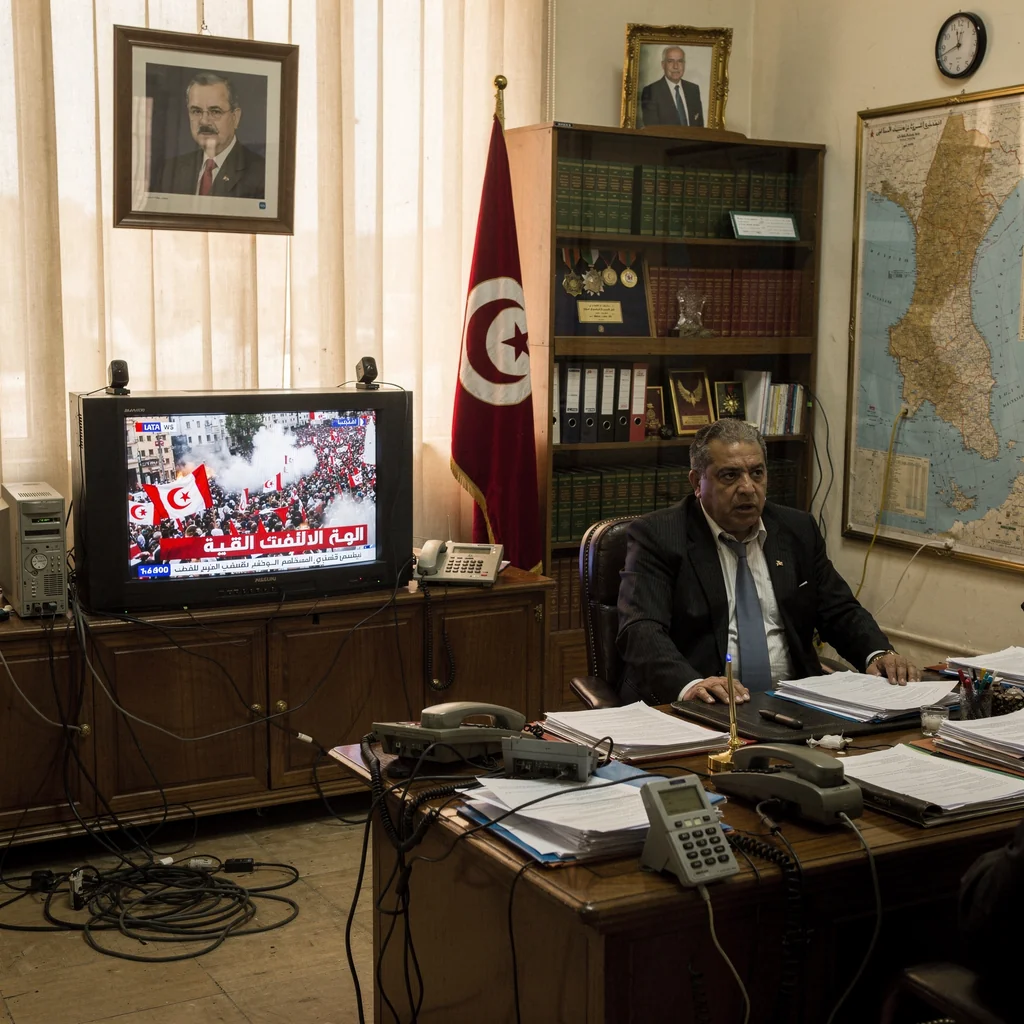
Tunis, 2007.
Omar was forty-nine years old. His empire had never been larger.
Three hotels. Five restaurants. Two beach clubs. A construction company. A transport company. Investments in tourism, in real estate, in services.
He had expanded along the coast. Hammamet. Sousse. Monastir. Djerba. The offshore sector was booming. The European Union was buying. The tourists were coming.
Omar had never been wealthier.
He sat in his office in Tunis. He looked at the financial statements. The profits were up. The occupancy was up.
We should expand, he told his manager. Buy another hotel. In Sousse.
Another one? the manager asked.
The market is growing, Omar said. The tourists are coming. We need more capacity.
But the banks, the manager said. They’re cautious. They’re talking about a global slowdown.
The banks are wrong, Omar said. Tunisia is different. We’re growing. We’re expanding.
Are you sure? the manager asked.
I’m sure, Omar said.
Yes, he said. Buy another hotel. Expand.
As you wish, the manager said.
Omar signed the papers. He approved the expansion. He committed to more debt. More investment. More risk.
The first sign was a drop in bookings.
January came. The tourists didn’t.
February came. The restaurants were empty.
March came. The hotels were half-full.
Omar called his travel agents in Europe. What’s happening?
The economy, they said. The crisis. The recession.
What crisis?
The global crisis, they said. The banks are failing. The people are scared. No one is traveling.
Omar didn’t believe them. It’s temporary. It will pass.
But it didn’t pass.
April came. The hotels were one-third full. The restaurants were serving twenty customers a night instead of two hundred.
May came. The banks stopped calling. The loans stopped coming. The credit dried up.
June came. Omar’s suppliers started demanding cash up front. No more credit. No more payment terms. Cash now.
July came. Omar couldn’t pay.
He had debt. He had payroll. He had taxes. He had suppliers. He had no cash.
He went to the bank.
He had been a customer for thirty years. He had borrowed millions. He had repaid millions. He had never missed a payment.
Can I get a bridge loan? he asked the bank manager. Just to get through the crisis?
The bank manager looked uncomfortable. Mr. ben Hadded…
I need 500,000 dinars, Omar said. Just for six months. I can repay it when the tourists come back.
The tourists, the bank manager said. When will they come back?
Next year, Omar said. Maybe sooner.
Next year, the bank manager said. That’s a long time.
I’m good for it, Omar said. You know me. You know my business.
We can’t extend credit at this time, the bank manager said.
But Belhassen got 15 million, Omar said.
Belhassen’s company is systemically important, the manager said.
And mine?
The manager didn’t answer.
Omar walked out of the bank. He stood on the street.
A World Bank report from 1973: The banking sector is moribund.
The sun was bright. The traffic moved.
September 2008.
Omar’s creditors were calling. His suppliers were threatening legal action. His landlord was threatening eviction.
Omar had one option left.
The government had announced a bailout program. A rescue package for struggling businesses. A state fund to help companies survive the crisis.
Omar applied. He filled out the forms. He submitted his financial statements. He waited.
Two weeks later, he received a letter.
His application had been denied.
He went to the government office. He asked to speak to the administrator.
Why was I denied? Omar asked.
The fund is exhausted, the administrator said.
Exhausted? Omar asked. It was announced three weeks ago.
The money has been allocated, the administrator said.
To whom? Omar asked.
To eligible businesses, the administrator said.
I’m eligible, Omar said. I meet all the criteria. I’m in tourism. I’m in the coastal region. I employ fifty people.
You don’t have the right connections, the administrator said.
What connections?
The right connections, the administrator said.
Omar was quiet.
Who received the money? Omar asked.
I can’t discuss that, the administrator said.
Can you give me a name? Omar asked. Just one name.
No, the administrator said.
Please, Omar said. I need to know who received the bailout that I was denied.
The administrator was quiet. He looked at Omar. He looked around the office. No one was listening.
Belhassen Trabelsi’s construction company, the administrator said quietly. Received 15 million dinars.
Omar felt like he had been punched.
Belhassen, Omar said. My partner.
Yes, the administrator said.
But… I provided the equipment, Omar said. I provided the materials. I provided the capital. The road project… it was my investment.
And the bailout went to him, the administrator said. Not to you.
Why?
Because, the administrator said, he has the right connections.
But I’m the one who needs it, Omar said.
I know, the administrator said. But the system is what it is.
Omar was silent.
Is there anything else? the administrator asked.
No, Omar said. Thank you.
Mr. ben Hadded, the administrator said. Be careful what you say. To anyone. About this conversation.
I understand, Omar said.
Good, the administrator said. Because if you speak out… there will be consequences.
Omar walked out of the government office.
Belhassen. Fifty-one percent. The road project. The profits. And now the bailout.
He walked to his car. He didn’t start the engine. He sat in the driver’s seat.
Belhassen, 2006: You’re replaceable.
January 2009.
Sami was waiting at a table in the back. He stood slowly, one hand on the table for support. His suit was old — the cuffs frayed, the collar worn.
Omar sat down.
How are you? Sami asked.
Omar didn’t answer.
Me too, Sami said.
The waiter brought tea. They sat in silence.
Belhassen, Sami said.
Don’t.
Fifteen million, Sami said.
I said don’t.
Sami was quiet. He stirred his tea.
I had a partner, Sami said. A different one. From the interior. Construction. Roads.
And?
He got the bailout, Sami said. I got the debt.
Omar was silent.
We built it, Sami said. We found the projects. We won the contracts. We hired the workers. We managed everything.
And they—
Took the profits, Sami said. Took the credit. Took the bailout.
But kept—
The risk, Sami said. That was ours.
He looked at his tea.
My son, he said. He wants to start a business. He asked me for advice.
Omar waited.
I told him no, Sami said. He looked at his hands. But I didn’t tell him everything. My construction crew — twelve men. They came to me in December. They asked if I could pay them for January. I couldn’t. I told them to find other work. They did. Hotel work. Security. One drives taxis now.
Sami picked up his tea cup. His hand shook slightly.
I should have sold my car, he said. I should have paid them myself. But I didn’t.
He took a sip of tea.
His hotels. His restaurants. His beach clubs.
No, Omar said. It wasn’t worth it.
Me neither, Sami said.
They sat in silence. The tea cooled in the cups.
What do we do now? Sami asked.
I don’t know, Omar said. Start over?
At our age? Sami asked. We’re in our fifties.
Then what? Omar asked.
Sami looked at the table. He looked at the tea cups. He looked at the abandoned construction site across the street. Cranes rusting in the wind. Half-built structures. Unfinished projects.
I don’t know, Sami said. But I know one thing.
What?
Sami nodded toward the abandoned construction site across the street. The rusted cranes rose above the empty buildings.
My grandfather had an olive grove, Sami said. Near Sfax. The trees are still there. Still producing.
Omar waited.
I visited last month, Sami said. My cousin tends it now. The trees don’t need permits. They don’t need connections.
Omar looked across the street. The rusted cranes. The half-built structures.
His grandfather’s olive grove.
My grandfather took me to the olive grove once, Omar said. When I was a boy. He showed me the trees. He told me: “These trees will outlast you. These trees will outlast your children. These trees will outlast your children’s children.”
Your grandfather was wise, Sami said.
He was, Omar said.
Omar looked across the street. The abandoned construction site. The rusting cranes.
The tea was cold in the cups.
I’m tired, Omar said.
Me too, Sami said.
What do we do now? Omar asked.
We wait, Sami said. We see what survives.
And if nothing does?
Then we plant new ones, Sami said.
Omar nodded.
Sami stood up. He left some coins on the table.
The olive grove, Sami said. Still there.
Omar watched him walk away. Sami’s limp was worse than Omar remembered — one leg dragged slightly with each step.
Beyond the rooftops, the cranes rose above the abandoned buildings, rusting in the wind.
End of Chapter 6