The cardboard box sat on Karim’s desk, half-filled with files. Thirty-nine years of hospital paperwork, reduced to what could fit in a single box.
He picked up the next file. Delivery Log, 1987.
The cover was faded. The pages yellowed. He opened it. The pages smelled of something between dust and damp, the particular smell of a life that had been stored.
January 1987: 34 deliveries February 1987: 31 deliveries March 1987: 29 deliveries
He turned the pages. The names were there. Women he had delivered. Babies he had caught. Life he had brought into the world.
He reached the end of the file.
Total for 1987: 347 deliveries.
He placed the file on his desk. He picked up the next one. Delivery Log, 2026.
He opened it.
January 2026: 3 deliveries February 2026: 2 deliveries March 2026: 2 deliveries
He turned the pages. The names were fewer. The spaces between entries wider.
He reached the end of the file.
Total for 2026: 28 deliveries.
He sat with the two logs on his desk. The paper was dry under his fingers. The numbers were ink in two different hands, thirty-nine years apart.
1987: 347 deliveries. 2026: 28 deliveries.
He had been twenty-two in 1987. He had believed the ward would always be full.
He was sixty-one now. The ward had one delivery last week. One delivery the week before. The cribs stood empty in the nursery, stacked in the corner because there was no need for them.
He stood up. He walked to the window. The hospital parking lot spread below him. The afternoon light slanted across the pavement. A few cars were parked in the visitor section. Not many. Most of the spaces were empty.
He had started here in 1985. He had been twenty. His first delivery — the baby slippery in his hands, the cry, the mother’s exhausted smile. The ward had been full then. The cribs occupied. The sound of new life everywhere.
He turned from the window. He looked at the cardboard box. The files. The accumulated evidence of a lifetime of witnessing.
Karim picked up the 1987 log. He opened it to a random page. May 1987.
The names were there. Fatima. Samira. Amina. Leila. Women he had delivered. Babies he had caught. Where were they now?
Some were dead. Some had left. Some were still in Tunisia, watching their children leave.
He closed the log. He placed it in the cardboard box.
He picked up the 2026 log. He opened it to the last page. December 2026.
There were two names this month. Two deliveries in the entire month of December. Two babies born in a hospital that once delivered three hundred.
He closed the log. He placed it in the cardboard box.
The box was nearly full now.
His phone buzzed on the desk. A message from Tayeb.
Three months in Jakarta now. The solar program is worse than expected. 100 gigawatts — they’re not even close. Atlas_bridge is struggling to implement. The grid failures are accelerating.
Solar, Karim thought. He went for solar.
I’ll be here longer than I thought, Tayeb’s message continued. Two more years, maybe three. The program is a mess. If I’m going to help them fix it, I need to stay on the ground.
Karim looked at the message. Two years. Three years. His cousin had been gone for thirty-six years. What was another three?
Bring back something good, Karim typed.
I’ll try, Tayeb replied.
The phone went dark. The box sat on the desk. The logs sat in the box.
He looked at the box. He looked at the empty nursery. He looked at the afternoon light slanting across the parking lot.
The corridor was empty. The hospital was quiet. It was the afternoon of his last day. No one had come to say goodbye. The younger doctors were busy with their own patients.
He walked toward the exit. He passed the nursery. The cribs were stacked in the corner, unused. He had delivered babies in this nursery. He had taught residents here. He had brought life into the world in this room.
Now the room was storage.
He passed the administrative office. The door was open. Dr. Chelly, the hospital director, was on the phone. Karim didn’t stop. He didn’t say goodbye.
He passed the nurse’s station. Two young nurses were on duty. They looked up as he passed.
Doctor, one said.
Nurse, he said.
He kept walking.
The automatic doors opened. He stepped outside. The air was cool. December in Tunis. The sky was overcast. There was no sun.
He walked to his car. It was parked in the staff lot. A fifteen-year-old Renault. The paint was faded. The engine made a sound when he turned the key. He didn’t care.
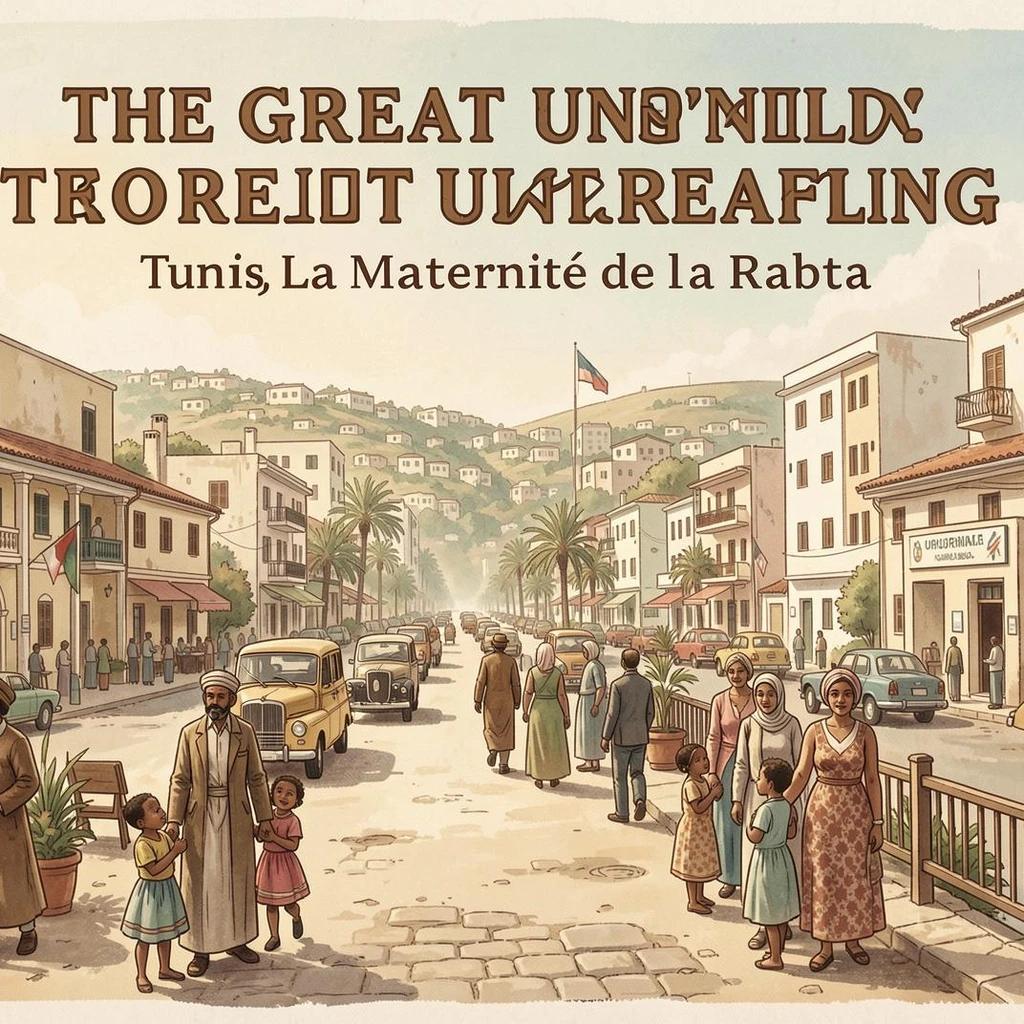
He sat in the driver’s seat. He didn’t start the engine. He sat with his hands on the steering wheel. He looked at the hospital building. La Maternité de la Rabta. He had spent thirty-nine years here. He had delivered thousands of babies.
- He was seven. His grandfather Mohamed had taken him to the zawiya.
What is this place? he had asked.
This is where we remember, his grandfather had said. Who we are. Where we came from. What we owe.
Inside, men had sat in a circle. The sheikh’s hand rested on the shoulder of the man beside him. That man’s hand rested on the shoulder of the next. They recited. The words were Arabic, but the melody was older.
Karim hadn’t understood the words. But the sound moved through his chest. His grandfather’s hand was warm on his shoulder.
The zawiya was closed now. The building was boarded up.
He started the engine. The car coughed, then roared to life.
He backed out of the parking space. He drove toward the hospital exit.
As he approached the gate, he saw the boarded building across the street. The zawiya. The wood was rotting. The paint had almost entirely flaked away. The Arabic inscription above the door was barely visible:
Where knowledge and Quran are gathered
He slowed the car. He looked at the building. He hadn’t been inside since 2011. The brief reopening after the revolution. The zawiya had opened. The circle had reformed.
Then 2013. The assassination. The zawiya closed again.
He accelerated through the gate. He turned onto the main road. He didn’t look back.
He parked the car in front of his building. It was an apartment block in the El Menzah district. Middle-class. Quiet. The kind of place where families lived, where children played in the courtyard, where life was ordinary.
There were no children in the courtyard today. There was no one playing. The courtyard was empty.
He climbed the stairs to the third floor. He unlocked the door. The apartment was quiet. Yasmine was at her sister’s in Sousse for the week.
He placed his keys on the table. He walked to the bedroom. He sat on the edge of the bed.
He sat for a long time without turning on the light.
Outside, the wind moved through the courtyard. The olive tree the landlord had planted in 1965 shifted its branches. The streetlamp made the leaves silver.
End of Prologue