Tunis, 1992.
Omar was thirty-four years old. He had survived the 1980s. He had survived the bread riots. He had survived the coup. He had rebuilt his business.
Now he was ready to expand.
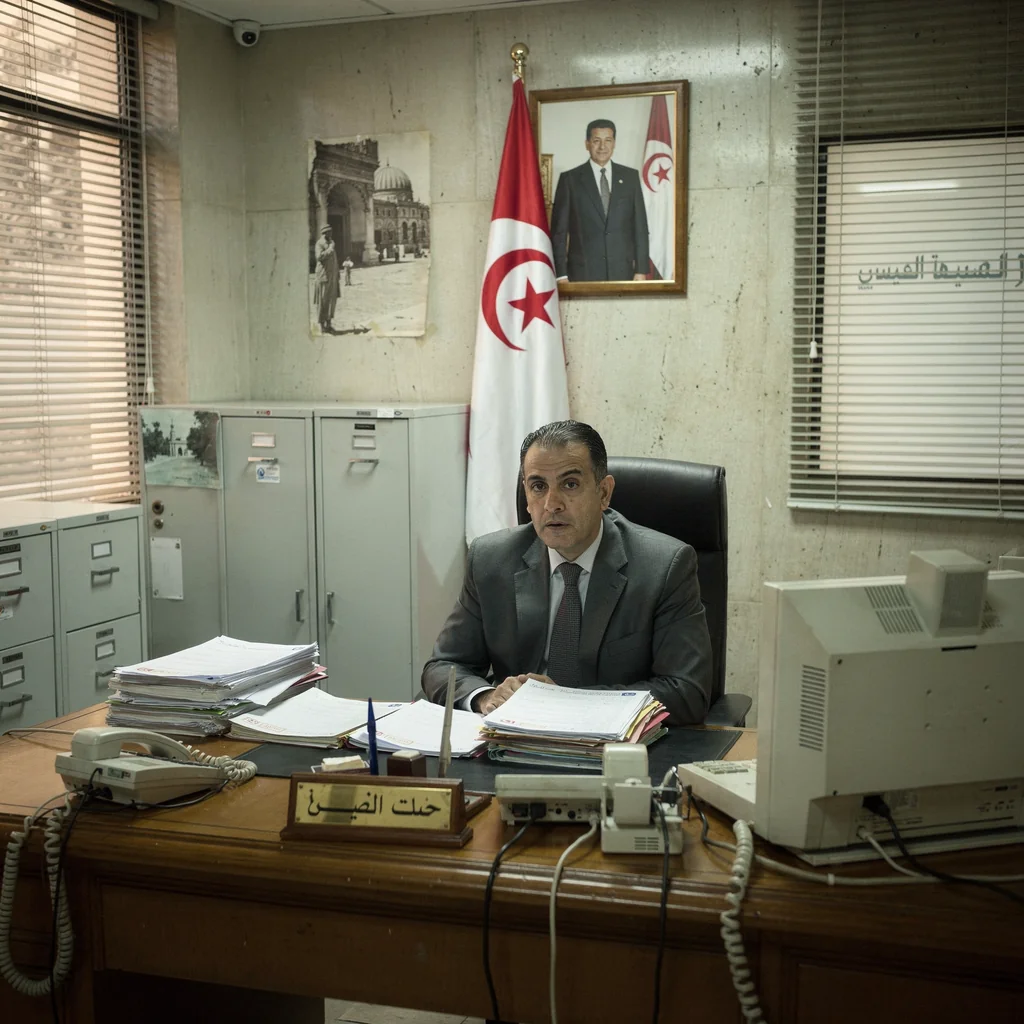
He sat in the office of the Investment Incentives Code. The government official across the desk was reviewing his application.
A tourism project, the official said. On the coast. Hammamet.
Yes, Omar said.
Hotels?
One hotel, Omar said. And a restaurant. And a beach club.
The official looked at the application. He looked at Omar.
Do you have a partner? the official asked.
Yes, Omar said.
Who?
Omar took a breath. This was the moment.
Belhassen Trabelsi, Omar said.
The official’s face changed. The wariness disappeared. The professional distance evaporated.
Belhassen, the official said. The brother-in-law of…
Yes, Omar said.
And how did you meet Monsieur Trabelsi? the official asked.
At a wedding, Omar said. A cousin of mine married into the family.
I see, the official said. And Monsieur Trabelsi is…
Fifty-one percent, Omar said. I am forty-nine percent.
The official nodded. This was the standard arrangement. The presidential family provided the connections. The investor provided the capital. The profits were split. The presidential family got the majority share.
This is a good application, the official said. Tourism is a priority sector. The coast is a priority region. The Investment Incentives Code will provide tax exemptions. Customs exemptions. Reduced social security contributions for the first five years.
How long, Omar asked, for approval?
Two weeks, the official said. Maybe three. With Monsieur Trabelsi’s name on the application…
Yes?
It will be fast, the official said.
Omar stood up. He shook the official’s hand.
Thank you, Omar said.
Congratulations, the official said. On your new venture.
Omar walked out of the office. He got in the car. He sat for a moment. His hands on the steering wheel.
Then he drove.
The road. The other cars. The afternoon light. Nothing specific. Everything ordinary.
He had done it. He had partnered with the presidential family. He had secured the tourism license. He was expanding.
Fifty-one percent for Belhassen. Forty-nine percent for Omar.
He felt successful.
He also felt something else. A heaviness in his chest. A knowledge that he had made a deal.
The servant with better clothes.
He told himself this was how business worked. He told himself everyone did it. He told himself there was no other way.
He drove to the construction site in Hammamet.
The wedding was in Carthage. The bride was the daughter of a government minister. The groom was the son of a general.
Omar had been invited. His hotel was successful now. The restaurant was thriving. The beach club was popular. He was someone.
He wore a suit that cost 3,000 dinars. Italian silk. French cut. He looked the part.
He arrived at the wedding hall. It was a palace by the sea. Marble floors. Crystal chandeliers. An orchestra playing.
He found his table. He sat with other businessmen. Other partners. Other minority shareholders.
They spoke in low voices.
How is your hotel? a man asked.
Full, Omar said. Every room. Every night.
And the restaurant?
Booked three weeks in advance.
The man nodded. You’re fortunate.
I worked hard, Omar said.
Of course, the man said. But you know what I mean.
He lowered his voice. We’re janitors with better clothes.
Omar knew what he meant.
Then the doors opened.
The presidential family arrived.
First came Belhassen Trabelsi. Omar’s partner. He wore a suit that cost more than Omar’s car. He walked with the confidence of a man who owned the room.
Behind him came other Trabelsis. Cousins. Brothers. Nephews. They wore suits that cost more than most Tunisians earned in a year.
Behind them came the President’s wife, Leila. She wore diamonds. She wore silk. She walked like a queen.
Behind her came the President himself. Zine el-Abidine Ben Ali.
The room went quiet.
The musicians stopped playing. The guests stood up. The waiters bowed.
Omar stood up. He bowed his head.
The presidential family walked to their table. The front table. The table with the best view of the sea.
Omar watched them.
He saw Belhassen whisper something to the President. He saw the President laugh. He saw the deference in the room.
He saw something else.
He saw the fear.
The other guests. The ministers. The generals. The businessmen. They didn’t just respect the presidential family. They feared them.
Omar felt the fear in his own chest.
He looked at the other businessmen at his table. They were all looking at their plates. They were all avoiding eye contact with the presidential family. They were all pretending to be invisible.
Don’t make eye contact, one of them whispered. Unless they speak to you first.
Omar looked at his plate. He felt the weight of the deal he had made. Forty-nine percent. He was the minority partner. He was the servant.
The wedding reception began. The musicians played. The guests danced. The food was served.
Lobster imported from Canada. Beef imported from Argentina. Wine imported from France.
Nothing was local. Nothing was Tunisian. Even the food was imported.
Omar ate his lobster. He drank his French wine. He danced with his wife.
He was successful. He was prosperous. He was at the wedding of a minister’s daughter.
And he had never felt more trapped.
Omar sat at the dinner table. His wife, Leila, was serving couscous. His daughter, Lina, was fifteen. His son, Bilal, was twelve.
How was work? Leila asked.
Omar pushed the couscous around his plate. He couldn’t tell her. He couldn’t tell anyone.
Fine, he said.
Lina looked at him. She was smart. She noticed things.
You’re quiet, she said.
It was a long day, Omar said.
Did you sign the contract? Bilal asked. The road project?
Omar looked at his son. Bilal wanted to be an engineer. He wanted to build things.
Yes, Omar said.
That’s good, Bilal said. You said it would be a big project. Important for the country.
Omar felt the weight in his chest. Yes, he said. Important.
Can we visit the site? Bilal asked. Can we see the construction?
Omar’s jaw tightened. Another contract. Another partner. Another deal where he was the junior.
Not yet, Omar said. It’s too early.
When? Lina asked.
Soon, Omar said.
He didn’t say: Never. He didn’t say: The site isn’t mine. He didn’t say: Your uncle Belhassen owns it.
He ate his couscous. The family talked about school, about friends, about the weekend.
Omar nodded. He smiled. He agreed.
Under the table, his fist was closed so tight his fingernails dug into his palm.
The funeral was at the cemetery in Sidi Bou Said. The grave was already dug. The marble headstone was already in place.
Hassen ben Hadded. 1930-2005. Senior Advisor to the ONFP. Beloved father and grandfather.
Omar stood at the edge of the grave. He was forty-seven now. He was wearing a black suit that cost 5,000 dinars. Italian silk. French cut.
He looked at the grave. He looked at the coffin. He looked at the mourners.
The President’s representative was there. The Minister of Health. The Director of the ONFP. They came because Hassen had been important. He had been a technocrat. He had been a modernizer.
Omar looked at Karim. His brother was forty. He was wearing a simple black suit. Off-the-rack. Not expensive.
Karim was crying. Not loudly. Just tears sliding down his face.
Omar wasn’t crying. He couldn’t. His phone had been ringing all morning. Clients. Partners. Belhassen. Everyone wanted something.
Are you okay? Omar asked.
Karim shook his head. No.
Neither am I, Omar said.
They stood together at the grave. The imam began the prayer. The mourners bowed their heads.
Allahu akbar.
God is great.
Omar bowed his head. His father. The man who had believed in modernization. The man who had helped implement the family planning program. The man who had died believing he had done the right thing.
The deliveries. The declining births. The empty cribs. Omar had heard Karim talk about it. He had seen the statistics. He had seen the reports.
He didn’t know whether his father had been right or wrong. He only knew that his father had died believing.
After the burial, they went to the family home. The apartment was full of mourners. Neighbors. Colleagues. Friends.
Omar moved through the crowd. He shook hands. He accepted condolences. He was the eldest son. He had to be strong.
He found Karim in the kitchen. His brother was standing alone. He was looking out the window. The traffic moved below. The city went on.
How are you? Omar asked.
I don’t know, Karim said. I keep thinking about the last conversation. The argument. In 1992. At the Ministry.
Omar remembered. Karim had come home angry. He had argued with their father about the family planning program. About the empty ward. About the coercion.
I don’t think he ever understood, Karim said. What he had done. What he had helped destroy.
He believed he was helping, Omar said.
I know, Karim said. That’s what makes it harder. He wasn’t evil. He was just wrong.
Omar looked at the mourners. The deals he had made. The compromises he had accepted. The partnerships he had formed.
I’m building things, Omar said. Hotels. Restaurants. Tourism. I’m creating jobs.
I know, Karim said.
But, Omar said. I’m making deals too. Compromises. I’m partnering with people I shouldn’t partner with. I’m doing things I swore I wouldn’t do.
Like what? Karim asked.
Omar studied his shoes. He couldn’t tell his brother about Belhassen. He couldn’t tell anyone. The contract required silence.
Business is complicated, Omar said.
It doesn’t have to be, Karim said.
Yes, Omar said. It does.
He looked at his brother. Karim was a doctor. He delivered babies. He saved lives. He helped people.
Are you happy? Omar asked. At the hospital?
Karim stared at the water bottle in his hand. I’m doing what I can.
But is it enough? Omar asked. Financially, I mean.
We manage, Karim said.
Omar reached into his pocket. He took out his wallet. He took out a business card.
I know people, Omar said. At the Ministry of Health. At the hospital administration. I can make calls. I can get you a promotion. A raise. Better hours.
Karim looked at the card. He looked at Omar.
I don’t want your help, Karim said.
It’s not help, Omar said. It’s connections. Everyone uses connections. Even in medicine.
Not me, Karim said. Not in medicine.
Why not? Omar asked. I’m trying to help. I have connections. I can make things easier for you.
I don’t want things to be easier, Karim said. I want to earn what I get. I want to know that I deserve my position. I want to know that I’m there because I’m a good doctor, not because my brother made a phone call.
Omar felt the frustration rise. You’re being stubborn.
I’m being principled, Karim said.
Principles don’t pay the bills, Omar said.
I pay my bills, Karim said. I have a pension. I have a salary. I have enough.
You could have more, Omar said.
I don’t need more, Karim said.
Omar looked at his brother. Karim was stubborn. He was idealistic. He was poor but proud.
Fine, Omar said. Have it your way.
I will, Karim said.
The silence stretched between them. The distance widened.
Omar’s phone rang. He looked at the screen. Belhassen.
I have to take this, Omar said.
Of course you do, Karim said.
Omar answered the phone. He walked out of the kitchen. He walked to the balcony. He closed the door.
Through the glass door, Omar could see Karim standing alone in the kitchen. His brother was looking out the window. The traffic moved below.
Belhassen was talking. Omar listened. He agreed. He promised.
Yes, Belhassen. Of course, Belhassen. Whatever you need, Belhassen.
Through the glass, Karim turned from the window and walked out of the kitchen without looking back.
Omar hung up. He stood on the balcony. The evening air was cool against his face. The streetlights flickered on below.
He looked at his hands. The hands that had shaken Belhassen’s hand. The hands that had signed the tourism license. The hands that now held a phone that never stopped ringing.
He thought of their grandfather’s words: Everything important is transmitted hand to hand. Shoulder to shoulder. When the circle breaks, the transmission stops. And when the transmission stops, something dies that cannot be named.
His father was dead. The circle was broken. The transmission had stopped.
His phone buzzed again. He silenced it. He went back inside to the mourners, to the handshakes, to the condolences.
Omar’s empire had grown. One hotel had become three. One restaurant had become five. He had expanded to Sousse. To Monastir. To Djerba.
He was forty-eight years old. He was wealthy. He was successful. He was tired.
Then came the request.
It came in a phone call. From Belhassen Trabelsi. His partner. His majority partner.
Can you meet me? Belhassen asked.
Of course, Omar said.
Come to my office, Belhassen said. In Tunis.
Omar drove to Tunis. He went to the office building in the city center. He took the elevator to the top floor.
Belhassen’s office was large. It overlooked the city. The windows stretched from floor to ceiling.
Omar, Belhassen said. Sit down.
Omar sat.
I have a favor to ask, Belhassen said.
Of course, Omar said. Anything.
My nephew, Belhassen said. He’s starting a business. A construction company. He needs a project.
I can give him a project, Omar said.
No, Belhassen said. He needs a partner. Someone with experience. Someone with capital.
I can be his partner, Omar said.
Good, Belhassen said. Now, the project.
What project?
Belhassen named a government contract. A road construction project. A highway in the interior. A contract that would be awarded by the Ministry of Equipment.
I know this project, Omar said. I was planning to bid on it.
Don’t bid, Belhassen said. Give it to my nephew. Let him have the contract.
Omar was confused. But I’ve prepared the bid. I’ve done the studies. I’ve arranged the financing.
All of that, Belhassen said, give to my nephew.
Then what do I do?
You supply the trucks, Belhassen said. You supply the equipment. You supply the materials.
And the profits?
Fifty-fifty, Belhassen said.
Omar weighed the words. The road project. The preparation. The investment.
I’ve already invested 200,000 dinars in preparation, Omar said.
That’s your contribution, Belhassen said. To the partnership.
I’m putting in the capital, Omar said. I’m providing the equipment. I’m providing the materials. And I’m giving him fifty percent of the profits?
Yes, Belhassen said.
That’s not fair, Omar said.
Belhassen looked at Omar. His face was neutral.
Fair, Belhassen said. Is for people who don’t have my phone number.
Omar said nothing.
Do you want to keep your hotels? Belhassen asked.
What?
Your hotels, Belhassen said. Your restaurants. Your beach clubs. Do you want to keep them?
Of course.
Then do this, Belhassen said. For my nephew.
What if I refuse?
Belhassen stood up. He walked to the window. He looked out at the city.
You’ve been a good partner, Omar, Belhassen said. You’ve made us both a lot of money.
Thank you.
But, Belhassen said, don’t overestimate your importance. I have other partners. Other businessmen. Other people who would be happy to take your place.
Omar didn’t respond.
Your licenses, Belhassen said. Your permits. Your tax exemptions. They can all be revoked. They can all be reassigned.
You wouldn’t, Omar said.
Belhassen turned from the window. He looked at Omar.
Try me, Belhassen said.
Omar felt the sweat on his back. He felt the fear in his chest.
What do you want? Omar asked.
I want you to do this favor, Belhassen said. For my nephew. The road project. Give it to him. Take fifty percent. And never speak of this conversation again.
Omar stared at the floor.
Do we have an agreement? Belhassen asked.
Omar’s hotels. His restaurants. His beach clubs. The years of work. The investments.
Yes, Omar said.
Good, Belhassen said. I’ll have my lawyer send the papers.
Omar stood up. He walked to the door.
Omar, Belhassen said.
Omar turned.
You’re a good businessman, Belhassen said. But you’re replaceable.
Yes, Omar said.
Remember that, Belhassen said.
I will, Omar said.
Omar walked out of the office. He took the elevator down. He walked to his car.
He sat in the driver’s seat. He didn’t start the engine.
The deal. The road project. The 200,000 dinars he had invested in preparation.
The threat. “You’re replaceable.”
His hands gripped the steering wheel. The leather creaked under his fingers.
Two days later, the papers arrived.
Omar sat in his office. His lawyer had reviewed them.
It’s a standard partnership agreement, the lawyer said. Fifty-fifty split. Your nephew provides the expertise. You provide the equipment and materials.
It’s not my nephew, Omar said. It’s Belhassen’s nephew.
The paper doesn’t say that, the lawyer said. The paper says “nephew of partner.”
I see, Omar said.
There’s one more thing, the lawyer said. There’s a confidentiality clause.
What does it say?
It says you can’t discuss the terms of the partnership, the lawyer said. With anyone. Not your wife. Not your partners. Not your brother. No one.
Is that legal?
It’s in the contract, the lawyer said. If you sign it, it’s binding.
Omar looked at the contract. The terms were clear. He would provide the equipment. He would provide the materials. He would provide the capital. Belhassen’s nephew would provide… what? His name? His connection?
I’m being robbed, Omar said.
You’re doing business, the lawyer said.
This is extortion, Omar said.
It’s a contract, the lawyer said. You can sign it or not.
If I don’t?
Then, the lawyer said, you lose your hotels.
Omar was silent.
What should I do? Omar asked.
Sign it, the lawyer said. What other choice do you have?
Omar picked up the pen. His hand was shaking. Just slightly. A tremor he couldn’t control.
He looked at the signature line. The place where he would sign away his dignity. His pride. His self-respect.
His hotels. His restaurants. His beach clubs. The years of work.
The 200,000 dinars.
Belhassen’s words: “You’re replaceable.”
Omar signed.
His hand shook as he wrote his name. The letters were uneven. The line wavered.
You’re shaking, the lawyer said.
I’m fine, Omar said.
Are you sure?
I’m fine, Omar said.
He capped the pen. He pushed the contract across the desk.
I’ll file it, the lawyer said. No one will ever know.
Thank you, Omar said.
The lawyer left. Omar was alone in his office.
He looked at his hand. The hand that had signed the contract. The hand that had shaken.
The wedding in 1996. The words of the businessman: “We’re janitors with better clothes.”
Omar had disagreed then. He had told himself he was a partner. He had told himself he had chosen freely.
Now he knew the truth.
He looked at his hand. The hand that had shaken Belhassen’s hand. The hand that had signed the contract.
He went to the sink. He turned on the water.
He washed his hands.
The water ran over his fingers, warm at first, then cold. He watched it swirl in the basin — clear, then gray with the ink that hadn’t quite dried, then clear again.
He turned off the water. He looked at his reflection in the dark window above the sink. The face that stared back was his own. The hands that hung at his sides were clean.
The contract lay on the desk behind him. Three copies. Signed. Witnessed. Filed.
He did not look at it again.
End of Chapter 4
End of Part I - THE BEGINNINGS