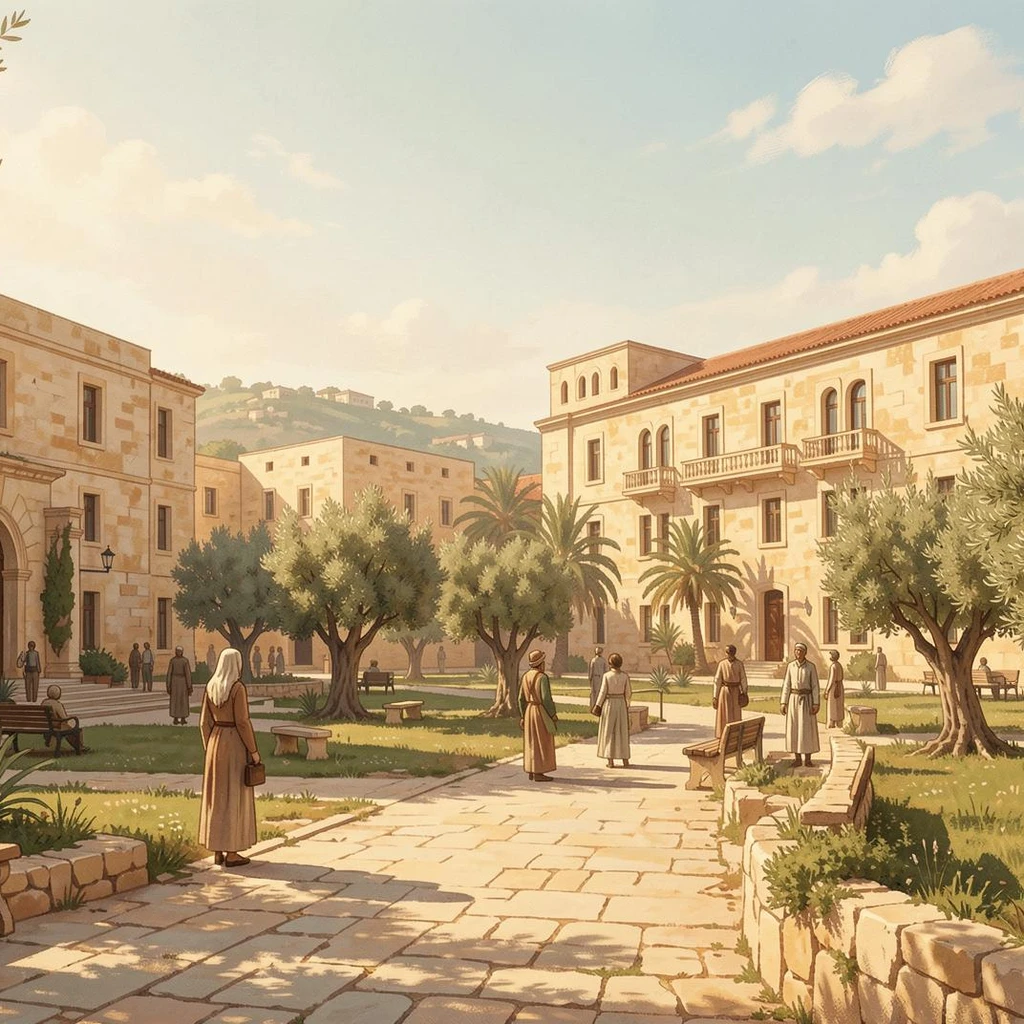
CHAPTER 10 — OCTOBER 2030: RECRUITMENT
Tunis, October 2030. Eighteen months since the first attempt failed.
January 2029. Tayeb had stood in a community center in the medina, explained Indonesia, proposed rebuilding. Five people had come. Two had left before he finished speaking. The remaining three had asked: Why should we listen to you? What makes you think you can bring back what’s gone?
He’d had no answer. He’d gone home to the grove with the trees that still stood and the children who didn’t come.
June 2029. He sat in Cafe du Nordion, watching the university students pass. They gathered in groups, talked intensely, argued about politics, about economics, about the future. But there was a pattern — the same names came up again and again. Bourguiba. The state. The EU. The IMF. Never the networks. Never what was gone.
November 2029. He met an imam at the Al-Zaytuna Mosque. Old man, eighty, remembered before. “The transmission is broken,” the imam said. “I can recite the formulas, but the spirit is gone. The network is gone. There’s no one to transmit to.” Tayeb asked: what if we rebuild? The imam had shaken his head. “You can’t rebuild what was destroyed. The soil is dead.”
December 2029. Tayeb stopped going to the mosque. He stopped attending lectures. He sat in the grove, watched the trees. The soil was dead. The transmission was broken. Nothing survived.
He had spent decades on this question — studying, researching, traveling to Indonesia — and for what? To return with answers that no one wanted, to propose rebuilding what no one believed could be rebuilt, to watch the empty cribs multiply while the trees stood silent witness to his failure. The weight of it pressed against his chest. He closed the notebook and sat in the silence.
February 2030. He’d returned to Cafe du Nordion — espresso smell, student noise, the window facing the university gates. The same students argued at the same tables. But a word kept surfacing in their conversations: resilience. What works, not what’s ideal.
March 2030. A sociology student sat across from him. “You’re the engineer. The one who was in Indonesia.” She’d asked what he found. He’d told her. She’d listened carefully, then asked a question he hadn’t expected.
April 2030. She brought a friend — a history student. They sat with Tayeb, asked questions, listened to his observations about Indonesia. Then the history student brought an engineering dropout. And the dropout brought his sister. They gathered at Tayeb’s table. Six people. They came to talk about what was missing. About what might remain.
June 2030. They met at the grove. Tayeb showed them the trees. His grandfather’s trees. His great-grandfather’s trees. The grove owner’s chair stood empty at the edge of the orchard. The students were quiet. One of them — the history student, Youssef — said: “The trees survived. Something must have survived with them.”
July 2030. The group grew. And shrank. Two students stopped coming — exams, summer jobs, loss of interest. One new person came — a young woman whose grandfather had been a shaykh in a tariqa before the dissolution. She knew things. Dhikr formulas. Stories of the saints.
August 2030. Tayeb stopped talking about Indonesia. The students had heard enough. They wanted to talk about what was here.
September 2030. The summer ended. The students returned to university. The group stabilized at six — Youssef, the history student; Amira, the sociology student; Malik, the engineering dropout; Samira, the tariqa granddaughter; two others who came and went. They met weekly in the grove. They talked about what survived.
October 2030. Eighteen months after the first attempt failed.
Tayeb stood in the grove. Six faces turned toward him. Autumn light through the olive branches, the limestone soil pale in the afternoon.
Two Weeks Earlier — University of Tunis
Youssef had been searching for six months.
He’d started in the library — reading everything he could find about the networks, the habous system, the zawiya, the way things used to work before 1957. The books were disappointing. Most described the networks as backward, feudal, obstacles to progress. The few that defended them were written in the 1920s, outdated and inaccessible.
He’d tried the mosques. The imams were polite but dismissive. “The old ways are gone, son. We live in a modern republic now. We should be grateful.” One older imam had hesitated, looked around the empty mosque, and said: “The transmission is broken. There’s no one to transmit to. You’re asking for what cannot be given.”
Youssef had stopped going to the mosques.
He’d tried his own family. His grandmother — small, weathered, hands that remembered the dhikr movements — had taught him what she could. The formulas. The practices. But she was old now. Her memory was fading. And there was no institution to carry what she knew.
“You need a community,” she’d said. “Dhikr is not solitary practice. The transmission requires relationship. Teacher to student. Elder to youth. I can teach you, but I’m the last link in a broken chain.”
He’d searched for other fragments. Other families. Other practices. He’d found stories — grandparents who remembered, habits that survived in private, formulas recited in homes — but they were scattered, isolated, disconnected.
Then he’d heard about Tayeb.
“The solar engineer,” a classmate had mentioned. “The one who went to Indonesia. Studied their networks. Came back last year.”
Youssef had found the guest lecture announcement. Solar energy in Southeast Asia. September 15, University of Tunis, School of Engineering. He’d attended.
Tayeb had spoken about solar irradiance, PPA optimization, grid integration. Technical expertise, clearly delivered. But toward the end of the talk, he’d mentioned Indonesia offhandedly — the pesantren networks, the NU organization, the waqf system that supported them.
After the lecture, Youssef had approached him.
The Grove — Present Day
October light through the olive branches. The air was dry — limestone dust and wild rosemary, the Mediterranean autumn cool after summer’s furnace. No humidity. No kretek. Just the wind in the leaves and the distant sound of traffic on the hill road.
Youssef sat across from him on the mat.
“You mentioned Indonesia,” Youssef said. “You mentioned their networks. Pesantren. NU. Waqf. You said they survived.”
“They survived,” Tayeb said.
“But you didn’t say we should copy them.”
Tayeb looked at the young man — thin, intense, eyes that missed nothing.
“No,” Tayeb said. “I didn’t.”
Tayeb’s hand went to the notebook in his jacket — the reflex of eighteen months of rejections. He’d been through this before. Young people asking about Indonesia, asking about copying. He’d given the answer — Tunisia is not Indonesia — and watched their eyes glaze over, watched them drift away.
But Youssef didn’t drift away. He leaned forward.
“Why not?” he asked.
“Because Tunisia is not Indonesia,” Tayeb said, giving the standard answer. “What worked there might not work here. What survived there might not survive here.”
He waited for Youssef to lose interest. To drift away. To ask: But if we can’t copy them, why are you telling me about them?
But Youssef didn’t ask that.
“So what does work here?” he asked instead. “What survived? What can we build from?”
Tayeb looked at him. In eighteen months, every young person had asked the same question. This one had asked a different one.
“Tell me about your search,” Tayeb said. “Why are you asking these questions?”
Youssef told him. The library searches, the disappointed imams, the grandmother teaching dhikr in their living room, the broken transmission. “I’m trying to learn,” he said. “But there’s nowhere to learn. The mosques are state-run. The imams are state-appointed. They teach what the state allows. My grandmother knows something else — something older, something deeper — but she can’t teach me alone. She needs a community. And the community is gone.”
“What do you want?” Tayeb asked.
“A teacher,” Youssef said. “Not an imam appointed by the state. A teacher chosen by the community. Someone who knows what my grandmother knows. Someone who can transmit what she received.”
Tayeb was quiet. His hand was still on the notebook. The community center. Five people. Two leaving before he finished.
“I can’t give you a teacher,” Tayeb said. “The teachers are gone. The zawiya are closed. The transmission was broken.”
He watched Youssef’s face fall.
“You’re not the first person to ask this,” Tayeb continued. “You won’t be the last. I’ve tried before. I’ve proposed rebuilding. People looked at me like I was crazy. They said: why would we want to go back? We’re a modern republic now. We’ve moved on.”
“So there’s no hope,” Youssef said.
“I didn’t say that,” Tayeb said carefully. “I said you can’t rebuild what was destroyed. The institutions, the networks, the transmission — they’re gone. They can’t be restored.”
He paused. “But that doesn’t mean nothing is possible.”
Youssef looked up.
“Then we rebuild the transmission.”
Tayeb shook his head. “You can’t rebuild what was destroyed.”
“Then we build something new,” Youssef said. “Something that can grow here. Something rooted in what remains.”
He paused. “My grandmother is still alive. What she knows is not gone. It’s scattered. It’s hidden. It’s not institutionalized. But it’s not gone.”
Tayeb looked at him — young, intense, willing to try despite the odds. What if the answer wasn’t copying? What if the answer was starting from what was already here?
“What else remains?” Tayeb asked, testing the possibility.
“People,” Youssef said. “Families. Grandparents who remember. Practices that survived in private. Teachings that passed from parent to child, even when the institutions were destroyed.”
He leaned forward. “The state closed the zawiya. Abolished the waqf. But my grandmother still knows the dhikr — she learned it from her grandfather, in the zawiya, before they padlocked the doors. She teaches me in her living room. The state can legislate institutions. It can’t legislate what happens between a grandmother and her grandson.”
Tayeb sat back. His grandfather. The grove. The trees. The stories told in the dark — stories of the zawiya, the habous, a time when the community provided for itself.
His grandfather was gone. But what he’d received, however incompletely — that remained.
“The relationships survived,” Tayeb said.
“My grandmother. Amira’s grandfather. People who remember — in families, in private.” Youssef’s hands moved as he spoke, tracing connections. “If we could gather what they know…”
“Then something grows,” Tayeb said. “Not a copy. Something rooted here.”
He stood up. “I know others. Students who feel the same gap. We don’t want to go back to 1950. We want to move forward. But with something that belongs to us — not imported, not imposed.”
Tayeb’s hand pressed flat on the mat. The community center. The Ministry. The scholars. All those doors closed. And now this one, opening.
“How many?” Tayeb asked.
“A dozen. Maybe two. We’ve been meeting informally. Reading. Discussing. But we need guidance. We need someone who understands the mechanism. Who understands how networks work. Who understands what survived elsewhere, even if it can’t be copied.”
He looked at Tayeb. “We’ve been waiting for you to stop trying to rebuild and start something different.”
Tayeb was quiet. Eighteen months of doors closing.
The grove. The empty cribs. The mosque announcements: three births this year, five deaths.
Youssef’s grandmother, teaching dhikr in her kitchen, the last link in a chain that could break at any moment.
“Bring them,” Tayeb said. “To the grove. This weekend. We’ll talk.”
The Grove, Saturday afternoon. The olive trees stood in rows — trunks gnarled, bark cracked by decades of Mediterranean sun, roots visible where the limestone had eroded around them. Silver-green leaves turning in the autumn wind. Tayeb’s grandfather had planted these. His grandfather’s grandfather had planted the first.
Nine young people arrived. Youssef had brought them.
There was Amira — twenty-four, a sociology student, studying what survived when institutions collapsed. Her grandfather had been a habous administrator before 1957, before the nationalization. He’d told her stories: how the waqf had funded schools and hospitals and mosques, how the endowments had provided for the community, how the networks had operated independently of the state.
“The waqf is gone,” Amira said. “But the principle remains. The idea that the community can provide for itself. That wealth can be held in trust. That resources can be pooled for the public good.”
There was Malik — twenty-six, an engineering dropout, frustrated with the state’s inability to solve problems. His neighborhood had no community center. No youth programs. No spaces for young people to gather except cafes, where you had to buy something, or the street, where the police harassed you.
“We need spaces,” Malik said. “Spaces that belong to us. Not the state. Not the market. Spaces where we can gather, discuss, learn, decide for ourselves what we need.”
There were others — students of literature, of economics, of architecture. Each carried a fragment of what survived. Each recognized the void. Each was searching for something new.
They gathered in the grove, sitting on mats under the olive trees. Tayeb had brought dates and tea. They ate. They talked.
“Why Indonesia?” Amira asked. “Why did you go there?”
“To learn,” Tayeb said. “To understand how they preserved their networks when we destroyed ours.”
“And what did you learn?”
“That preservation requires economic independence,” Tayeb said. “Indonesia’s networks survived because they had their own funding — the waqf. When the state couldn’t interfere, they remained autonomous.” The wind moved through the olive branches. A leaf spiraled down onto the mat between them. “But Tunisia abolished the waqf in 1957. The funding went to the state. The independence went with it.”
“So we can’t rebuild the waqf,” Amira said. “The state won’t allow it.”
“The state won’t allow it,” Tayeb agreed.
“So what do we do?” Malik asked. “How do we fund ourselves? How do we create spaces that belong to us?”
“I don’t know,” Tayeb said. “But it won’t be a copy. And it won’t be a revival. It has to grow from here — from what survived.”
He looked around the circle. “You’re what survived. What your grandparents kept. What continued in private when the institutions were destroyed.”
Youssef nodded. “We’re the seeds.”
“Seeds need soil,” Tayeb said. “They need water. They need each other.”
“What do we cultivate?” Amira asked.
“Connection,” Tayeb said. “Relationship. Transmission. The community deciding for itself what it needs — not the state deciding for it.”
He stood up. “I’m not a teacher. I’m an engineer. I went to Indonesia to study networks, not to lead them. But I know this: the network is not the institution. The network is the transmission itself. And the transmission requires relationships.”
He gestured to the circle.
“You have relationships. You have fragments. You have the willingness to gather. That’s enough to begin.”
“Begin what?” Malik asked.
“Something that doesn’t have a name yet,” Tayeb said. “Not a zawiya. Not a pesantren. Something that belongs to here. To now.”
He paused. “What would that look like?”
The olive leaves rustled in the autumn wind. The Mediterranean light slanted through the branches.
“A circle,” Amira said finally. “Like this. We gather. We share what we know. We teach each other.”
“My grandmother can teach dhikr,” Youssef said. “She learned in the zawiya, before they closed.”
“My grandfather remembers how the waqf worked,” Amira said. “The principle, even if the institution is gone.”
“I can organize,” Malik said. “I studied engineering before I dropped out. Planning, logistics, projects.”
“And I can tell you what I saw in Indonesia,” Tayeb said. “Not to copy. Just so you know what it looks like when networks survive.”
“Is that enough?” Youssef asked.
“It’s enough to begin,” Tayeb said.
“When?” Amira asked.
“Next week,” Tayeb said. “Same place. Same time. Bring your grandparents if they’re willing. Bring what they remember.”
“And then what?”
“Then we see what grows,” Tayeb said.
They returned the next week. And the week after. Youssef brought his grandmother — a small woman, weathered face, clear eyes, hands that still moved through the dhikr gestures automatically, the way a body remembers what the mind forgets. Amira brought her grandfather — tall, stooped, voice raspy, memory sharp for the waqf’s operations.
They gathered under the olive trees. The grandparents taught. The young people learned.
Tayeb watched. He took notes. The question he’d carried since Indonesia — What did they preserve that we destroyed? — sat differently now. Something else was forming beneath it. He couldn’t name it yet.
Youssef’s grandmother sat cross-legged on the mat, her weathered hands resting on her knees. The dhikr began — her voice low, Arabic syllables measured and slow, the young people gathering close, their knees touching in the circle. The chant found a rhythm, settled into a pulse.
The October wind moved through the grove. The olive leaves turned, pale undersides catching the late afternoon light. A single adhan rose from the village mosque — thin, solitary, the call carrying over the limestone hills.
Tayeb stood at the grove’s edge, notebook closed in his hand. The Mediterranean darkened beyond the ridge. The tea on the table between the mats had gone cold.