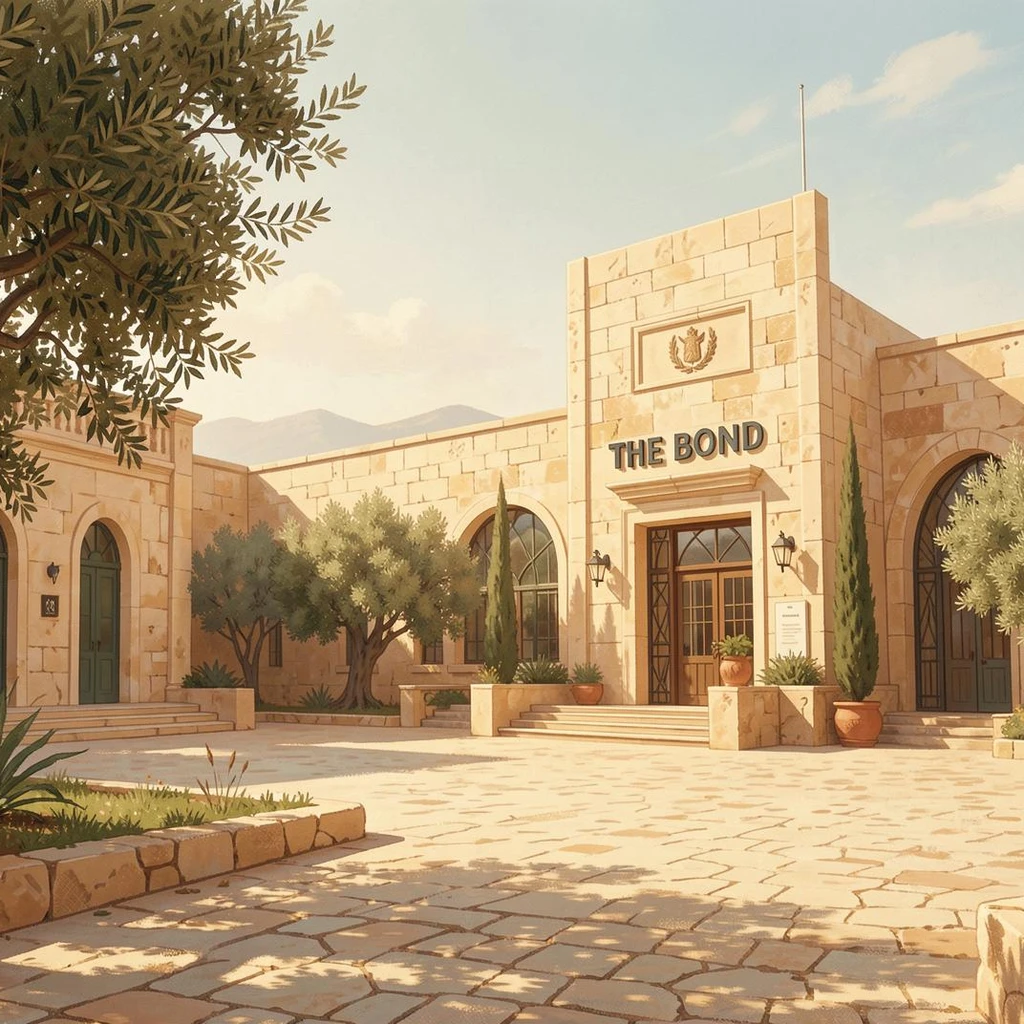
CHAPTER 12 — 2032-33: EXPANSION + CRISIS
Winter 2032. Three years since the first attempt failed. Two years since the circle began.
The grove had changed. Or maybe the world around it had changed.
September 2031. The circle stabilized at thirty. Enough to feel substantial, not enough to draw attention. The grove was full on Saturdays, but not crowded. The dhikr practice was consistent — everyone knew the formulas now, everyone participated.
October 2031. Youssef’s grandmother died quietly in her sleep, eighty-three years old, the last living link to the zawiya before 1961. She had been the carrier of the old dhikr fragments, the one who remembered the melodies, the rhythms, the specific formulas that had been transmitted before the dismantling.
The circle sat for her in the grove — thirty people gathered under the olive trees, reciting what she had taught them, their first collective practice of what she had passed on. Youssef led the dhikr, his voice steady, his face composed. He had been preparing for this moment, carrying her transmission, learning what she could offer in her final months.
One formula remained — the ya Lateef invocation she had whispered in her final weeks, the gentle repetition she had taught him when her strength was fading: Ya Lateef, ya Latif, riffa hamma min kulli ḍaliq — O Gentle One, O Subtle One, ease the burden of every constrained one. This was now part of the circle’s practice, carried from her deathbed into the living community.
After the funeral, after the burial, after the third day of recitations, Youssef grew quieter. He had always been serious, always intense, always focused on the practice. Now there was a new certainty about him — less questioning, more resolve, as if the grandmother’s passing had transferred something beyond just the dhikr formulas.
He was twenty-five now. The last living link to the pre-1961 networks was gone, and he had become the link instead.
November 2031. A young couple came — married two years, one child, pregnant with the second. They’d heard about the circle from a friend. They were looking for community. Looking for something beyond the state’s family planning clinics. The circle welcomed them.
December 2031. Two more families came. Then another. The circle was growing again — thirty-five, forty. The grove was getting crowded. Malik organized a second weekly gathering — Wednesdays in a rented community room, for those who couldn’t make Saturdays.
January 2032. Tension about growth. Some old-timers worried about dilution — too many new people, too fast, the practice losing depth. Others argued for openness — the fragments needed to spread, not hide. The argument lasted weeks. No resolution, but an accommodation: newcomers would spend their first three meetings learning the basics before fully participating.
February 2032. The circle reached fifty. Young families brought children. The sound of children’s laughter mixed with the dhikr chant. The trees that had witnessed only absence for decades were witnessing life again.
March 2032. The state noticed.
Tayeb saw it first in the subtle ways — a car parked on the road overlooking the grove, someone taking notes during the Saturday gatherings, questions asked in cafes: What happens in that grove? Who leads it? What do they teach?
The circle debated: ignore? engage? confront? They decided to continue. The practice was public. The gathering was open. They had nothing to hide.
April 2032. A journalist came — young woman from a progressive magazine, sympathetic, curious. She interviewed participants, wrote an article: “The Circle Under the Olive Trees: A New Kind of Community Rising in the Shadow of the Empty Cribs.”
The article was careful. It focused on the families. The children. The sense of belonging. It didn’t mention religion. It didn’t mention the dhikr practice or the grandparents’ fragments or the zawiya histories.
The article went viral.
May 2032. More young people came. The circle expanded again — sixty, seventy. The grove was crowded. The logistics strained. Malik organized a third weekly gathering — Fridays in a different neighborhood.
June 2032. Crisis of growth. The circle was too big for one grove, too big for informal leadership. Decisions that had been made by consensus now required coordination. Newcomers didn’t know the history, didn’t understand the practice, wanted to change things. The old-timers felt diluted.
July 2032. The circle debated: cap membership? split into multiple circles? formalize leadership? No consensus. The argument was heated. For the first time, people left — not because they lost interest, but because the circle was becoming something they hadn’t signed up for.
July 15, 2032. The second circle formed.
Samira — twenty-three, who’d been with the circle since its first weeks, who’d brought the dhikr formulas from her grandfather’s tariqa — offered to facilitate a new gathering in her neighborhood. Ariana, a working-class suburb north of Tunis. She knew families there. She knew a community center they could use. She felt ready.
Youssef trained her. He spent three sessions walking her through the dhikr practice — the formulas, the rhythms, the breathing. He explained the history: the zawiya networks, the grandmother’s transmission, the fragments they were reconstructing. He described the bond: collective discernment, shared decision-making, the capacity to determine maslahah together.
She nodded. She understood. She was ready.
The first Ariana gathering was held on a Tuesday evening in July. Eighteen people came — young families, single mothers, elderly people who’d heard about “the circle under the olive trees” and wanted something closer to home. Samira facilitated. She led the dhikr. She explained the history. She described the bond.
The gathering ended. People thanked her. They said they would return.
Youssef arrived late — he’d been at the grove with Malik, discussing logistics. He sat with Samira after everyone had left. She was excited. Eighteen people. A second circle. The bond was spreading.
“How was the dhikr?” Youssef asked.
“Good,” Samira said. “Everyone participated. The energy was strong.”
“What did you feel?” Youssef asked.
“What do you mean?”
“When you led the dhikr. When you recited La ilaha illa Allah. What did you feel in your body? In your chest? In your breath?”
Samira was quiet. She tried to remember. “I felt… focused. I was concentrating on getting the words right, making sure everyone could follow.”
“Not the contraction,” Youssef said. “The heart contraction. The way the chest tightens when the truth lands. Did you feel that?”
She shook her head slowly. “No. I don’t think I’ve ever felt that.”
Youssef didn’t respond.
July 22, 2032. The second Ariana gathering. Twenty-four people this time.
Youssef attended. He sat at the edge of the circle. He watched.
Samira led the dhikr. Her voice was clear. The words were correct. The rhythm was steady. But something was missing.
The participants followed along. They repeated the formulas. They moved their bodies. But they were saying words, not inhabiting states. They were performing the practice, not transmitting the bond.
After the gathering, a young man approached Youssef. He was twenty, maybe twenty-one. He’d been coming to the Ariana circle for two weeks.
“What is this for?” he asked. “The dhikr, the gathering — what’s the point?”
Youssef tried to explain. The connection. The relationship. The capacity to discern maslahah together. The transmission of wisdom across generations.
The young man listened. He nodded. But Youssef could see he didn’t understand — not in his body, not in the way that mattered. He understood the concepts. He didn’t inhabit the bond.
July 29, 2032. A third circle formed — in Sidi Hassine, another suburb. This one led by a young man named Karim, twenty-six, who’d joined the main circle in April. He was confident. He was organized. He had printed worksheets. He had created a facilitation guide.
Malik reviewed the guide. It was detailed. It was systematic. It was — dead.
The dhikr broken into steps. The decision-making process outlined in bullet points. The history summarized in three paragraphs. Everything correct. Everything flat. Everything stripped of the resonance that made the practice alive.
“We can’t use this,” Malik said.
“It’s clear,” Karim said. “People need structure. They need to know what to expect.”
“They need transmission,” Malik said. “Not instructions.”
Karim didn’t understand the difference.
August 5, 2032. Amira visited the Ariana circle. She sat through the gathering. She watched Samira facilitate. She watched the participants recite dhikr, discuss community needs, plan a neighborhood iftar.
Afterward, she sat with Samira in the community center’s small office. The walls were covered with children’s drawings from the after-school program that used the space during the day.
“It’s growing fast,” Amira said. “Three circles now. Eighty people across all of them.”
Samira nodded. “And more asking to join. I have twelve people on the waiting list for Ariana alone.”
Amira was quiet. She opened her notebook — the same one she’d been using since the first circle, pages filled with observations, quotes, reflections. She flipped back to March, April, May. The early days. When the circle was thirty people. When everyone who came had been personally invited by someone who’d been coming for months. When the dhikr practice felt dense, like the air before rain.
She flipped to the current pages. July. August. The new circles. The waiting lists.
“You’re facilitating three gatherings a week now,” Amira said. “Youssef is training two new facilitators. Malik is coordinating logistics across three locations.”
“It’s working,” Samira said. “We’re growing. We’re reaching more people.”
“Are we transmitting?” Amira asked.
Samira didn’t answer.
Amira closed the notebook. “Last week at the main circle, I sat next to a woman who joined in June. She’s been coming for two months. She recites the dhikr perfectly. She participates in every discussion. But when I asked her what maslahah meant to her — what it felt like in her body when the circle reached consensus — she couldn’t answer. She understood the concept. She didn’t inhabit the practice.”
She looked at Samira. “We’re growing faster than we can transmit.”
Samira heard it. The words landed.
“We need more facilitators,” Samira said. “More people who can transmit.”
“And how long does it take to become a facilitator?” Amira asked. “How many months of sitting in the circle? How many hours of dhikr practice? How many conversations with Youssef, with the elders who carry the fragments? Before someone can hold the space for others?”
Samira did the math in her head. She’d been coming for five months. Youssef had been training her for three weeks. And she still didn’t feel the heart contraction. She still couldn’t transmit what she’d only begun to receive.
“Six months,” she said quietly. “At least. Maybe more.”
“And we’re adding new members every week,” Amira said. “We’re starting new circles every month. We’re growing faster than we can develop facilitators. We’re prioritizing reach over depth.”
Samira saw it now. The Ariana circle — twenty-four people, reciting words without inhabiting states. The Sidi Hassine circle — following worksheets instead of receiving transmission. The main circle — crowded, noisy, diluted.
“We need to slow down,” Samira said.
August 7, 2032. The facilitators gathered — Tayeb, Youssef, Amira, Malik, Samira, Karim, two others who’d started facilitating in other neighborhoods. They met in the grove, early morning, before the Saturday gathering.
Amira shared her observation. “We’re growing faster than we can transmit.”
Youssef described what he’d seen in Ariana — people performing the practice without inhabiting the bond. Malik described the facilitation guide — correct, systematic, dead. Samira described her own realization: five months of attending, three weeks of training, and she still couldn’t transmit what she hadn’t fully received.
“The bottleneck is transmission,” Youssef said. “We can create as many circles as we want. We can invite as many people as we want. But if we don’t have facilitators who can transmit, we’re just creating empty structures.”
“We’re scaling the vehicle,” Amira said, “before we’ve developed the capacity to carry the cargo.”
The discussion went on for hours. What to do? Close the new circles? Stop inviting new members? Cap the main circle? Develop a training program? Create a hierarchy of facilitators?
No consensus emerged. But the question was now clear: Depth or reach?
August 14, 2032. The circle decided.
They would cap membership at eighty. They would stop forming new circles until they had enough facilitators who could transmit. They would prioritize depth — the slow, careful cultivation of transmission — over reach.
They would wait.
This meant turning people away. This meant waiting lists. This meant saying no to families who were searching for connection, for community, for something beyond the empty cribs and the lonely apartments.
But it was the only way to protect the bond.
August 2032. The circle stabilized at eighty. Multiple weekly gatherings. Rotating facilitation. A loose system that was barely holding together.
What were they transmitting? What were they deciding? What was the maslahah — the public good — they were pursuing collectively?
They didn’t know yet. The bond was established. The content was still emerging.
Then the offer came.
Spring 2033. The Ministry of Youth and Sports sent a representative.
His name was Walid — thirty-five, suit that cost more than most participants earned in a year, smile that didn’t reach his eyes. He came to a Saturday gathering, sat at the edge of the circle, watched. He didn’t participate. He observed.
After the gathering ended, he approached Tayeb.
“Tayeb Damerji,” he said. “The solar engineer. The Indonesia expert.”
Tayeb nodded.
“We’ve been following your project,” Walid said. “The ministry is impressed. Grassroots community organizing. Young people finding purpose. Families creating connection. This is exactly what Tunisia needs.”
He paused. “The ministry would like to offer support.”
“Support?”
“Funding,” Walid said. “A community center. A proper building. Not just this grove, this open-air gathering. A real space. Classrooms. Offices. Resources.”
He smiled. “The ministry can provide a building in Tunis. A former youth center that was closed due to budget cuts. We can renovate it. We can staff it. We can fund your activities.”
Tayeb was quiet. He heard the offer — and the cost.
“And in exchange?” Tayeb asked.
Walid’s smile widened. “No exchange. Just partnership. The ministry wants to support grassroots initiatives. We want to enable young people to serve their communities. You’re doing good work. We want to help.”
“Under ministry oversight?”
“Under ministry partnership,” Walid corrected. “We would have a representative present. To ensure accountability. To ensure alignment with national priorities. To ensure that the activities serve the public good.”
Tayeb understood.
The offer was tempting. A building. Funding. Resources. Legitimacy.
Tayeb didn’t answer immediately. “Let me discuss with the circle.”
“Of course,” Walid said. “But please understand — the offer is time-limited. The ministry’s budget cycle closes in two weeks. If you’re interested, we need to move quickly.”
He handed Tayeb a card. Ministry of Youth and Sports. Walid Bouazizi, Director of Community Initiatives.
“Think about it,” Walid said. “A building. Funding. The ability to serve so many more people. This is an opportunity.”
He left. Tayeb watched him go — suit gleaming in the spring sunlight, returning to the air-conditioned car, the driver waiting, the state watching.
The circle gathered that evening — not in the grove, but in the community room Malik had rented. Fifty people crowded into the space. Tayeb explained the offer.
Silence. Then questions.
“A building?” Malik asked. “That would help. We’re outgrowing the grove. We’re turning people away for lack of space.”
“Funding?” Amira asked. “We have no budget. Everything comes from contributions. We could do more — more meals, more programs, more services.”
“Partnership?” Youssef asked. “What does that mean?”
“It means ministry oversight,” Tayeb said. “A representative present. Accountability to the ministry. Alignment with national priorities.”
“What priorities?” a new voice asked — a young father, twenty-five, brought his wife and infant daughter to the circle.
Tayeb didn’t know. But he could guess.
The ministry’s priorities were the state’s priorities. And the state’s priority, since Bourguiba, since the abolition of the networks, since the dismantling of the habous, was demographic control. Family planning. Small families. Modern, prosperous, secular Tunisia.
Two children was the ideal. Three was acceptable. Four was backward.
If the circle accepted ministry funding, if the circle became a state-managed program, then the circle would have to align with state priorities. The circle would have to teach what the state wanted. The circle would have to transmit the state’s bond.
The cargo would change. The vehicle would become the state’s.
“The state wants to co-opt us,” Amira said. She understood immediately.
“Can we use their funding without accepting their control?” Malik asked. “Take the building, use the resources, but maintain our autonomy?”
“They won’t allow it,” Tayeb said. “The state never allows independence. The state always demands control. The offer of resources is always an offer of absorption.”
He paused. “If we accept the building, if we accept the funding, we become a state program. We lose the capacity to decide for ourselves what is maslahah. We lose the bond.”
“But we gain reach,” Malik said. “We gain resources. We gain the ability to serve more people.”
“Do we serve them by becoming the state?” Youssef asked. “Or do we serve them by remaining free to decide for ourselves?”
The room was quiet. The debate began.
For three days, the circle debated. They gathered every evening — in the community room, in the grove, in cafes and homes and offices. They argued. They deliberated. They discerned collectively.
The young father who’d brought his infant daughter spoke: “We need resources. We need a building. We’re turning families away. How can we grow if we have no space?”
An elderly woman who’d joined the circle recently — she’d been a child when the zawiya closed, she carried fragments she’d learned from her grandmother — spoke: “I remember the last time the state offered help. I was seven. My grandfather was the zawiya’s caretaker. The state came with trucks, with workers, with officials. They said: we’re building a school. We’re bringing modern medicine. We’re creating progress. We trust you, they said. We’re partners. She paused. “Within a year, the zawiya was closed. Within five years, the habous were seized. The state’s help came with a price we couldn’t see until it was too late.”
A university student who’d joined last month spoke: “But we’re not the zawiya. We’re not reviving the past. We’re building something new. Can’t we partner with the state without becoming the state?”
Tayeb spoke: “When I was in Indonesia, I watched the network negotiate with the state. I watched kyai accept state funding for schools, for clinics, for programs. They thought they could maintain autonomy. They thought they could take the resources and keep control.” He paused. “Within a decade, the network was teaching what the state wanted. The network was transmitting the state’s priorities. The resources came with control — slowly, gradually, until the network couldn’t distinguish its own bond from the state’s.”
“What is our bond?” Amira asked. “If we refuse the offer, if we maintain our autonomy — what are we choosing? What is our bond?”
“Our bond,” Youssef said, “is connection. Relationship. Collective decision-making. The capacity to determine for ourselves what is maslahah, what is the public good, through practice and deliberation and shared discernment.”
“And can we maintain that bond without resources?” Malik asked. “Can we cultivate the capacity for collective decision-making when we’re turning people away for lack of space? When we have no budget for programs? When we’re limited by what we can scrape together from contributions?”
“We grow slowly,” the elderly woman said. “We cultivate depth, not reach. The zawiya didn’t start with thousands. It started with a handful. It grew organically. It grew from relationships, not from resources. It grew from the bond, not from the cargo.”
“Depth, not reach,” Amira said. She was writing in her notebook, documenting the deliberation.
“But the state offers reach,” the young father said. “The state offers the ability to serve so many more people. Don’t we have an obligation to accept? To expand our impact? To serve the community at scale?”
“Is it service,” Youssef asked, “if we become the vehicle for someone else’s cargo? Is it service if we lose the capacity to decide for ourselves what is maslahah? Is it service if we transmit the state’s bond instead of our own?”
The debate continued. No easy answers. No clear consensus. The bond was working — the circle was deliberating collectively, discerning together, struggling toward shared understanding.
On the third evening, Walid returned.
He came to the grove this time, not the community room. He found the circle gathered under the olive trees — sixty people now, waiting for him.
“I wanted to check on your decision,” Walid said. “The offer is still available. But the deadline is tomorrow. The ministry needs to know.”
Tayeb stepped forward. “The circle has deliberated. We have an answer.”
Walid smiled. “And?”
“We decline,” Tayeb said.
Walid’s smile froze. “You decline? You decline a building? Funding? Resources? The ability to serve so many more people?”
“We decline,” Tayeb said, “because we cannot accept resources that come with control. We cannot become a state program. We cannot lose the capacity to decide for ourselves what is maslahah.”
“This is a mistake,” Walid said. His voice tightened. “The ministry is offering support. The ministry wants to help. By refusing, you’re limiting your impact. You’re turning away resources that could serve so many people.”
“We are choosing depth over reach,” Amira said.
“We are choosing relationship over resources,” Youssef said.
“We are choosing our bond over yours,” Malik said.
Walid looked at them — sixty people under the olive trees, families with children, young and old together, fragments of what survived gathered into something new.
“You’re making a mistake,” he said again. “The state is not your enemy. The state wants to support you. But you cannot have resources without accountability. You cannot have partnership without alignment.”
“We understand,” Tayeb said. “And we decline.”
Walid was quiet for a long moment. He looked at the grove. He looked at the trees. He looked at the people.
“Your choice,” he said finally. “But understand this: the state will not tolerate uncontrolled religious gathering forever. You are operating in a gray area — not authorized, not illegal, but not regulated. That gray area may not last.”
He paused. “The offer remains open for six months. If you change your mind, contact the ministry.”
He left.
The circle was quiet. The decision was made.
The grove at dusk. The circle gathered for dhikr practice — the chant rising, the words Arabic, the bodies swaying. Young families with children. Elderly people with fragments. Young hands resting on their knees. The olive trees stood behind them, silver leaves catching the last light, roots gripping the soil they’d known for centuries. The chant carried beyond the grove, into the neighborhood, into the evening air.