CHAPTER 18 — SEPTEMBER 2038: THE SOLAR PANELS RISE
One
September 2038. Ten years since Indonesia. Ten years since the notebooks were filled, the seeds were gathered, the return journey began.
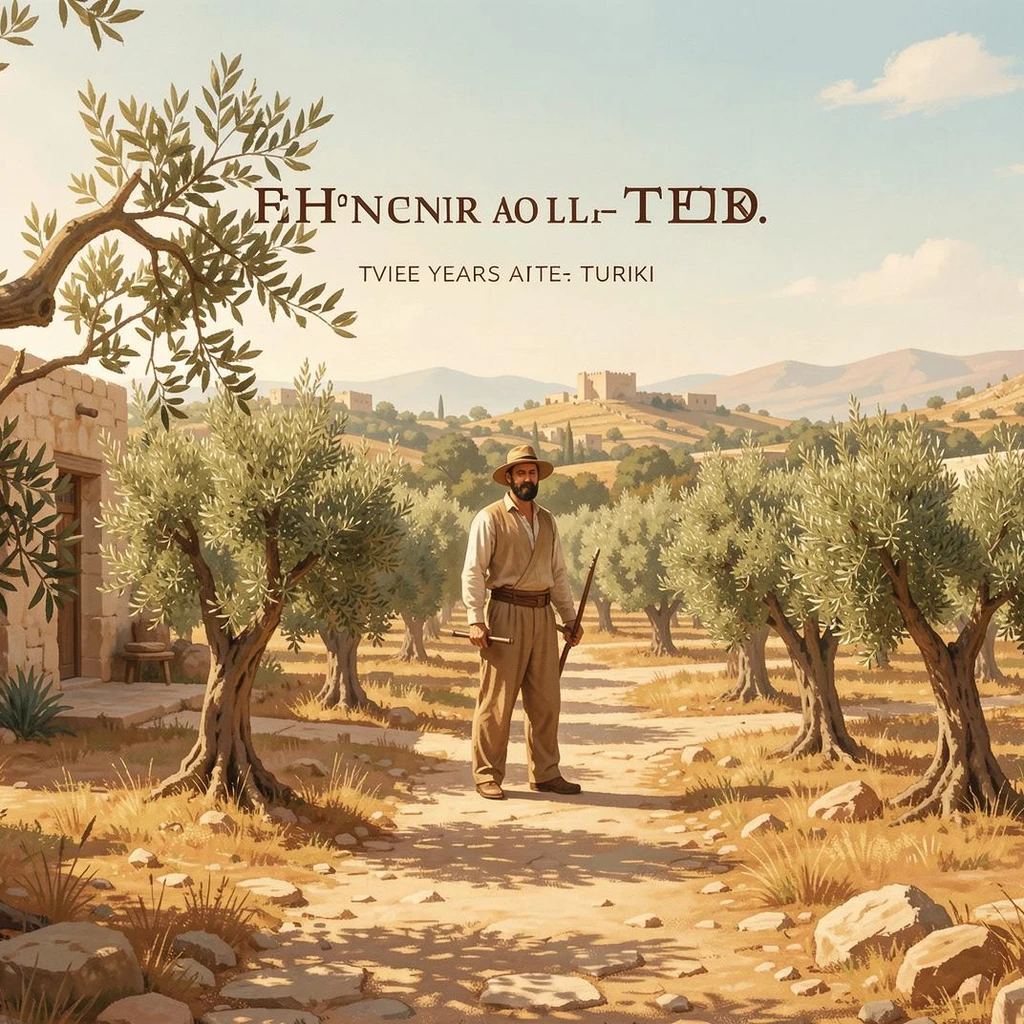
Tayeb stood at the southern edge of the grove, watching the horizon.
The solar panels were rising.
Not the small panels from the first phase, the experimental installation from five years ago. These were different—larger, more powerful, arranged in rows that followed the contour of the land, blue and black against the limestone soil, glinting in the Mediterranean sun.
There were forty-eight panels total, arranged in three rows of sixteen. They had been installed over the summer—June, July, August—by teams of workers hired by the foundation, funded by the state grant, designed using Tayeb’s own software from atlas_bridge. The panels were connected to inverters, the inverters to the grid, the grid to the national energy system.
The energy flowed.
Tayeb had calculated the output himself. The forty-eight panels would generate approximately 52,000 kilowatt-hours annually—enough to power the grove, the foundation’s buildings, the dormitories and classrooms. Enough to sell excess back to the grid. Enough to fund the foundation’s operations for the next five years.
The panels were the economic foundation. The energy independence was the political autonomy. The grove was no longer just an olive farm. It was a demonstration. A model. A proof of concept.
Tayeb walked the row of panels, checking the mounting, the wiring, the connections. Everything was solid. Everything was secure. Everything would last.
He had designed this system twelve years ago, in the aftermath of the crisis, after the recovery project collapsed, after the three young men revealed the grafting in the courtyard. He had designed it in his head—solar panels for energy independence, agricultural integration to preserve the grove, economic autonomy to maintain political independence.
But he had not been able to build it. The funding had not existed. The technology had been too expensive. The timing had been wrong.
The timing was right now.
The state grant had come through—the partnership, the recognition, the integration. The funding was available. The technology had improved—solar panels were cheaper, more efficient, easier to install. The political conditions had shifted—the state was promoting renewable energy, supporting decentralized systems, encouraging community-owned projects.
So the panels were rising. Tayeb’s design was becoming reality.
But it was not happening the way he had imagined twelve years ago.
Two
He walked back toward the farmhouse, moving between the olive rows, the panels visible beyond the trees to the south. The September light was golden, slanted, autumn approaching. The harvest would begin next month.
The farmhouse had changed. It was no longer just his home—it was also the foundation’s training center, with dormitories in the back, a classroom in the converted barn, offices in what had been his living room. But he didn’t mind. The work was more important than the space.
He found Yassin in the courtyard, reviewing the week’s schedule, the student assignments, the budget reports. Thirty-three years old now, the foundation’s executive director, responsible for thirty zawiyas across Tunisia, six hundred students in training, twelve more in planning.
“Uncle,” Yassin said, looking up from the papers. “The Ministry called.”
Tayeb nodded. “About what?”
“The next phase of expansion,” Yassin said. “They want to fund another thirty zawiyas. Another thousand students. They’re offering six million dinars annually—double what we receive now.”
Tayeb studied the budget figures on the table. “What do they want in return?”
“More integration,” Yassin said. “More oversight. More reporting. They want the foundation to be more involved in national policy. They want us to participate in the state’s religious moderation campaign. They want our students to be visible ambassadors for Tunisia’s approach to Islam.”
Tayeb nodded slowly. “And the core practices? The dhikr, the transmission, the autonomy?”
“Protected,” Yassin said. “The contract from last year—the addendum that specifies that core practices cannot be changed without foundation approval—it still stands. The Ministry accepted it. They pushed back, but they accepted it.”
He leaned back in his chair. “But they want more visibility. More media presence. More public demonstrations of our practices.”
Tayeb turned a pen between his fingers. More reach, more circles, more students. Also more exposure, more oversight, more room for the state’s hand to close around what they’d built.
“What do you think?” Tayeb asked.
“I think we should accept,” Yassin said. “The funding will allow us to expand—to sixty zawiyas, to two thousand students. The visibility will help us reach more communities, more young people seeking connection.”
He looked at Tayeb. “But I’m concerned about the same things Omar and Sami warned about. The co-optation. The control. The slow erosion of autonomy. What do you think?”
Tayeb looked past Yassin toward the grove.
“We should accept,” he said. “But we revisit every six months. If the autonomy erodes, we walk away.”
He looked at Yassin. “The state destroyed the networks once. It will always try to control what replaces them. We accept the money. We keep the practice separate.”
Yassin nodded. “And the minority? Those who oppose?”
“Sami and Omar have reason to worry. They remember the crisis—they remember how the first state offer divided us.”
“So we refuse?” Yassin asked.
“No. We accept. But we maintain the six-month review. And we keep the practice autonomous. If the state pushes on the dhikr, on the transmission, on how we teach—that’s the line.”
Yassin nodded. “I’ll prepare the response. We’ll vote next week.”
“Thank you,” Tayeb said.
He turned toward the grove, toward the solar panels beyond the trees. “I’m going to walk. I’ll be back for dinner.”
He walked alone between the olive rows, the panels visible through the leaves, the September light golden on the bark.
Three
He walked for an hour, moving slowly through the grove, touching the trees, checking the olives, remembering.
He stopped at Row Seven, Tree Twelve—the tree that had lost its branch in the storms of February 2035, the tree whose scion had been grafted to new rootstock, the tree whose wound had healed over, the bark closing around the break.
The tree was healthy now. The branch was gone, but new growth had filled the gap. The tree had adapted, compensated, recovered.
Tayeb touched the bark. His grandfather had planted this tree. His grandfather’s grandfather had planted the trees around it. Seven generations of Damerjis had worked this soil, had harvested these olives, had pressed this oil.
And now there were solar panels beyond the trees, generating energy, funding the foundation, creating something new.
He continued walking, moving toward the southern edge, where the family plot stood beneath the carob tree. Four graves. Four generations. The bridge generation, the ones who had received intact networks and watched them destroyed.
He touched his father’s grave. The stone was warm from the September sun.
“We tried,” Tayeb said. “You tried. I tried. Different methods. Same failure.”
He looked at the graves around him—his grandfather, his great-grandfather, his great-great-grandfather. The ones who had planted the trees, who had received the transmission, who had preserved the networks.
Not the old way, his father would say. Not what I knew. But something’s growing.
“I don’t know if it’s enough,” Tayeb said.
He touched the stone one more time. The wind moved through the carob tree, the leaves rustling, the olives falling onto the graves.
The stone was silent.
Four
He walked back toward the farmhouse as the afternoon wore on, the September light turning from gold to orange, the shadows lengthening across the grove.
He found Karim Hadded waiting for him at the courtyard gate.
Karim was seventy-three now, retired for three years. The logs were stored, the names recorded, the documents archived. The ward was closed, converted to storage, but the memories remained.
“You’re still standing,” Karim said.
Tayeb nodded. “We’re still standing.”
“The panels are rising,” Karim said.
“Yes,” Tayeb said. “They’re generating energy. Funding the foundation. Creating independence.”
“The state is partnering,” Karim said.
“With oversight. We kept the core practices autonomous.”
“Is it working?” Karim asked.
“I don’t know. We reassess every six months. But the growth is real. Thirty zawiyas. Six hundred students. Something is spreading.”
They walked together into the grove, moving between the olive rows, the solar panels visible beyond the trees.
“What have you achieved?” Karim asked. “After all these years. After Indonesia, after the recovery, after the partnership. What has changed?”
Tayeb ran his hand along the bark of the nearest tree. The ridges were familiar under his palm.
“Not what I intended,” he said. “I thought I could restore the old networks. Rebuild the institutions. Recover what was destroyed. I was wrong. Restoration was impossible.”
He looked at Karim. “But something else grew. Old wood, new roots. The grafts, you’d call them.”
“The grafts,” Karim said.
They walked in silence for a time, the olives crunching beneath their boots, the solar panels turning slowly beyond the trees.
“The state destroyed the networks,” Karim said. “I watched them fall. One empty crib at a time. The isolation, the collapse, the end.”
“What’s different now?” Tayeb asked.
Karim stopped walking. He looked at Tayeb. “You kept the testimonies. The documents. The records. I kept the logs—thirty-nine years of births, names, dates. I thought I was writing an obituary. Maybe I was writing something else.”
“The book of names,” Tayeb said. “You gave it to me. The births from 1987.”
“I kept them,” Karim said. “Every one.”
They stood together at the edge of the grove, watching the solar panels turn slowly in the September sun, the blue and black glinting against the sky.
“Are you happy?” Karim asked.
Tayeb watched the panels rotate, tracking the afternoon light.
“No,” he said. “Not happy. The trees are still standing, but they’re not the same trees. Something was lost. Something was destroyed.”
He looked at Karim. “But something new is growing in its place.”
“That’s how it is,” Karim said. “The trees endure. The branches fall. Something grows.”
They stood together as the sun began to sink, the September light turning orange, the shadows lengthening across the panels, the trees, the soil.
“What transmits?” Karim asked. “In the end. After the institutions are gone, the networks abolished, the transmission broken. What actually transmits?”
Tayeb watched a single panel rotate, catching the last of the angled light.
“I’m not sure,” he said. “But I watched Fatma teach Amina last month. She’s already changed the dhikr—different tempo, different rhythm. It’s not what I taught her. And Amina will change it again.”
He gestured at the grove around them. “The words survive. The practice changes. What stays is the gathering itself. The turning toward each other.”
“The grafts,” Karim said.
“Yes.”
They stood together as the twilight gathered, the solar panels turning slowly in the fading light, the energy still flowing.
Five
They walked back to the farmhouse as the night deepened, the stars multiplying above the grove. The solar panels were no longer visible in the darkness, but Tayeb knew they were there, turning slowly, generating energy, feeding into the grid.
They reached the courtyard. Karim’s taxi was waiting. He had to return to Tunis before dark.
“Will I see you again?” Karim asked.
“Anytime,” Tayeb said. “The grove is open. You’re always welcome.”
Karim nodded. He opened the taxi door, then looked back at Tayeb.
“What you built,” he said. “It’s alive.”
He got into the taxi. “Thank you for witnessing.”
The taxi drove away, the tires crunching on the gravel road, the taillights fading into the distance.
Yassin, Omar, Sami, and Fatma came out of the farmhouse. They stood with Tayeb in the darkness, watching the taxi disappear.
From inside the farmhouse, the sound of dhikr began—younger students practicing on their own, voices finding rhythm in the dark. The sound carried through the open door, across the courtyard, toward the grove.
“What transmits?” Tayeb asked. “After everything. What actually transmits?”
Fatma looked toward the farmhouse door, where the chanting grew steadier. “The gathering,” she said. “That’s what I couldn’t find before I came here. Not the words—I knew the words. The gathering.”
Yassin nodded. “The circles. When twenty people sit together, something happens that doesn’t happen alone.”
“Is it enough?” Tayeb asked.
No one answered. The dhikr continued inside—uneven, young, finding its rhythm. The solar panels hummed beyond the wall. The olive trees stood in their rows around them.
“Lā ghālib illā Allāh,” Tayeb said. There is no victor but God.
“Wa-al-mulku lillāhi abadan,” the students responded. Dominion belongs to God, eternally.
The Mediterranean sun set beyond the grove. Orange, violet, deep blue. The panels turned—forty-eight blue-and-black surfaces catching the last light, reflecting the sky, reflecting each other. Beyond the panels, the olive trees stood in their rows, leaves silver-green in the twilight. The wind moved through the branches, through the panel arrays. From the courtyard behind him, the sound of dhikr rose—young voices, uneven, settling into rhythm, finding the pulse. The panels turned toward the dark. The trees stood. The olives fell.